
Close Menu
C-News
  • News
    • World
  • Politics
  • Business
    • Technology
    • Careers
  • Lifestyle
    • Entertainment
    • Travel
  • World News
  • Sports

Subscribe to Updates

Get the latest creative news from FooBar about art, design and business.

What's Hot

Beyond Kyankwanzi Lies Uganda’s Next Public Service Revolution

June 19, 2026

Can Northern Uganda Become Tourism’s Next Star?

June 19, 2026

Coffee, Services Boom Spur Property and Building Rush

June 17, 2026
Facebook X (Twitter) Instagram
Trending
  • Beyond Kyankwanzi Lies Uganda’s Next Public Service Revolution
  • Can Northern Uganda Become Tourism’s Next Star?
  • Coffee, Services Boom Spur Property and Building Rush
  • Brilliant but Broke? KCB Rescues 56 Students
  • New Evidence Finds: Tech, AI Isn’t Killing Jobs, It’s Creating Them
  • Budget 2026/27: The Economy Is Booming. Are Households Too?
  • BoU’s Cash Limits Aren’t About Cash—They’re About Control
  • Why Government Is Targeting Budget Leakages, Project Delays and Corruption
X (Twitter)
C-News
  • News
    • World
  • Politics
  • Business
    • Technology
    • Careers
  • Lifestyle
    • Entertainment
    • Travel
  • World News
  • Sports
C-News
Home»News»Uganda Shows Six Signs of Economic Recovery
News

Uganda Shows Six Signs of Economic Recovery

By Nickson MaberiMay 29, 2023Updated:May 30, 2023No Comments3 Mins Read
Facebook Twitter Pinterest LinkedIn Tumblr Email
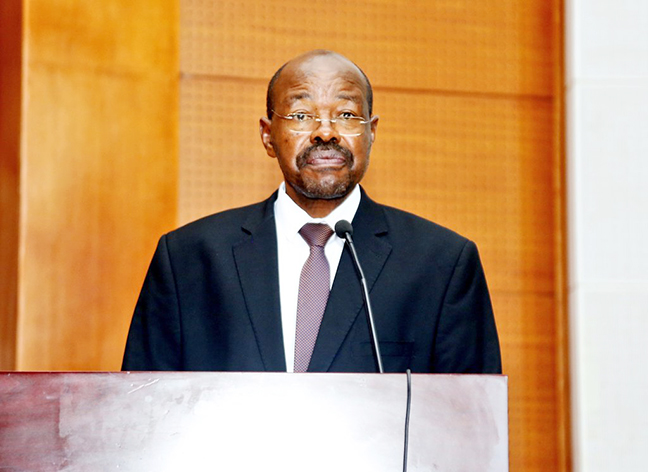
Minister Lugoloobi at the Uganda Media Centre
Share
Facebook Twitter LinkedIn Pinterest Email

OUR REPORTER

In a recent update on the progress made towards implementing the commitments outlined in the NRM Manifesto 2021-2026, Amos Lugoloobi, the minister of State for Finance, Planning, and Economic Development highlighted positive indicators of economic recovery. Let’s take a closer look at the encouraging economic trends:

  1. Economic Growth: The economy experienced a growth rate of 4.6 percent in the fiscal year 2021/22, an improvement from the previous year’s 3.5 percent. Notably, during the first quarter of the current financial year, the economy grew by 7.5 percent, compared to 2.7 percent in the same quarter of the previous year, the minister said. This growth was primarily driven by increased value addition in the industry and services sectors, which grew at 12.7 percent and 9 percent, respectively. The economy is projected to further expand by 5.5 percent by the end of FY 2022/23.
  2. Inflation: Although prices remain elevated, he said, there has been a gradual decline in annual headline inflation, decreasing from 10.7 percent in October 2022 to 8.0 percent in April 2023. This reduction can be attributed to a slowdown in the increase of prices for food, beverages, as well as a decrease in prices of building materials, fuel, and electricity.
  3. Cost of Borrowing: Shilling-denominated lending rates offered by commercial banks decreased to 18.76 percent in March 2023, down from 20.24 percent in February 2023, he said, adding that the decline in the inflation rate, reduced government participation in the domestic credit market, and increased access to credit for prime borrowers with good credit ratings were cited as factors contributing to this reduction.
  4. External Trade: Uganda’s trade deficit with the rest of the world narrowed to US$ 241.93 million in March 2023, compared to US$ 297.66 million in February 2023, he said. “The decrease was driven by increased export earnings, which more than offset the rise in the import bill. Within the East African Community (EAC), Uganda recorded a trade surplus of US$ 15.9 million,” he added.
  5. Value of Merchandise Export: Uganda’s merchandise exports reached US$ 674.54 million in March 2023, reflecting a significant increase of 93.0 percent compared to US$ 349.44 million in February 2023. The minister said this growth was primarily due to higher export earnings from mineral products, tobacco, maize, and cotton.
  6. Employment Creation: Formal employment, as captured by the PAYE Register, witnessed a 3.03 percent increase from 1,380,972 employees in 2020/21 to 1,422,857 employees in 2021/22, he said, adding that the Public Administration Sector registered the highest number of Pay As You Earn (PAYE) employees (456,782), followed by the Manufacturing Sector (145,448), Wholesale and Retail Trade (97,261), and the Agricultural Sector (57,731). Most formal sector jobs (83 percent) were contributed by the private sector, with a significant concentration in agriculture and fishing (69.4 percent).

Having provided these key highlights of the economic recovery, the minister emphasized the government’s commitment to the NRM manifesto objectives. These objectives include; broadening the economic base by creating opportunities across all regions, establishing an integrated and self-sustaining economy through import substitution and export-oriented growth, formalizing the economy, achieving lower middle-income status, and generating productive jobs.

To realize these objectives, the government has made various commitments within the manifesto. The government aims to create more productive jobs by leveraging all factors of production.

Share. Facebook Twitter Pinterest LinkedIn Tumblr Email
Nickson Maberi

    An English language enthusiast, Digital journalist and seasoned poet. wilsonmaberi@gmail.com

    Related Posts

    Beyond Kyankwanzi Lies Uganda’s Next Public Service Revolution

    June 19, 2026

    Brilliant but Broke? KCB Rescues 56 Students

    June 17, 2026

    New Evidence Finds: Tech, AI Isn’t Killing Jobs, It’s Creating Them

    June 16, 2026
    Top Posts

    Opening Ceremony FIFA World Cup Qatar 2022

    November 21, 2022

    Musk lifts Donald Trump’s Twitter ban after a poll

    November 23, 2022

    Angry protests at giant iPhone factory in Zhengzhou

    November 26, 2022

    Protesters openly urge Xi to resign over China Covid curbs

    November 27, 2022
    Don't Miss
    News

    Beyond Kyankwanzi Lies Uganda’s Next Public Service Revolution

    By Kalikumutima DeoJune 19, 20260

    Uganda has spent decades developing policies and reform strategies, but citizens judge government differently—by whether services are delivered efficiently and fairly. A new commentary argues that the country’s next phase of transformation must focus on faster service delivery, accountability, meritocracy and a citizen-first culture if public trust and economic growth are to improve.

    Can Northern Uganda Become Tourism’s Next Star?

    June 19, 2026

    Coffee, Services Boom Spur Property and Building Rush

    June 17, 2026

    Brilliant but Broke? KCB Rescues 56 Students

    June 17, 2026
    Stay In Touch
    • Twitter

    Subscribe to Updates

    Get the latest news from c-news!

    Demo
    About Us
    About Us

    C-News is your source of the latest general news, business, health, travel and politics as it breaks in Uganda and East Africa.

    Reports, Analysis, Pictorial and Videos.

    Email Us: info@c-news.ug
    Contact: +256 776745120

    X (Twitter)
    Our Picks

    Beyond Kyankwanzi Lies Uganda’s Next Public Service Revolution

    June 19, 2026

    Can Northern Uganda Become Tourism’s Next Star?

    June 19, 2026

    Coffee, Services Boom Spur Property and Building Rush

    June 17, 2026
    Most Popular

    Opening Ceremony FIFA World Cup Qatar 2022

    November 21, 2022

    Musk lifts Donald Trump’s Twitter ban after a poll

    November 23, 2022

    Angry protests at giant iPhone factory in Zhengzhou

    November 26, 2022
    • Home
    • Privacy Policy
    © C-NEWS 2026

    Type above and press Enter to search. Press Esc to cancel.