
KAMPALA – Ugandan exporters will spend the next four months preparing for a rare opportunity: meeting international buyers face-to-face and trying to convince them that their products are reliable enough for global markets.
That opportunity will come during the Uganda Connect International Buyers’ Week, scheduled for November 9 to 15, 2026, at the Speke Resort Convention Centre in Munyonyo. The event is intended to bring foreign buyers into the country to inspect products, visit factories and negotiate directly with Ugandan businesses.
For farmers, manufacturers and processors, the promise is straightforward. Instead of producing goods and then searching for customers, they could secure buyers first and supply according to known demand.
The Presidential Advisory Committee on Exports and Industrial Development, or PACEID, launched the 2026 event under the theme “Meet. Connect. Trade.” It expects verified international buyers, investors, exporters, trade representatives, development partners and government agencies to attend.
The programme will include private business meetings, investment discussions, factory visits, product demonstrations and sector-specific “deal rooms”. These are focused meetings where businesses in the same industry can negotiate prices, volumes, standards and delivery terms with prospective buyers.
PACEID says the first Buyers’ Week, held in 2025, generated export contracts worth more than $1.5 million. This year, the committee is targeting at least 20 transactions valued at more than $3 million.
The larger question is whether those meetings can produce lasting orders rather than one-off deals.
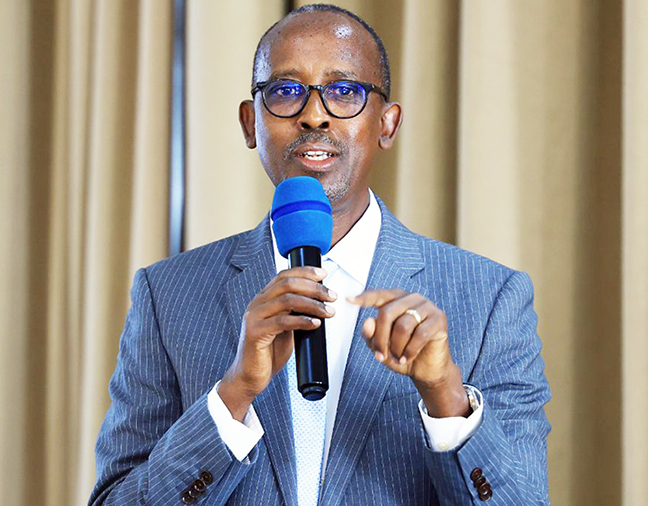
Speaking at the launch at Sheraton Kampala Hotel, PACEID chairman Odrek Rwabwogo said Uganda must identify dependable markets before encouraging businesses to increase production.
“The prosperity of any nation begins with markets,” Rwabwogo said. “Uganda Connect International Buyers’ Week is our deliberate strategy to bring verified international buyers to Uganda, allowing them to experience our products, meet our producers and build long-term commercial relationships.”
He said the country was moving away from speculative trade, where producers grow or manufacture goods without confirmed customers, towards demand-driven production that could support jobs, investment and household incomes.
That distinction matters for ordinary producers. A farmer may harvest large quantities of coffee, cocoa, fruit or grain, but still lose money if there is no reliable buyer, the product fails quality tests or transport costs make the deal unprofitable. Manufacturers face similar risks when they invest in production without knowing whether customers will place repeat orders.
Rwabwogo said PACEID had entered a new phase, which he called “PACEID 2.0”. Its earlier work focused on helping businesses enter markets, meet export standards and gain access to infrastructure and financing. The next phase will emphasise regional aggregation centres, better trade data and a deeper understanding of export value chains.
Aggregation centres bring produce from many small suppliers into one location, where it can be sorted, stored, inspected and prepared for larger orders. For small farmers who cannot individually supply the quantities demanded by international buyers, such centres can make participation in export trade more practical.
But reaching a buyer is only part of the challenge. Exporters must also meet rules on quality, packaging, safety, labelling and traceability.
“It doesn’t matter how much we produce if we don’t meet market entry requirements. It’s like winking at a girl in the dark,” Rwabwogo said.
PACEID Head of Secretariat Matthew Bagonza described the event as a market-access platform rather than a conventional trade exhibition. The aim, he said, is to connect Ugandan producers directly with global demand.
Markets Director Brenda Katarikawe Opus said the longer-term value would come from commercial relationships established during the week.
“Uganda Connect International Buyers’ Week is where production meets opportunity and where relationships are developed,” she said. “Every buyer who comes to Uganda leaves as an ambassador.”
Ahead of the November gathering, PACEID plans to recruit exporters and buyers across the country. Between July and October, participating businesses will receive training in export compliance, branding, trade negotiations, buyer engagement and the requirements of particular markets.
The preparation will be important because an international order can expose weaknesses that are less visible in the domestic market. A business may have a strong product but still lose a contract because it cannot maintain consistent quality, produce the required volume or deliver on time.
PACEID also released its performance report for January to June 2026, outlining work in market development, standards, infrastructure, export financing and strategic partnerships. Priorities for the second half of the year include turning trade leads into confirmed orders and strengthening Uganda Connect Trade Hubs.
The event comes as Uganda reports strong export growth. According to figures cited in the source material, merchandise exports reached about $13.4 billion, or roughly Shs48 trillion, in 2025. Gold contributed $6.4 billion, coffee $2.46 billion and cocoa beans $632 million. Monthly receipts during the first half of 2026 reportedly exceeded $1.3 billion to $1.5 billion, driven largely by gold and coffee.
The author can be reached at: ebenezernsubuga405@gmail.com