
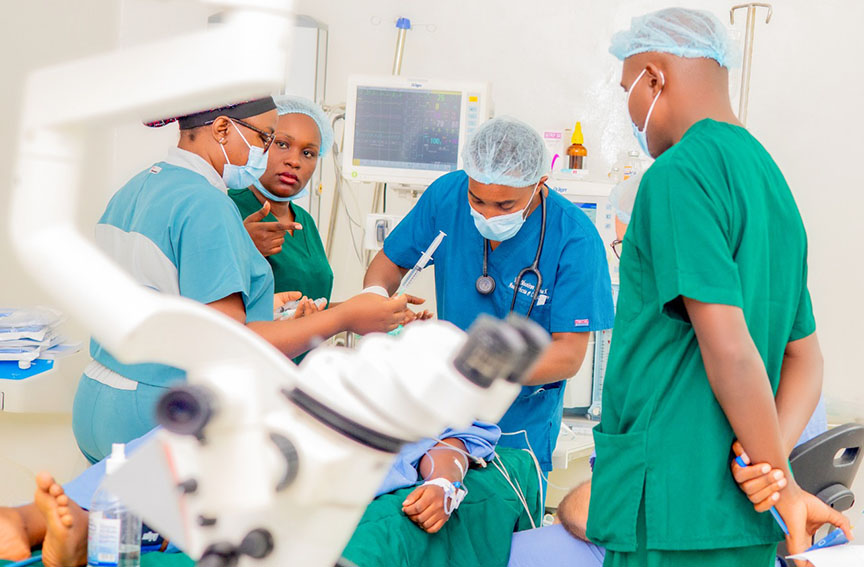
KAMPALA – A patient travelling to Uganda for treatment or a student enrolling from across the border brings more than a demand for care or a place in a classroom. Their spending also earns Uganda money from abroad, making hospitals and learning institutions part of the country’s export economy.
That market has grown substantially. Yet researchers and industry experts say Uganda needs better services, clearer regulation and more reliable data to realize its potential.
Speaking during a recent two-part webinar series informed by studies from the Economic Policy Research Centre (EPRC), experts urged Uganda to create a more supportive environment for exporting health and education services.
EPRC’s analysis shows that health services exports rose from $3.3 million in 2015 to $26.8 million in 2024, more than eight times their earlier value. Education services exports increased from $31 million to $103 million over the same period, more than tripling.
Philemon Okillong, a research analyst at EPRC, said regional demand drives the market, with Kenya and Rwanda among the leading consumers of Uganda’s services.
The growth matters because Uganda spends more on services from abroad than it earns from selling its own internationally. According to EPRC, that trade-in-services deficit reached $2.6 billion in 2025. Expanding health and education exports could help narrow the gap, although current earnings remain modest compared to its size.
The potential benefit extends beyond foreign exchange for Ugandans.
EPRC executive director Sarah N. Ssewanyana said developing these exports offers an opportunity to improve the quality and scale of domestic services while establishing Uganda as a trusted regional centre for specialized care and learning.
The ambition connects two goals: attracting patients and students from abroad while strengthening services that Ugandans also need. Whether that happens will depend on how the sectors develop.
Dr Alfred Driwale, commissioner of Health Services at the Ministry of Health, said the discussions had helped reframe health care beyond its traditional treatment as a public service that consumes resources.
But measuring its economic contribution remains difficult.
Driwale said current health information systems do not assess services from a financial perspective and leave out care provided to groups such as refugees. Those gaps make it harder to establish the sector’s full value.
Dr Diana Ssewanyana of Aga Khan Hospital Nairobi also said existing data understates the number of patients travelling both into and out of Uganda for treatment. Without a clearer picture of those movements, policymakers cannot fully assess the market Uganda serves or the demand it loses to providers abroad.
Education faces similar obstacles.
Brighton Barugahare, commissioner of Policy Analysis and Research at the Ministry of Education, said Uganda must improve educational standards, resolve fragmented regulation across governing bodies and address institutions’ reluctance to share operational data.
These are practical barriers to expansion. Better standards would strengthen the services on offer, while clearer regulation and fuller information would help policymakers understand the sector and plan its growth.
The discussions point to a growing opportunity, but also to unfinished work. Uganda’s hospitals and learning institutions are already earning export revenue. Turning that growth into a stronger regional position will require reliable evidence, coordinated policy and improvements in the services themselves.