
When the lights go out in Kira, the inconvenience travels quickly. A home is plunged into darkness, a shop loses business, and a machine falls silent. For thousands of electricity users across this rapidly growing part of Greater Kampala, repeated power interruptions have become an uncomfortable part of daily life.
Now, Uganda Electricity Distribution Company Limited (UEDCL) acknowledges that parts of the network are struggling to keep pace with demand. The company has begun upgrading transformers and distribution lines in an overhaul it says will eventually bring more reliable electricity to more than 80,000 customers.
The state-owned distributor has announced a combination of emergency interventions and longer-term infrastructure projects aimed at easing the pressure, as electricity demand grows across rapidly expanding communities on the outskirts of Kampala.
The interventions were outlined during a meeting with more than 100 local leaders in Kira Municipality, the first step in what UEDCL says will be a nationwide engagement campaign on electricity reliability and service delivery.
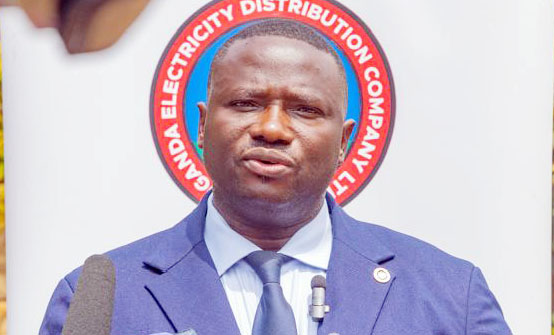
“We are engaging with local leaders to explain the causes of the current supply interruptions, provide information on ongoing projects, listen to their concerns and explore opportunities for collaboration,” said Isaac Katewanga, UEDCL’s acting chief commercial and operations services officer.
Katewanga acknowledged the inconvenience caused by repeated interruptions and said the company was pursuing both immediate fixes and longer-term investments to address network constraints.
One of the biggest projects is an upgrade of the transformer at Kawanda substation, which UEDCL says should ease capacity constraints affecting customers in Naalya and Kyaliwajala. The work is expected to be completed by the end of 2026.
UEDCL has also started splitting the Seeta and Bukerere distribution line, an intervention intended to reduce network congestion, stabilize voltage, and allow electricity to be restored more quickly after interruptions.
In heavily loaded areas, the company says it is installing additional transformers, replacing overstretched ones with higher-capacity units and replacing damaged poles and conductors.
Samson Tondo, UEDCL’s head of engineering services for the Central region, said more than 80,000 customers are expected to benefit from the interventions.
They span Kira, Namugongo, Kyaliwajala, Bulindo, Kitukutwe, Nsasa, Nabusugwe, Naalya, Kasangati, Najjera, Kitikifumba, Nakwero, Kijabijjo, Bukerere and Sonde, among other surrounding communities.
The scale of the work points to a larger problem confronting Uganda’s electricity system: getting electricity onto the national grid is only part of the challenge. The distribution infrastructure must also have sufficient capacity to deliver that power reliably to homes, shops, factories and other users.
UEDCL says it is working with the Uganda Electricity Transmission Company Limited (UETCL) on plans to increase transmission capacity in Greater Kampala from 80 megawatts to 200 megawatts.
Beyond Greater Kampala, longer-term projects include construction of substations at Magigye, Kigo and Nakasero, alongside upgrades at Kireka, Busunju, Kakiri, Mubende, Kanyantogoro, Jinja Industrial, Kabaale and Mbale.
Power lines in Mityana, Masaka, Kasese and Bushenyi are also undergoing refurbishment.
UEDCL says that once the projects are completed, it expects a 98 per cent improvement in supply reliability. The company did not, however, provide the baseline against which that improvement is measured or specify when all the projects are expected to be completed.
Infrastructure capacity is not the only problem UEDCL says it is confronting.
The company says vandalism of electricity infrastructure is increasing, leaving communities without power and disrupting essential services. Tondo appealed to residents and local leaders to report suspicious activity around electricity installations to UEDCL or local authorities.
Jessica Zziwa, UEDCL’s head of commercial and operations services for the Central region, raised another concern: fraudsters targeting people seeking new electricity connections.
“We encourage customers to pay for new connections directly to UEDCL through our accredited partner banks and mobile payment platforms. Do not pay cash to anyone promising to speed up your connection,” Zziwa said.
She urged customers who encounter suspected fraud to report it to UEDCL or the nearest police station.
Police representatives at the Kira meeting pledged to work with the electricity distributor against vandalism. ASP Justus Tashobya, the Kampala East regional police commander, said police would continue working with UEDCL to identify and apprehend perpetrators.
Moses Haumba, the mayor of Namugongo Division, welcomed the engagement with local leaders, saying communities should also be involved in protecting electricity infrastructure.
“This is a big step towards strengthening the relationship between UEDCL, local leaders and our communities,” Haumba said. “Such engagements are important in addressing challenges affecting service delivery and ensuring that communities play an active role in protecting the electricity distribution infrastructure.”