
KAMPALA – In a village where a family has received Parish Development Model money, the government’s promise is straightforward: invest the funds in a productive enterprise, earn an income and eventually repay the loan so another household can benefit.
The Parish Development Model, commonly known as PDM, was designed to move households from subsistence farming into the cash economy. Rather than producing mainly for home consumption, beneficiaries are expected to grow crops, rear animals or run small enterprises that generate regular income.
Now the government says the programme is beginning to produce results. But its own trade figures reveal a more complicated picture.
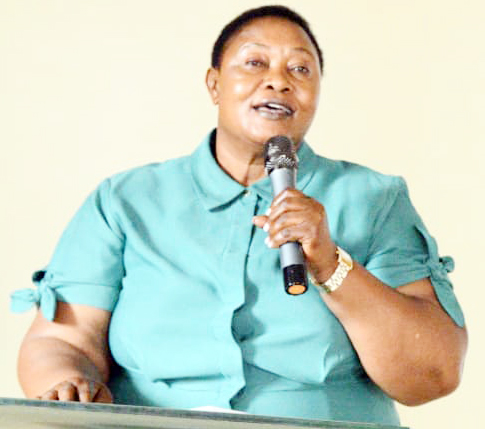
In her ministerial statement, Minister for the Presidency Milly Babalanda said banana production had risen by more than 140 per cent since the PDM was introduced, citing the African Development Bank Group and the Ministry of Agriculture. Put simply, that would mean production has grown to more than twice its earlier level. Output of root crops such as cassava and Irish potatoes reportedly increased by 67 per cent, while cereals, including maize, rice and wheat, rose by about 34.5 per cent. Oil crops such as groundnuts increased by 32 per cent.
“These achievements demonstrate that His Excellency the President’s strategy of wealth creation through increased household production is yielding positive results,” Babalanda said.
Those are substantial gains. But the statement does not provide the starting years, exact tonnage, survey method or explanation of how much of the increase can be directly attributed to PDM rather than rainfall, prices, acreage expansion or other agricultural programmes. That evidence matters because production growth alone does not prove that the households receiving PDM money are becoming richer.
The government has doubled the amount allocated to each parish from Shs 100 million to Shs 200 million during the current term. The aim is to expand household production and support Uganda’s ambition of growing its economy tenfold to $500 billion by 2040.
That means taxpayers are committing far more money to PDM. In return, they need more than stories of money being distributed. They need evidence showing who received it, what they invested in, whether the enterprise survived, how much income it generated and whether the revolving loan was repaid.
Babalanda has therefore directed RDCs, Chief Administrative Officers, production officers and community development officers to maintain detailed records on every beneficiary. Districts should document the chosen enterprise, the advice and extension services provided, its performance and the status of repayment.
Officials must also use the Parish-Based Management Information System, a digital platform intended to store accurate and verifiable PDM data.
This could mean closer supervision and more pressure to account for the money. For officials, it creates a paper trail that could expose ghost recipients, altered identity details and funds sent to people who do not exist.
Babalanda cited the RDC of Kween district, who she said helped uncover a network that allegedly diverted Parish Development Model funds by creating ghost beneficiaries, sending money to telephone numbers linked to deceased people, and altering the National Identification Numbers of genuine applicants. The allegations require formal investigation, but they show why accurate records are essential to a revolving fund: money stolen from one round is money denied to the next household.
The directive was contained in a July 16 ministerial statement on the monitoring of government programmes, service delivery and corruption. In it, Babalanda instructed Resident District Commissioners and Resident City Commissioners to track public projects continuously, from planning and procurement through construction, completion and commissioning.
RDCs and RCCs are the President’s representatives in districts and cities. They do not ordinarily build roads, recruit teachers or manage health-centre budgets. Those responsibilities lie mainly with local governments, accounting officers and technical departments. Their role is to monitor government work, report failures and help coordinate central government programmes.
Babalanda now wants that oversight to become more systematic.
Every district and city must keep an updated register showing the condition of major public projects, how far each has progressed, the obstacles delaying it, the contractor’s performance and the action required. The reports must be submitted regularly to the Office of the President.
The directive follows a nationwide inspection campaign by Minister for Local Government Balaam Barugahara, involving unannounced visits, public meetings and the arrest of officials suspected of wrongdoing. Inspections in eastern Uganda led to orders for the arrest of municipal engineers over allegedly poor work and the detention of school administrators over reportedly inflated enrolment figures.
The exercise also uncovered “ghost workers” in schools and health centres, people listed on public payrolls despite not doing the jobs for which they were being paid.
PDM
A deeper contradiction, however, lies in Uganda’s import bill.
According to the Uganda Revenue Authority’s 2024/25 Annual Databook, as cited by the minister, Tanzania overtook China as Uganda’s largest source of imports. Uganda bought goods worth about Shs 12.46 trillion from Tanzania, including rice valued at between Shs 734.65 billion and Shs 820.81 billion, maize worth Shs 33 billion and groundnuts worth Shs 75.6 billion. During the same period, Uganda exported goods valued at only between Shs 602.25 billion and Shs 675.25 billion to Tanzania.
In practical terms, Uganda bought far more from Tanzania than it sold there. Some of those imports were crops also produced by Ugandan farmers.
That does not necessarily mean the imports were avoidable. Traders may turn to foreign suppliers because local production is insufficient, seasonal, expensive, inconsistent in quality or difficult to collect and transport. Even so, the figures raise a serious question: if domestic crop production is rising sharply, why is Uganda still spending hundreds of billions of shillings importing basic foods?
Babalanda argued that increased production must lead to more trade and lower import dependence. She said Uganda’s fertile soil and favourable weather should allow the country to feed itself and export surpluses.
Rice presents a particular challenge. Government restrictions on cultivation in wetlands are intended to protect fragile ecosystems. The minister therefore urged district officials to help farmers increase upland rice production through agricultural extension services rather than destroy wetlands in the pursuit of higher output.
What happens next will determine whether PDM becomes a lasting economic programme or another large transfer of public money with uncertain returns.