
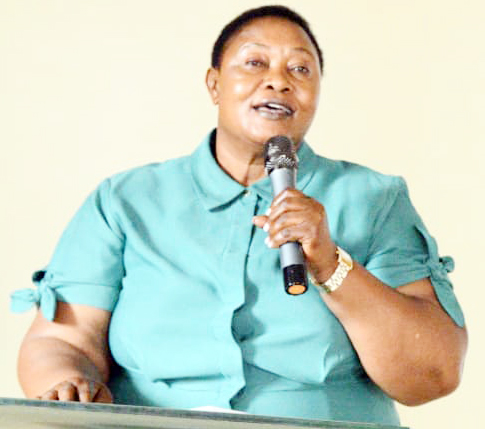
KAMPALA – For a Ugandan who has watched a classroom block remain unfinished for years, travelled over a newly repaired road that quickly broke apart, or been asked for money to secure a government job, Minister for the Presidency Milly Babalanda’s recent message is easy to understand: the officials appointed to represent the President in every district must stop watching from the sidelines.
In a July 16 ministerial statement on monitoring government programmes, service delivery and corruption, Babalanda directed Resident District Commissioners and Resident City Commissioners to track public projects continuously, from planning and procurement to construction, completion and commissioning.
“Monitoring should no longer be treated as an occasional administrative activity,” she said.
RDCs and RCCs are the President’s representatives in districts and cities. They do not normally construct roads, recruit teachers or manage health-centre budgets themselves. Those duties fall mainly to local governments, accounting officers and technical departments. But RDCs are expected to monitor government work, report failures and help coordinate central government programmes.
Babalanda now wants that oversight to become more systematic.
Every district and city must maintain an updated register showing the condition of major public projects, how far each has progressed, the problems holding it back, the contractor’s performance and the action required. These reports must be submitted regularly to the Office of the President.
This could make it harder for a failed project to disappear into paperwork. A stalled market, an abandoned bridge, or a poorly constructed health centre should have a named contractor, a recorded deadline, and an official explanation.
“No project should be abandoned without immediate intervention,” Babalanda said. “No unexplained delays should be ignored. No contractor should compromise quality without being held accountable.”
The directive comes after Minister for Local Government Balaam Barugahara began a nationwide inspection campaign involving unannounced visits, public meetings and arrests of officials suspected of wrongdoing. The unannounced ministerial inspections in eastern Uganda led to orders for the arrest of municipal engineers over allegedly poor work and the detention of school administrators over reportedly inflated enrolment figures. The exercise also uncovered “ghost workers” at schools and health centres listed on public payrolls despite not doing the jobs for which salaries were being paid.
Those allegations will still require investigation and due process. An arrest is not proof of guilt. But the cases point to the wider problem Babalanda says government is trying to confront: public money is often approved, released and recorded as spent without citizens receiving the promised service.
The minister also targeted the reported sale of public jobs.
“Public employment is not a commodity for sale,” she said. “Recruitment into public service must remain merit-based, transparent and competitive.”
That warning matters in a country where a government job can mean a stable salary, a pension and social security for an entire household. When recruitment is corrupted, qualified applicants lose out to those who can pay or use connections. The public then pays twice: first through stolen or misused recruitment money, and later through weak services delivered by people who may not be qualified for their positions.
Babalanda instructed RDCs and accounting officers to report bribery, procurement fraud, ghost workers, ghost projects, inflated contracts, diversion of funds and falsified accountability records. Anti-corruption telephone numbers should be displayed at RDC and RCC offices so citizens can submit complaints and tips.
She also told RDCs to provide factual and timely reports “without fear or favour”, saying their loyalty must be “to the Constitution, the President and the people of Uganda”.
That formulation captures a tension within the RDC system. These officers are public servants, but they are also presidential appointees operating in a politically charged environment. The same statement directs them to mobilise citizens for Women Council, LC I and LC II elections and refers to guidance from the NRM Secretariat and the party’s national chairman. That overlap between state administration and ruling-party mobilisation is likely to raise questions about whether RDCs can supervise elections and government programmes with equal fairness toward all citizens.
Babalanda also warned officials whose performance remains weak. Quoting President Museveni’s phrase, “Kisanja No Sleeping, No Corruption,” she said poor supervision, failure to address public complaints and persistent underperformance could lead to removal from office.
The real test will not be the force of the directive, but what follows it. Uganda has issued many anti-corruption warnings. Citizens will judge this one by whether unfinished projects are completed, stolen money is recovered, compromised officials face fair investigations, and complaints receive answers.
A monitoring register can expose failure. A hotline can collect evidence. But neither will change public services unless institutions act on what they find.