
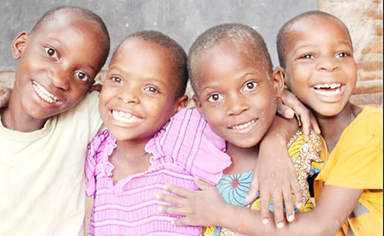
The widespread belief in many rural communities that the capital, Kampala, offers unlimited employment opportunities has created fertile ground for child traffickers. Exploiting poverty, unemployment and limited access to information, traffickers lure parents with promises of quality education, decent jobs and brighter futures for their children. Driven by economic hardship and hope, many parents unknowingly entrust children as young as six to individuals posing as benefactors.
Children from vulnerable regions such as Karamoja and West Nile, where poverty rates remain among the highest in Uganda, are especially at risk. Many are transported to Kampala and other urban centres, only to become trapped in exploitative situations, including street begging, domestic servitude, hawking and other forms of child labour. As they grow older, particularly adolescent girls, many face further exploitation through commercial sexual exploitation, prostitution and other forms of gender-based violence.
To many Ugandans, children begging at busy road junctions in Kampala appear to be simply asking for help from motorists and pedestrians. Behind those innocent faces, however, lies a far darker reality. Many are victims of organised trafficking networks that profit from their suffering. These criminal groups control where children beg, collect the money they receive and frequently move them from one location to another to avoid detection. The children themselves rarely benefit from the money they collect. Instead, they remain trapped in a cycle of exploitation that enriches their traffickers.

The continued presence of child beggars on Kampala’s streets is therefore more than a social concern. It reflects deeper structural challenges, including persistent poverty, unemployment, organised crime, weak child protection systems and gaps in law enforcement that Uganda continues to grapple with despite rapid urbanisation.
The 2025 Trafficking in Persons Report by the United States Embassy in Uganda identifies districts such as Napak, Abim, Amudat and Kaabong as some of the country’s major source areas for trafficked children.
Human trafficking is no longer confined to vulnerable rural communities. Recruitment networks have increasingly expanded into higher institutions of learning. University students, particularly young women, are being lured into commercial sex work, online pornography and other exploitative activities. Financial hardship, pressure to maintain expensive lifestyles, peer influence and the relative anonymity of campus life all contribute to this growing vulnerability. Equally concerning is that many young people have limited understanding of how traffickers recruit, manipulate and exploit their victims.
Uganda has made significant progress in establishing legal and policy frameworks to combat trafficking. The Prevention of Trafficking in Persons Act, 2009, the Children (Amendment) Act, 2016, the Kampala Capital City Child Protection Ordinance, 2022, and provisions of the Penal Code all criminalise human trafficking and related offences. Together, these laws provide an important legal foundation for protecting vulnerable people.
Yet legislation alone has not been enough to dismantle the increasingly sophisticated trafficking networks operating across the country. In 2025, at least nine government officials were charged with offences related to child trafficking, while several other cases remain before the courts. These cases highlight the growing complexity of trafficking networks and suggest that, in some instances, they have infiltrated institutions responsible for protecting children.
Although stronger investigations, prosecutions and victim support remain essential, Uganda’s response continues to be more reactive than preventive. Greater investment in prevention is needed, and education offers one of the most sustainable long-term solutions.
Unfortunately, Uganda’s education system has yet to systematically prepare learners to recognise, avoid and report trafficking risks. While the Competency-Based Curriculum promotes life skills and child protection, it does not provide structured anti-trafficking education that equips learners with practical knowledge about recruitment tactics, online safety, safe migration, labour exploitation, reporting mechanisms and available protection services.
Schools are uniquely positioned to become Uganda’s first line of defence against human trafficking. By integrating anti-trafficking education into existing subjects such as Social Studies, English, Christian Religious Education, Islamic Religious Education and Life Education, learners can gain age-appropriate knowledge and practical skills before traffickers have the opportunity to target them. Teacher training institutions should also equip educators with the skills to identify vulnerable learners, deliver trafficking prevention education and make appropriate referrals for support.
Preventing human trafficking begins long before a child is exploited. It starts by ensuring that every learner has the knowledge to recognise danger, make informed decisions and seek help before becoming a victim. Strengthening anti-trafficking education in schools would not only protect individual children but also help build more resilient communities capable of resisting exploitation.
The author holds a Master’s Degree in Adult and Community Education, Makerere University. Human Trafficking Researcher and Child Protection Consultant, Center for Transformative Parenting and Research (CTPR)
Email: denisntende10@gmail.com
Tel: +256 757 898876