
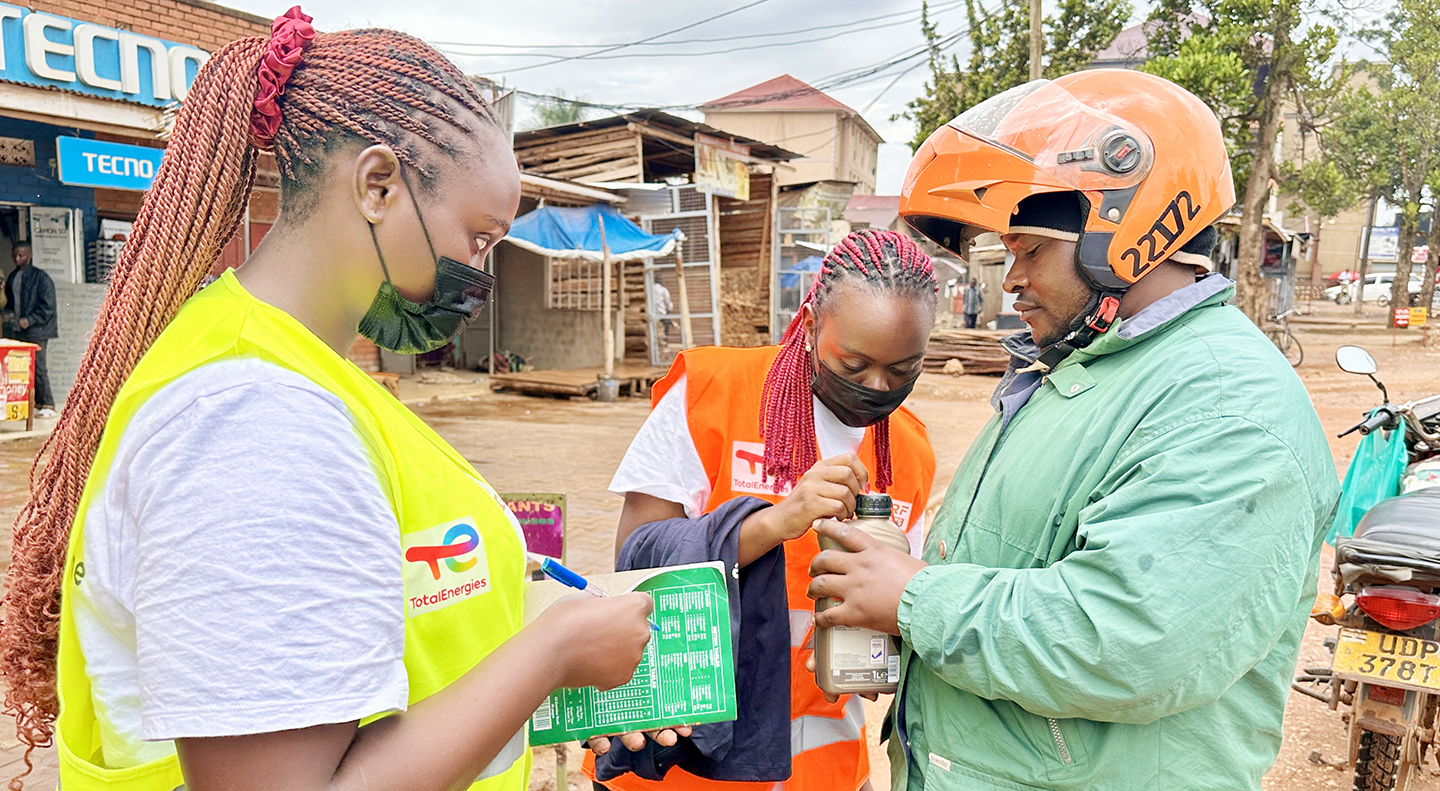
KAMPALA – For many Ugandan motorists, engine oil is often an afterthought.
Fuel gets the attention. So do tyres, insurance, and the rising cost of spare parts. But when a boda boda rider pulls into a roadside garage, a taxi driver squeezes maintenance costs to stay profitable, or a truck owner tries to keep vehicles moving along regional trade routes, the choice of engine oil can determine whether an engine lasts years or fails prematurely.
That reality sits at the heart of a growing concern emerging within Uganda’s transport sector: the spread of counterfeit lubricants. While fake engine oil rarely makes headlines, mechanics and industry players say it is quietly increasing repair bills, reducing vehicle performance, and creating hidden costs that ripple through an economy heavily dependent on transport.
It is against this backdrop that TotalEnergies Uganda has launched the Wininii Campaign, a nationwide consumer awareness initiative designed to help motorists identify genuine lubricants and avoid counterfeit products circulating in both formal and informal markets.
On the surface, the campaign is about engine oil. But the deeper story is about money, livelihoods, and the rising cost of getting around in Uganda.
The challenge with counterfeit lubricants is that they rarely cause immediate damage. Unlike a punctured tyre or a failed battery, the warning signs often appear slowly. A vehicle may continue operating for weeks or even months before problems emerge. Fuel consumption starts creeping upward. Engine power declines. Temperatures rise. Eventually, a breakdown occurs. By then, the original purchase decision may be long forgotten.
For many vehicle owners, that delayed impact makes counterfeit products especially dangerous.
“Most of the engine problems we see today are caused by poor-quality or counterfeit oil and parts,” said Agaba Hillary, a mechanic based in Kasangati. “Many drivers buy lubricants because they are cheap without checking whether they are genuine. In the long run, they end up spending much more on engine repairs, overheating issues, and reduced vehicle performance.”
His observation points to a larger economic reality.
Uganda’s transport system runs on narrow margins. Boda boda riders depend on daily earnings. Taxi operators face constant pressure from fuel costs and competition. Truck owners must manage maintenance expenses while keeping goods moving across increasingly busy trade corridors. For many operators, the temptation to save money on lubricants is understandable.
Yet what appears cheaper at the point of purchase can become far more expensive later.
A damaged engine doesn’t only affect the owner of a vehicle. When a boda boda breaks down, a rider loses income. When a taxi spends days in a garage, passengers face disruptions and operators lose revenue. When a truck develops mechanical problems, supply chains slow and businesses absorb additional costs.
In that sense, counterfeit lubricants create consequences that extend far beyond individual vehicles.
The issue is not unique to Uganda. According to the Organisation for Economic Co-operation and Development and the European Union Intellectual Property Office, counterfeit goods account for about 2.5 per cent of global trade, with automotive spare parts and lubricants among the sectors most affected, particularly in developing markets.
What makes the Ugandan situation especially significant is the country’s growing dependence on road transport. As vehicle ownership increases and commercial transport expands, the risks associated with counterfeit products also grow.
Henry Kamukama, a lubricants mechanical supervisor at TotalEnergies Uganda, said many motorists only realise they have purchased counterfeit products after significant damage has already occurred.
“Many vehicle owners only realise they have purchased counterfeit lubricants after experiencing engine problems, overheating, excessive fuel consumption, or unexpected breakdowns,” Kamukama said.
The challenge, he explained, is that counterfeit products often look genuine.
“Consumers should pay attention to packaging quality, safety seals, labelling, and purchase points,” Kamukama said. “Genuine lubricants are manufactured to strict quality standards, but counterfeit products often imitate branding while lacking the protective properties required to ensure proper engine performance.”
That observation highlights one of the most important shifts taking place in Uganda’s consumer market. Increasingly, the battle against counterfeit goods is becoming less about product availability and more about consumer awareness.
The Wininii Campaign reflects that change. Rather than focusing solely on enforcement, it seeks to help consumers understand how to identify authentic products and why lubricant quality matters. The campaign encourages motorists to buy from authorised dealers and verified service centres where counterfeit products are less likely to circulate.
What has changed, therefore, is not the existence of counterfeit lubricants. The problem has been present for years. What is changing is the effort to make consumers active participants in protecting themselves.
Yet some realities remain unchanged.
Commercial operators remain under pressure to minimise costs. Informal supply chains continue to exist. Counterfeit products still find buyers because lower prices can be difficult to resist in an economy where every shilling counts.
“People need to understand that the right oil protects the engine and saves money over time,” Agaba said. “But many drivers only realise this after they have already damaged their engines.”
The long-term implications extend beyond maintenance costs.
As Uganda’s vehicle population continues to grow, mechanical reliability is becoming a broader public concern. Engine failures on highways and busy urban roads can disrupt transport services and create road safety risks when vehicles suddenly break down in traffic.
That means the fight against counterfeit lubricants is increasingly linked to transport efficiency, consumer protection, and road safety.
TotalEnergies Uganda has also incorporated a product authentication mechanism into the campaign, allowing motorists who purchase or service vehicles using its lubricants to verify authenticity through scratch seals and a mobile verification code. While prizes are part of the promotion, the larger objective is to encourage a culture of verification before purchase.
Ultimately, the story is not really about engine oil.
It is about the hidden cost of poor information. It is about how a seemingly minor purchasing decision can affect household income, business profitability, and transport reliability. And it is about a growing recognition that in an economy powered by movement, protecting engines also means protecting livelihoods.