
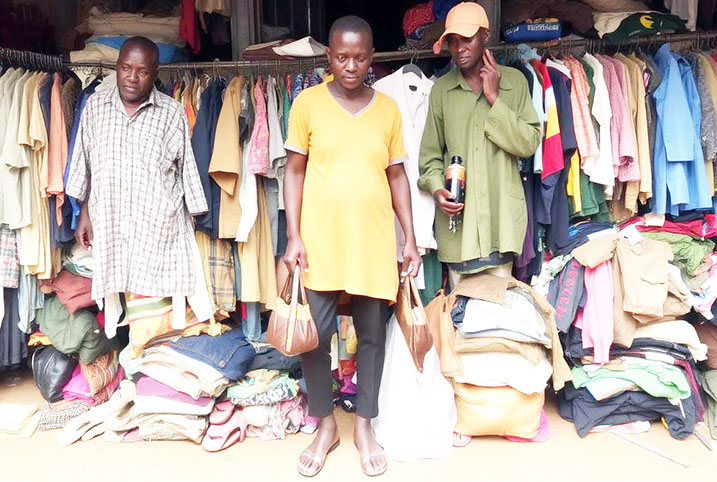
KAMPALA: Uganda’s market for second-hand clothing (SHC) continues to play a pivotal role in the country’s economy and consumer landscape. The sector, defined by high import volumes, significant tax contributions, and varied household expenditure patterns, presents unique opportunities and challenges. With the East African Community’s (EAC) proposed ban on SHC imports looming, understanding Uganda’s SHC market dynamics is critical for shaping policies that balance economic growth with consumer needs.
Trends in SHC Imports
Uganda has seen a sustained increase in SHC imports over the past decade, with the import value of worn clothing surpassing new clothing imports as early as 2010. By 2023, SHC imports totaled $95.9 million, compared to $79.1 million for new clothes, reflecting strong consumer demand. According to an October 2024 policy note published by the Economic Policy Research Centre (EPRC), the East African Community’s (EAC) proposed ban on second-hand clothing (SHC) in 2016 temporarily led to a dip in imports. However, the market rebounded in subsequent years, with the exception of a pandemic-induced decline in 2020.
China has emerged as the leading exporter of SHC to Uganda, accounting for $58.7 million in exports in 2023, followed by the USA, Canada, and India. This shift reflects evolving global SHC trade networks, with China and South Asia serving as sorting and processing hubs for second-hand garments collected from developed nations.
Tax Contributions and Revenue Trends
SHC imports contribute significantly to Uganda’s tax base, with import duties, environmental levies, and other charges applied to shipments. As of October 2020, SHC incurred an import duty of 35% or $0.40 per kilogram, along with a 10% environmental levy. While revenue from SHC taxes rose from $47 million in FY2014/15 to $87 million in FY2022/23, its share of total tax revenue decreased from 1.56% to 1.27% over the same period.
This declining proportion underscores the need for diversification and sustainable growth strategies in the sector. The contribution of SHC tax revenue to Uganda’s GDP, however, has remained stable, fluctuating between 0.16% and 0.20% since FY2014/15.
Household Expenditure on SHC vs. New Clothing
Consumer spending patterns reveal the enduring popularity of SHC. Between FY2018/19 and FY2019/20, total household expenditure on SHC decreased from UGX 331 billion to UGX 281 billion, largely due to COVID-19-related economic disruptions. During the same period, expenditure on new clothes fell from UGX 704 billion to UGX 689 billion.
The data also highlights disparities in spending based on poverty status. Poor households tend to allocate more of their limited budgets to SHC, while non-poor households spend more on both SHC and new clothing. Urban households, with greater access to SHC markets, spend more on these goods compared to rural households, where average expenditures have remained relatively stable.
Re-Export Dynamics and Informal Trade
Not all SHC imported into Uganda is consumed domestically. In 2023, formal re-exports of SHC totaled $1.4 million, with the Democratic Republic of Congo (DRC), Kenya, and South Sudan serving as key markets. Informal cross-border trade (ICBT) further amplifies this value, with Uganda acting as a net exporter of SHC to its neighbors.
The informal nature of this trade suggests a broader, unrecorded economic impact. For example, in 2019, Uganda’s ICBT exports of clothes (new and used) were valued at $54.1 million, while imports stood at just $4.9 million, confirming the country’s role as a regional hub for SHC redistribution.
Policy Implications of the Proposed SHC Ban
The East African Community’s proposed ban on second-hand clothing (SHC) aims to promote the development of domestic textile and leather industries. However, implementing such a policy presents several challenges. SHC remains a cost-effective option for Uganda’s low-income consumers, with no locally produced alternatives matching its affordability. Scaling up local textile production must prioritize price competitiveness to address the needs of this demographic effectively.
Additionally, the lack of concrete actions to transition away from SHC reliance underscores the necessity for robust incentives to attract private investment in the textile sector. Without these measures, the shift may face significant delays and resistance.
The ban also raises concerns about trade balance and revenue risks. Eliminating SHC imports could increase reliance on low-cost new clothing from Asia, altering trade dynamics and potentially diminishing the tax revenue generated from SHC imports, which has been a notable contributor to Uganda’s economy.
Recommendations for Stakeholders
To ensure a smooth transition while safeguarding economic and social interests, several measures should be considered. Incentivizing domestic textile production through tax breaks, subsidies, and infrastructural support can help local manufacturers produce affordable and accessible clothing for all income groups. Supporting informal traders by formalizing informal cross-border trade (ICBT) channels would improve revenue capture and enhance trade efficiency.
Consumer education is also crucial; promoting the benefits of supporting local industries while addressing preferences for affordable options can help build public support for the transition. Finally, strengthening policy implementation through a phased approach to the SHC ban, coupled with capacity-building initiatives for local manufacturers and clear enforcement timelines, will ensure the shift is both effective and sustainable.
Conclusion
Uganda’s SHC market reflects a complex interplay of economic, social, and trade factors. While the sector’s growth underscores its importance, transitioning to a sustainable and self-reliant textile industry requires deliberate planning and investment. With balanced policies and collaboration among stakeholders, Uganda can achieve its dual goals of economic growth and consumer satisfaction, positioning itself as a leader in the region’s evolving textile landscape.