
KAMPALA— Uganda’s Ministry of Finance has unveiled its first quarter financial roadmap for the 2025/26 fiscal year—one that signals confidence, caution, and a high-stakes commitment to what officials are calling a “Ten-Fold Growth Strategy.” But beneath the bullish GDP projections and rising foreign direct investment numbers lies a deeper question: can the country turn spreadsheets into sustainable transformation?
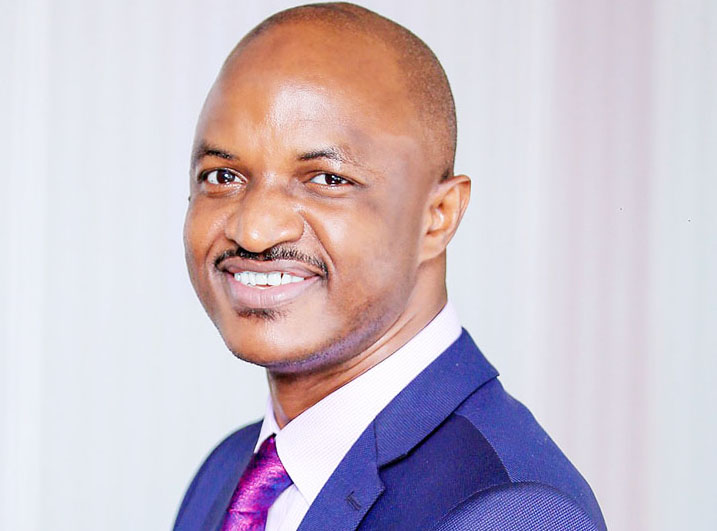
At a press briefing on Monday, Secretary to the Treasury Ramathan Ggoobi painted a picture of economic resilience, lifted by rising exports, strong remittances, a firming shilling, and a first quarter release of Shs 17.18 trillion (roughly $4.65 billion), or nearly 24 percent of the national budget.
A Growing—but Fragile—Economy
Uganda’s economy grew at an average of 6.9 percent over the last three quarters of FY2024/25, driven by government spending under the Parish Development Model, rising investment, and a modest rebound in household consumption. For this financial year, the government is projecting real GDP growth to hit 7 percent, with ambitions to scale into double digits over the medium term.
In nominal terms, Uganda’s economy is now worth Shs 226.34 trillion ($61.3 billion), up from UGX 203.71 trillion ($53.9 billion) in the previous fiscal year.
And the numbers are trending upward elsewhere, too. Remittances rose 31.4 percent year-on-year to $304.48 million in Q3 of FY2024/25. Foreign direct investment (FDI) saw a 26.3 percent jump over the same period, with Q3 FDI standing at $785.79 million—a testament, officials say, to the country’s growing appeal to international investors, particularly in energy, mining, and agriculture.
Export earnings reached $2.6 billion in Q3—up 39.1 percent from the previous year—driven by strong international prices for coffee and cocoa. For the 12 months leading up to March 2025, Uganda’s total exports hit $11.8 billion.
That export boom helped narrow the trade deficit by nearly 40 percent. Meanwhile, foreign reserves rose to $4.3 billion, enough to cover 3.8 months of imports, compared to $3.2 billion last June.
The Shilling Stays Strong
One of the more surprising data points is the Ugandan Shilling’s performance. It appreciated by 1.3 percent against the US dollar in June 2025 alone, making it one of Africa’s strongest currencies, thanks in part to improved export receipts, healthy remittance flows, and a disciplined monetary policy environment.
Inflation remained subdued at 3.9 percent in June, comfortably below the Bank of Uganda’s 5 percent target, suggesting stable prices in the face of global instability.
But questions remain about the durability of these trends. Analysts warn that much of the growth is still vulnerable to external shocks—geopolitical tensions, climate risks to agriculture, and continued uncertainty around regional trade agreements could quickly dampen momentum.
First Quarter Expenditure Priorities
The national budget for FY2025/26 stands at Shs 72.38 trillion ($19.6 billion). Of this, Shs 43.4 trillion is available for direct spending after debt repayments. The first quarter release accounts for 23.7 percent of the total budget.
The allocation prioritizes infrastructure, security, human capital development, and four key growth engines—agriculture, tourism, minerals, and science and technology, grouped under the government’s ATMS strategy.
Highlights of Q1 Spending:
- Wages and Salaries: Shs 2.26 trillion, ensuring government workers, including teachers and medical staff, are paid on time.
- Debt & Treasury Operations: Shs 6.93 trillion, covering interest payments and treasury obligations.
- Electoral Commission: Shs 468.7 billion, reflecting early preparation for the 2026 elections.
- Defense & Security: Shs 1.2 trillion spread across defense, police, intelligence, and prison services.
- Infrastructure: Shs 1.08 trillion to the Ministry of Works and UGX 420.76 billion to the Energy Ministry for electrification and transmission lines.
- Health Sector: Shs 262.9 billion for development, infrastructure, and vaccine programs; Shs 173.96 billion to National Medical Stores for essential drugs.
- Education: Shs 143.75 billion to the Ministry of Education and Shs 157.7 billion for public universities.
- Science & Innovation: Shs 139.1 billion, including Shs 33 billion earmarked for creatives and artists under the Ministry of Gender.
- Local Governments: Shs 382 billion to ensure service delivery at the grassroots.
Tight Controls, Big Promises
Ggoobi issued stern reminders to accounting officers across all ministries and local governments. Salaries must be paid by the 28th of every month. No government contract should be signed in foreign currency. And, crucially, no entity may commit public funds without sufficient budget allocations.
“Budget discipline is no longer a request—it’s a command,” he stressed.
The government also warned against unauthorized hiring, mandating that all recruitment must first be cleared by the Ministry of Public Service.
Observers say this kind of fiscal discipline is necessary but often elusive. Uganda’s past budgets have been marred by unpaid domestic arrears, bureaucratic inefficiencies, and procurement irregularities.
A Push for Transparency
As part of its transparency drive, the Finance Ministry urged the public and civil society to monitor spending through the online portal budget.finance.go.ug and report concerns via a dedicated budget hotline (0800 229 229).
Whether this increased scrutiny leads to more accountable spending remains to be seen.