
KAMPALA – For decades, Uganda’s national budget has been measured by familiar yardsticks: how much money government plans to spend, how many roads it intends to build and whether taxes will rise or fall. This year’s budget demands a different conversation. It asks whether the country has reached a point where strong macroeconomic indicators can finally translate into meaningful improvements in the lives of ordinary citizens.
The numbers, at first glance, are encouraging. Economic growth is estimated at 6.4 per cent this financial year and is projected to accelerate to 10.2 per cent in 2026/27, driven largely by the start of commercial oil production. Inflation remains low at 3.8 per cent, exports have more than doubled over the past five years, foreign direct investment remains robust, and the Uganda shilling has maintained unusual stability in a region often buffeted by currency volatility.
For policymakers, these figures reinforce a narrative that Uganda has entered a period of economic resilience. But beyond the spreadsheets lies a more complicated reality. Economic growth, no matter how impressive, means little if it fails to create jobs, raise incomes and improve living standards.
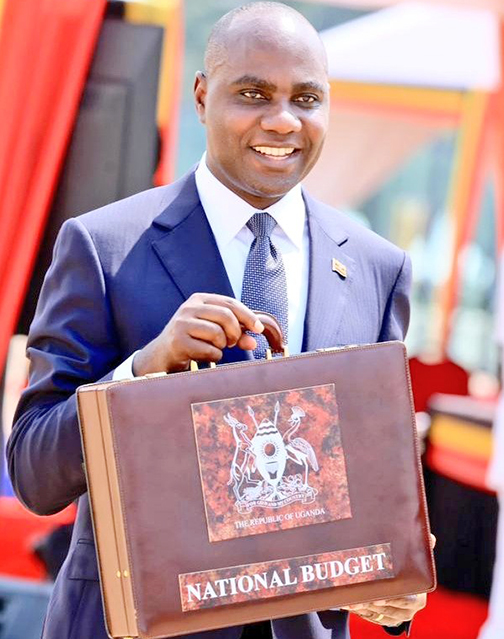
Finance Minister Henry Musasizi appeared conscious of that tension when presenting the 2026/27 budget at Kololo Independence Grounds.
“The challenge before us is no longer simply growing the economy,” he told Parliament. “The challenge is ensuring that growth translates into jobs, household incomes, enterprise development and prosperity for every Ugandan.”
That single sentence may be the most important line in the entire budget speech because it acknowledges what many Ugandans already know from experience: national prosperity and household prosperity are not always the same thing.
Uganda’s economy is projected to reach approximately USD 69.3 billion by the end of June, with per capita income rising to USD 1,420. Those figures suggest progress, yet averages often conceal inequality. A farmer struggling with unpredictable weather in Busoga or a graduate searching unsuccessfully for work in Kampala may find little comfort in GDP statistics if their own circumstances remain unchanged.
The government’s response is what it calls “full monetisation” of the economy. In practical terms, the objective is to move millions of households away from subsistence farming into activities that generate regular cash incomes. That explains the continued emphasis on the Parish Development Model, Emyooga, agricultural financing and enterprise funds.
More than Shs 4.4 trillion has already been transferred through the Parish Development Model to all 10,589 parishes, with government expecting over four million beneficiaries by the end of June. Another Shs 2.49 trillion has been allocated to wealth-creation programmes in the coming financial year.
For rural communities, these interventions could determine whether families remain trapped in subsistence or begin participating in commercial agriculture. For urban traders, initiatives such as the Katale Loan Facility promise access to cheaper credit than many have previously enjoyed.
But financing alone is not enough.
The budget reflects a growing recognition that capital without markets, infrastructure or productivity improvements cannot deliver sustainable transformation. Consequently, agriculture receives its highest allocation ever at Shs 2.26 trillion, with spending directed not only towards farming but also irrigation, research, disease control, mechanisation and value addition.
The underlying strategy is clear: Uganda wants to export fewer raw commodities and more finished products.
Coffee illustrates the point. Rather than relying solely on exporting beans, government hopes investments in processing facilities such as the Africa Coffee Park in Ntungamo will enable the country to capture more value from global markets. Similar thinking underpins investments in banana processing, pharmaceuticals and mineral beneficiation.
Science and technology occupy an equally prominent place in the budget. The allocation of Shs 1.14 trillion to innovation, ICT and creative industries reflects an understanding that future competitiveness will depend as much on knowledge as natural resources. Uganda is investing in electric vehicles, biotechnology, digital infrastructure and business process outsourcing while expanding fibre optic networks and reducing internet costs.
These developments are not abstract policy choices. They influence whether a young software developer in Gulu can compete for overseas contracts, whether a manufacturer in Jinja can reach customers more efficiently or whether a farmer in Kabale can access market information through a smartphone.
Digital transformation has already altered parts of the economy. Mobile money transactions reached Shs 392.7 trillion in the year ending March 2026, supported by 36.7 million active accounts and more than 1.22 million agents. Internet subscriptions and smartphone adoption continue to rise, creating opportunities that scarcely existed a decade ago.
Yet perhaps the most significant theme running through the budget is not technology or agriculture but self-reliance.
Musasizi described domestic revenue mobilisation as “a sovereignty objective,” arguing that countries financing development through their own resources enjoy greater independence and resilience. Domestic revenue is expected to rise from Shs 35.7 trillion to Shs 45.6 trillion next year, funding a growing share of government programmes without excessive dependence on external financing.
The philosophy is economically compelling. Nations that rely heavily on donors often find policy choices constrained by external priorities. A broader domestic tax base provides governments with greater flexibility to invest according to national needs.
But self-reliance carries obligations.
Raising more domestic revenue requires expanding economic activity rather than merely increasing tax burdens. Businesses must grow. Employment must expand. Household incomes must rise sufficiently for taxation to become sustainable rather than punitive.
Public debt presents another area where nuance matters.
Uganda’s total public debt stands at approximately USD 34.86 billion, equivalent to about Shs 126.19 trillion, representing around 53 percent of GDP. Government insists the borrowing has financed productive infrastructure rather than recurrent consumption, pointing to investments in transport, electricity, water systems and industrial development.
The distinction is important. Borrowing to finance salaries creates future obligations without generating assets. Borrowing to build roads, power plants or digital networks can increase future productivity if those investments are well managed.
Whether Ugandans ultimately view the debt as justified will depend less on ratios than on outcomes. If transport becomes cheaper, electricity more reliable and businesses more competitive, the investments will speak for themselves.
Infrastructure remains central to that vision.
The budget allocates Shs 8.79 trillion for transport development, including roads, bridges, ferries, airports and the Standard Gauge Railway. The railway alone is projected to reduce container transport costs between Mombasa and Kampala from about USD 3,500 to roughly USD 1,600 while cutting transit times from five days to one.
For exporters, those savings could improve competitiveness. For consumers, they may eventually translate into lower prices as logistics become more efficient.
Energy investment follows a similar logic. Government aims to expand electricity generation, transmission and rural connections while preparing for future nuclear development. Reliable power is often invisible when available but crippling when absent, affecting factories, hospitals, schools and households alike.
The social sectors have not been ignored.
Education receives Shs 6.66 trillion, with additional funding for teacher salaries and STEM education. Health is allocated Shs 5.23 trillion, supporting specialised care, medicines and infrastructure while reducing dependence on donor financing for essential supplies. Water and sanitation investments continue expanding access across rural and urban communities.
These allocations reflect an understanding that economic transformation requires healthy, educated and productive citizens as much as roads or factories.
Even tourism, often treated as a secondary industry, is positioned as a strategic export sector. With receipts exceeding pre-pandemic levels and investments continuing in destination marketing and infrastructure, government sees tourism as both a foreign exchange earner and a source of employment across multiple sectors.
Still, optimism should not obscure risk.
Much of the projected acceleration depends on successful oil production, continued export growth and sustained investor confidence. Global commodity prices, geopolitical tensions and climate shocks remain variables beyond Uganda’s control. Meanwhile, creating enough productive employment for one of the world’s youngest populations remains an immense challenge.
The budget itself acknowledges this by repeatedly returning to jobs as the ultimate measure of success.
Formal employment has expanded substantially over the past decade, but more than 10 million Ugandans still work in the informal economy, often with limited security or predictable income. Structural transformation takes time, and the transition from subsistence to commercial activity rarely follows a straight path.
Perhaps the most revealing feature of the budget is that it no longer frames growth as the destination. Growth is presented as the means to something larger: prosperity that reaches households rather than remaining confined to national accounts.
That distinction matters.
For a coffee farmer, success will mean earning enough to educate children and invest in the next harvest. For a young graduate, it will mean finding meaningful work instead of waiting years for an opportunity. For a market vendor, it will mean affordable credit and customers with money to spend. For businesses, it will mean infrastructure that lowers costs and expands markets.
Uganda’s 2026/27 budget lays out an ambitious roadmap built on industrialisation, digital transformation, domestic resource mobilisation and strategic investment. The macroeconomic fundamentals suggest the country is entering a period of considerable opportunity.
But budgets are ultimately judged not by speeches or projections but by lived experience.
If stronger growth creates better jobs, higher incomes and broader opportunity, this budget could mark the beginning of a genuine economic turning point. If those gains fail to reach ordinary citizens, the impressive figures will remain exactly what they are today: numbers that look good on paper but feel distant from everyday life.
By the Numbers: Uganda’s 2026/27 Budget at a Glance
10.2% – Projected economic growth next financial year, driven by the start of commercial oil production.
Shs 250.4 trillion (USD 69.3bn) – Estimated size of Uganda’s economy by June 2026.
USD 1,420 – Expected average income per person, up from the lower-middle-income threshold.
3.8% – Inflation rate, helping keep prices relatively stable.
USD 18.04bn – Export earnings in the year to March 2026, more than triple 2022 levels.
USD 2.46bn – Coffee export earnings, reaffirming coffee as Uganda’s top cash crop.
USD 3.2bn – Foreign direct investment attracted in the past year.
Shs 45.6 trillion – Domestic revenue target for 2026/27, up from Shs 35.7 trillion.
USD 34.86bn – Uganda’s public debt, equivalent to 53% of GDP.
Shs 4.4 trillion – Funds injected into the Parish Development Model across 10,589 parishes.
Shs 2.26 trillion – Record allocation to agriculture to boost commercial farming and value addition.
Shs 8.79 trillion – Spending on roads, rail, airports and other transport infrastructure.
USD 1,600 – Expected cost of moving a container from Mombasa to Kampala by SGR, down from USD 3,500.
Shs 6.66 trillion – Budget for education, including UPE, USE and teacher salaries.
Shs 5.23 trillion – Allocation to the health sector.
20 million – Smartphones connected to Ugandan networks.
Shs 392.7 trillion – Value of mobile money transactions in one year.
2.32 million – Workers employed in the formal private sector, compared to over 10.5 million in informal jobs.
The takeaway: The budget’s success will not be judged by these figures alone, but by whether they translate into more jobs, higher incomes and better living standards for Ugandans.