
KAMPALA — In parts of Uganda, climate change doesn’t arrive as a headline; it arrives as floodwater, sweeping through homes, roads, and livelihoods with little warning. And when it recedes, what’s left behind is not just damage, but a question that keeps resurfacing: are local governments prepared for what’s coming next?
That question took centre stage in Kampala last week, as policymakers and development experts warned that Uganda’s response to climate change remains too fragmented, underfunded, and disconnected from the realities on the ground.
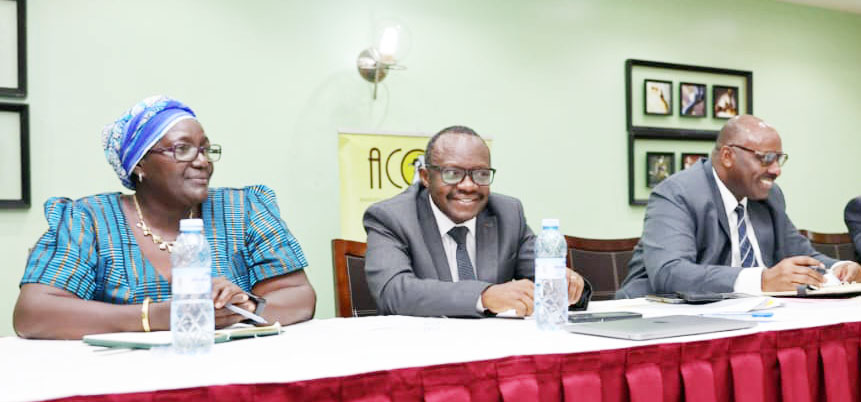
At a quarterly meeting convened by the Ministry of Local Government, officials and development experts gathered to confront a question that is becoming harder to ignore: how prepared are Uganda’s local governments to deal with a changing climate?
For Arthur Bainomugisha, Executive Director of the Advocates Coalition for Development and Environment (ACODE), the answer lies not in new rhetoric, but in how local governments plan and spend.
“Climate-responsive planning should take climate change at the centre stage, budgeting and coordination,” he told the meeting, arguing that climate action must move from the margins of policy into the core of local government systems.
Uganda, he acknowledged, has made visible progress. Investments in climate-resilient infrastructure, the rollout of the Local Climate Adaptive Living Facility, and the construction of more than 1,300 hectares of climate-resilient community access roads all point to a country trying to adapt.
But those efforts, Bainomugisha warned, remain uneven, and in many cases, disconnected from how districts actually plan and allocate resources.
He pointed to the real-world consequences. “In West Nile, a division was destroyed by flooding, and that’s climate change,” he said. “Now we have to deal with the emergency.” The problem, he added, is that the very officers tasked with managing environmental risks are often underfunded and under-supported. “We need to protect that well, if we are going to survive.”
His argument is as much about systems as it is about funding. Climate change, he said, is already disrupting agriculture and local economies, while contributing to broader social pressures, including gender-based violence. Yet budgeting for these impacts remains inconsistent.
“The gap between expenditure and implementation needs to be closed,” Bainomugisha said, placing responsibility squarely on accounting officers to make climate commitments real.
The message resonated with government officials in the room, who framed the issue in equally practical terms.
Ben Kumumanya, Permanent Secretary at the Ministry of Local Government, urged district leaders to think more critically about their role in the national economy. Understanding how each district contributes to Uganda’s GDP, he said, is essential, not just for planning, but for unlocking growth.
He also pointed to more immediate gaps. “Positions should be filled within three months,” Kumumanya said, noting that staffing shortages continue to undermine service delivery across districts.
For those working in agriculture, the sector most exposed to climate shocks, the conversation felt even more urgent.
Consolata Acayo, Assistant Commissioner for Communications at the Ministry of Agriculture, outlined a series of practical interventions, from irrigation and mechanisation to stronger pest and disease control. But her message, too, returned to the role of local government.
“I know that in the recent past, the District Local Government has been working closely with farmers, giving them support on irrigation equipment,” she said, pointing to efforts already underway.
Still, she cautioned that gaps remain, particularly in supervision and the quality of inputs like seeds, issues that continue to hold back productivity.
There were also calls to connect farmers more directly to financing. Dorothy Muinda from the Bank of Uganda highlighted the Agricultural Credit Facility as a key tool for transforming agriculture, describing it as a way to support projects across the value chain, from production to processing and trade.
But access, she noted, depends heavily on local leadership. “Local government leaders can boost Agricultural Credit Facility uptake by disseminating accurate information through community meetings,” she said, emphasizing the influence district officials hold at the grassroots level.
Taken together, the discussions painted a picture of a system at a crossroads.
Uganda has the frameworks, the programmes, and, increasingly, the awareness. What it still needs is alignment between policy and practice, between funding and implementation, and between national ambition and local execution.
For Bainomugisha, that alignment begins with a simple shift in perspective.
Climate change, he suggested, is no longer a side issue. It is the context within which local governments must now operate, and budget.