
History has always been captivated by visible power. We celebrate those who built nations, commanded armies, transformed economies, and occupied positions of influence. Entire civilizations have devoted themselves to documenting the individuals who wore the crown, sat on the throne, signed the laws, and shaped institutions. Yet in our fascination with public authority, we have often overlooked a more profound question: who shapes the human beings who wield that power?
Behind every leader, decision-maker, entrepreneur, or statesman exists a private world rarely examined by history. Who restores courage when confidence falters? Who offers reassurance when responsibility becomes overwhelming? Who influences the thoughts that ultimately become public decisions? These questions do not diminish authority; they deepen our understanding of it.
French philosopher Michel Foucault challenged the notion that power exists only within governments, institutions, and formal structures. He argued that power also moves through relationships, expectations, language, and everyday interactions. It does not merely command; it shapes. It influences what we fear, what we desire, what we believe, and ultimately who we become. The most consequential forms of power, therefore, are often the least visible, arriving quietly through trust, admiration, intimacy, validation, and emotional access.
This reflection becomes particularly significant during Men’s Mental Health Awareness Month, when society is increasingly confronted by a difficult paradox. Men are often celebrated for resilience, achievement, and their capacity to carry responsibility, yet many remain discouraged from expressing vulnerability, grief, fear, or emotional exhaustion. As bell hooks observed, traditional expectations of masculinity frequently require emotional restraint, creating individuals who may appear powerful externally while navigating profound internal struggles.
This reality invites a deeper question. If a man can lead institutions, influence societies, and command significant authority, yet still long for understanding, affection, affirmation, and emotional peace, where does power truly reside? The answer is neither that men are weak nor that women secretly control them. Rather, it reveals a universal truth about the human condition: every person possesses vulnerabilities, and whoever is granted access to those vulnerabilities is entrusted with a remarkable form of influence.
Perhaps this is the most overlooked economy in human society; the economy of emotional access. We carefully study wealth, political authority, and information because they are measurable, yet we rarely examine the invisible exchanges of reassurance, acceptance, encouragement, and emotional security that shape the decisions of those who may hold extraordinary public power.
The conversation inevitably extends to gender and the expectations societies construct around it. Thinkers such as Simone de Beauvoir and Judith Butler challenged us to question how much of what we regard as natural roles is genuinely chosen and how much is inherited through culture and tradition. Such inquiry is not an attack on tradition itself; rather, it is an invitation to intellectual honesty about how authority, identity, and expectation are formed.
Yet regardless of gender, the central lesson remains unchanged: power without ethics is merely control wearing a more sophisticated disguise. The ability to understand another person’s fears, hopes, and emotional needs can become a source of healing or a mechanism of manipulation. The difference lies not in the influence itself, but in the character of the person exercising it.
Perhaps humanity’s greatest mistake has been assuming that power belongs only to those who can be seen. We have studied the crown, analyzed the throne, and documented the empire, yet rarely have we examined the private kingdoms that shape the individual wearing the crown. The quiet conversations after public victories, the encouragement offered during moments of doubt, and the unseen acts of emotional stewardship have influenced leaders, families, communities, and civilizations far more than history often acknowledges.
The question, therefore, is not whether men possess greater power than women, or women have greater power than men. Such debates are ultimately too narrow for the complexity of human experience. The more enduring question is what we choose to do with the influence another person’s vulnerability places in our hands.
The highest form of power has never been the ability to make another human being smaller. It has always been the capacity to hold influence while preserving dignity, freedom, and humanity. For in the end, the greatest kingdoms we will ever govern are not built with wealth, titles, or armies. They are the private kingdoms within the hearts of those who trust us enough to let us enter.
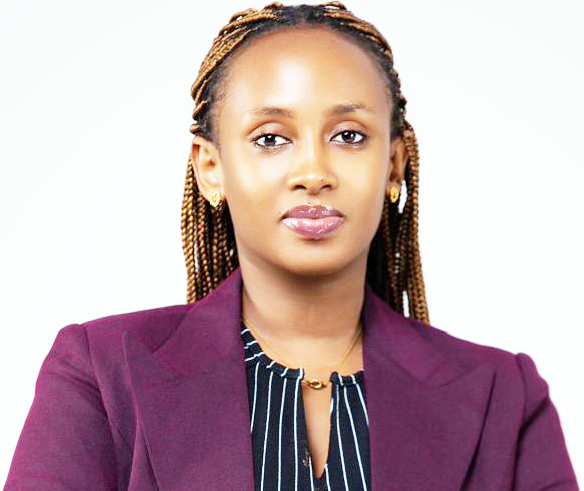
Author works with Kalikumutima & Co. Advocates