
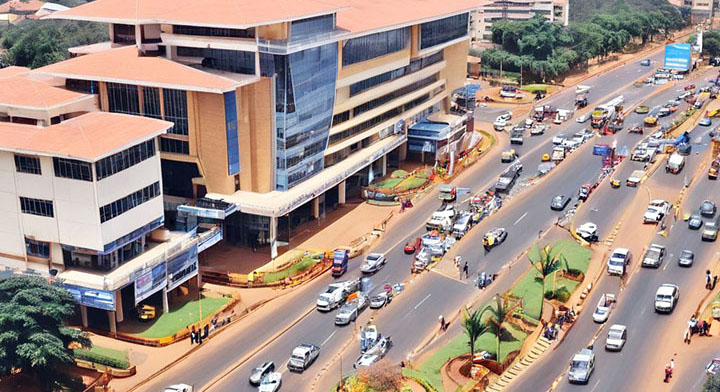
Kampala, Uganda—March 27, 2025 – By 2025, Africa’s roads remain the deadliest in the world—not because the continent is the most motorized, but because they are the least protected. According to the Africa Status Report on Road Safety 2025, the continent accounts for 24% of global road traffic fatalities, despite owning just 4% of the world’s vehicles. In 2021 alone, an estimated 259,601 lives were lost to road crashes across Africa, with an average fatality rate of 19.6 per 100,000 population. That’s nearly double the global average.
The numbers reveal more than a crisis; they paint a portrait of systemic neglect, institutional weakness, and infrastructural failure—one where the most vulnerable road users pay the highest price. Pedestrians (31%), motorcyclists (17.5%), and cyclists (4.4%) make up over half of all road traffic deaths. The burden falls disproportionately on males and on adults aged 18–59, often the most economically productive segment of the population.
The Invisible Epidemic: Data Gaps and Underreporting
At the heart of Africa’s road safety crisis lies an absence of truth—at least statistically. The report identifies vast discrepancies between officially reported and estimated road traffic deaths. In some cases, WHO estimates are three times higher than national figures. The reasons are stark: fragmented data systems, reliance on single-source reporting (often police data), and inconsistencies in definitions of what constitutes a fatality or serious injury.
This underreporting masks the true scale of the problem and undermines policy response. While countries such as Morocco, Tanzania, and Zambia are making strides in strengthening their data collection and harmonization, the continent still lacks a standardized, continent-wide road traffic injury surveillance system. The establishment of the African Road Safety Observatory (ARSO) is a step in the right direction, but its impact remains uneven across regions.
Where the Wheels Fall Off: Policy and Leadership Gaps
Although 49 African countries have designated road safety agencies, only 29 receive direct budget support. This leaves many unable to carry out meaningful interventions. Even more concerning, just 24 countries have fatality reduction targets aligned with the UN Decade of Action for Road Safety (2021–2030), a framework that aims to halve global road deaths by 2030.
This leadership void translates into poor enforcement, minimal accountability, and weak political will. In many cases, road safety is still seen as a technical or transport issue, rather than a public health and human rights imperative.
Built for Speed, Not for Safety: Infrastructure Failures
Africa’s roads are not built for its people—at least not the most vulnerable ones. The report finds that only nine countries conduct formal road safety audits, and most infrastructure projects ignore non-motorized road users entirely. Pedestrians and cyclists are forced to share space with high-speed vehicles, while motorcyclists are often left to navigate potholed roads without dedicated lanes or protective barriers.
The human cost of this is immense. In urban areas, poor design has made road use a game of survival. In rural areas, where enforcement and signage are minimal, risk is even higher.
Legislation Without Teeth: Vehicle Safety and Risk Behavior
Vehicle regulation is another blind spot. Fewer than a third of African countries require modern safety features in vehicles—such as electronic stability control, airbags, or anti-lock braking systems. No country has fully met WHO’s recommended legislation for motorcycles and three-wheelers, even though these account for a significant proportion of road users.
Enforcement of laws on speeding, drunk driving, helmet use, and seatbelt compliance is also critically weak. Many laws exist on paper but are rarely enforced. The result is a culture of impunity, where reckless driving is normalized.
After the Crash: A Broken System of Care
Even when accidents occur, the system fails to catch those who fall. While many countries have some form of emergency care, fewer than a third have national trauma registries, and access to post-crash services is patchy at best. This means even survivable crashes often result in death or long-term disability due to lack of timely care.
Without real-time data on injuries, policymakers remain blind to where emergency resources are most needed.
Signs of Hope: Case Studies in Progress
Amid the sobering statistics, the Africa Status Report on Road Safety 2025 highlights glimmers of progress from countries showing what determined leadership and coordinated action can achieve. In Morocco, the introduction of the Collision Matrix has transformed how authorities respond to road safety threats. This data-driven crash analysis tool allows officials to pinpoint high-risk sites and implement targeted interventions to save lives.
Kenya has developed a forward-thinking National Road Safety Action Plan covering the period from 2024 to 2028. The plan combines sustainable funding with a multi-agency approach, creating a blueprint that could inspire and guide similar efforts across the continent. In Zambia, reforms have focused on harmonizing crash data systems, embedding road safety into urban planning frameworks, and improving the reach and quality of emergency medical services.
These examples demonstrate that meaningful progress is possible when there is political will, strong cross-sector coordination, and community engagement. They serve as proof that road safety need not remain a distant goal but can be a present reality for African nations willing to act.
A Road Ahead: What Must Change
To meet the United Nations target of halving road traffic deaths by 2030, Africa must undergo a fundamental shift in how it approaches road safety. This starts with investing in robust data systems capable of accurately tracking both fatalities and injuries. Comprehensive national road safety agencies must be established and properly funded, with mandates that extend across the health, transport, and enforcement sectors.
Infrastructure design also needs a complete overhaul. Roads must prioritize the needs of the most vulnerable users—pedestrians, cyclists, and motorcyclists—who account for the majority of fatalities. Regulatory frameworks governing vehicle safety need to be strengthened and aligned with global standards set by the World Health Organization.
Equally important is the development of universal access to quality post-crash care. This includes the creation and maintenance of trauma registries, adequate ambulance services, and rehabilitation centres that can support recovery after serious accidents.
Above all, road safety must be elevated to a political and developmental priority. It can no longer be seen as the sole responsibility of transport ministries. Instead, heads of state, national parliaments, and regional institutions such as the African Union must take ownership of the crisis and act accordingly.
Until that happens, the roads that connect communities and drive economies will continue to serve as corridors of tragedy, where lives are lost and potential is cut short far too soon.