

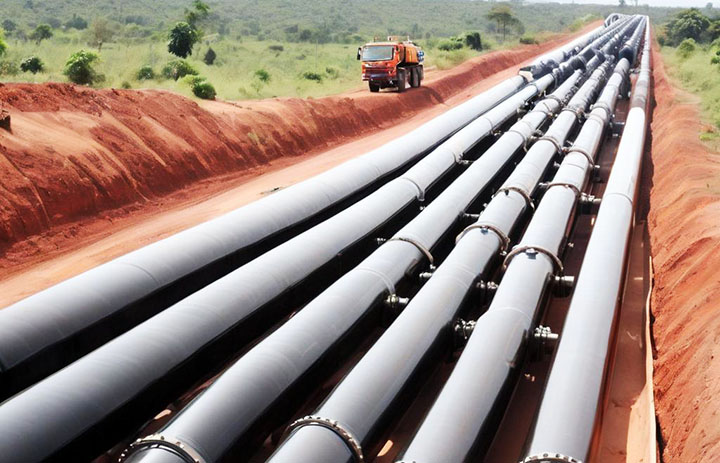
KAMPALA: The East African Crude Oil Pipeline (EACOP) Project is making significant strides, with 500 km of the pipeline already delivered in Tanzania. According to Matia Kasaija, Uganda’s Minister for Finance, Planning and Economic Development, the target is to lay 100 km per month. In his budget speech for the Financial Year 2024/2025, Kasaija outlined the roadmap toward the first oil in FY 2025/26, highlighting both achievements and future plans.
“Uganda is progressing steadily towards the first oil in FY 2025/26,” Kasaija stated. He highlighted several milestones, including advancements in the Upstream Petroleum Project with ongoing drilling works in preparation for production. The EACOP Project, a critical component of Uganda’s oil infrastructure, is progressing with 500 km of pipeline delivered in Tanzania, targeting an ambitious 100 km per month.
Additionally, the thermal insulation plant for heating the EACOP in Tabora, Tanzania, was commissioned in March 2024. This plant is crucial for maintaining the flow of oil through the pipeline, ensuring efficiency and reliability. The Ministry of Energy and Mineral Development has also issued two new exploration licenses to the Uganda National Oil Company and DGR, an Australian-based company, indicating a continued expansion in exploration efforts.
The planned 60,000 barrels per day Refinery in Kabaale, Kikuube District, is another significant project making headway. The government has acquired land for the project sites and associated terminal, and technical designs are ready. Uganda is collaborating with Alpha MBM Investments from the United Arab Emirates to build the refinery, which is expected to enhance the country’s oil processing capacity.
One notable positive is the enforcement of the National Content Policy, which has ensured that 93 percent of jobs in the oil and gas sector go to Ugandans, totaling 13,607 jobs so far. This policy not only boosts local employment but also builds local expertise in the oil and gas industry. Additionally, since 2021, contracts worth USD 1.796 billion have been awarded to Ugandan companies out of the total contract investment of USD 7.162 billion, showcasing the significant involvement of local businesses in the sector.
However, the EACOP Project and related initiatives also face several challenges. The target to lay 100 km of pipeline per month is ambitious and requires meticulous coordination and resource management. Any delays or logistical issues could impact the overall timeline. Furthermore, the environmental impact of such large-scale infrastructure projects is a concern. Ensuring adherence to high-quality environmental standards is critical, and any lapses could have long-term ecological consequences.
In a bid to ensure the security of petroleum product supply, the Uganda National Oil Company (UNOC), in partnership with the private sector, will commence the importation of all petroleum products starting in the first week of July 2024. This move aims to stabilize supply and potentially reduce costs associated with petroleum products in the country.
This announcement means the end of a months-long dispute between Kenya and Uganda and promises to enhance the efficiency and reliability of Uganda’s petroleum sector.
The agreement signed in May came after a period of tension between the two nations, sparked by Kenya’s denial of a license to Uganda’s government-owned oil marketer, UNOC, to operate locally and handle fuel imports to Kampala. Kenya had also restricted the use of the Kenya Pipeline Company (KPC) infrastructure for transporting Uganda’s refined petroleum products from Mombasa port, leading Uganda to file a lawsuit at the East African Court of Justice on December 28.
For the next financial year, Kasaija has allocated Shs 920.86 billion to the oil and gas sector to prioritize several key areas. These include the development of the EACOP hub in Tanga, continued construction of the EACOP with necessary infrastructure to meet environmental standards, procurement and dissemination of 57,000 Liquefied Petroleum Gas (LPG) cylinders to promote clean cooking, the establishment of the Petroleum Geoscience Laboratory, and equity contribution for the Refinery Project.
In conclusion, while Uganda’s oil and gas sector shows promising growth with substantial investments and milestones achieved, it also faces challenges that need careful management. Ensuring environmental sustainability, meeting ambitious project timelines, and maximizing local benefits are critical for the sector’s success.
