

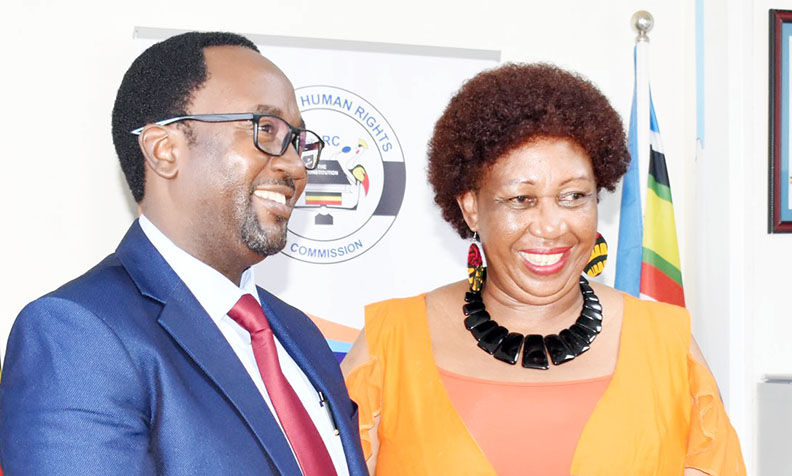
KAMPALA – The Uganda Human Rights Commission (UHRC), established to safeguard and promote human rights in Uganda, faces significant challenges in fulfilling its mandate, as highlighted in the Auditor General’s report for the year ending June 30, 2023. With a growing backlog of cases, severe budget shortfalls, and the withdrawal of key development partner funding, the Commission is grappling with a crisis that threatens its ability to deliver justice to victims of human rights abuses. This article delves into the core issues impeding the UHRC’s operations and the recommendations proposed by the Public Accounts Committee to address these concerns.
The Backlog of Pending Cases: A Growing Concern
One of the most glaring issues raised in the Auditor General’s report is the overwhelming backlog of cases pending before the UHRC Tribunal. As of June 30, 2023, the Commission had a total caseload of 1,521 pending cases. This backlog represents an alarming trend, where more cases are being added each year than are being resolved. Of the 1,521 cases, 83% (or 1,258 cases) had not yet been heard for the first time, while only 263 cases were partly heard, with witnesses still gathering evidence.
The sheer volume of cases pending before the Tribunal underscores the strain on the UHRC’s ability to function effectively. In the 2022/2023 financial year, only 66 cases were closed, while 895 new files were added for hearings. This performance, which saw only 17.3 percent of cases partly addressed, highlights the Commission’s limited capacity to conclude cases in a timely manner. As the backlog grows, so too does the risk of justice being delayed and ultimately denied to victims of human rights violations.
Regional Disparities in Case Handling
The regional breakdown of the pending cases further reveals disparities in the Commission’s operations. The Central, Hoima, and Soroti offices had the highest number of unresolved cases, while the newly established offices in Lira and Kabale reported no figures, as they only became operational in January 2022. The concentration of pending cases in certain regions raises concerns about the equitable distribution of resources and the Commission’s ability to manage caseloads across the country effectively.
The absence of reported cases from the Lira and Kabale offices is partly attributed to their recent establishment and the fact that Lira’s performance was previously accounted for under the Gulu Regional Office. However, the lack of progress in key regions like Central and Hoima, which are major hubs of human rights concerns, points to systemic inefficiencies that need urgent redress.
The Funding Crisis: A Stumbling Block to Justice
Central to UHRC’s operational challenges is the acute funding crisis that has plagued the institution. The Auditor General’s report reveals that the Commission is grappling with budgetary constraints, with an operational shortfall that has severely hampered its ability to carry out core functions such as tribunal hearings, investigations, and inspections of detention facilities.
In the 2022/2023 financial year, the Commission required UGX 60.88 billion to fully implement its strategic plan, which is aligned with the National Development Plan III. However, only Shs 19.7 billion was appropriated, leaving a funding gap of UGX 41.18 billion. Out of the total budget, Shs 5.25 billion was allocated to fixed costs, including salaries, gratuities, and rent for the Commission’s offices. This left little room for the Commission to address its core mandate of investigating and resolving human rights complaints.
Adding to the funding woes is the withdrawal of key development partners who had been instrumental in supporting the UHRC’s operations. According to the report, donor funds that were previously used to finance tribunal hearings and other essential activities have dwindled, leaving the Commission dependent on government funding, which remains inadequate. Without the necessary financial backing, the UHRC’s ability to process cases and offer justice is significantly compromised.
Government’s Role and the Impact of Sporadic Funding
The funding shortfall is exacerbated by the government’s sporadic support for tribunal sessions. According to the Auditor General, tribunal hearings are funded by the Justice Law and Order Sector (JLOS) rather than the Government of Uganda directly. This dependency on an external funding stream has led to delays in hearing cases, as funds are often insufficient to support regular tribunal sittings.
The Committee’s report stresses the importance of government funding in ensuring that tribunal hearings, a core aspect of justice delivery, are not left to the whims of donor support. It recommends that the Ministry of Finance, Planning, and Economic Development (MOFPED) prioritize funding for tribunal hearings and ensure that resources are allocated promptly. Without consistent financial support, the backlog of cases will continue to grow, further undermining public trust in the UHRC’s ability to deliver justice.
Alternative Dispute Resolution (ADR): A Potential Solution
One of the key recommendations made by the Public Accounts Committee is the strengthening of the Alternative Dispute Resolution (ADR) mechanism as a means of reducing the caseload burden on the UHRC. ADR offers a quicker, less resource-intensive method of resolving disputes, particularly in cases where the parties involved are willing to negotiate and reach a settlement.
The Committee’s recommendation to enhance the ADR mechanism is a pragmatic step towards alleviating the pressure on the UHRC’s tribunal system. However, for ADR to be effective, the government must invest in building the capacity of the Commission to facilitate such resolutions. This includes training staff in mediation and arbitration techniques and ensuring that the legal framework supports ADR as a legitimate pathway to justice.
Conclusion: The Need for Comprehensive Reform
The challenges facing the Uganda Human Rights Commission are not insurmountable, but they require urgent and comprehensive reform. The growing backlog of cases, exacerbated by funding shortfalls and the withdrawal of donor support, is a critical issue that undermines the Commission’s ability to deliver justice. Without adequate resources and strategic interventions, such as the adoption of ADR and a more equitable distribution of cases across regional offices, the UHRC will continue to struggle in fulfilling its mandate.
The government’s role in providing consistent and sufficient funding cannot be overstated. The Public Accounts Committee’s recommendations offer a roadmap for addressing these challenges, but without the political will and financial commitment to implement these reforms, the UHRC’s financial struggles will persist, and justice for victims of human rights violations will remain out of reach. The time for action is now—before the backlog becomes an insurmountable barrier to justice in Uganda.
