
Close Menu
C-News
  • News
    • World
  • Politics
  • Business
    • Technology
    • Careers
  • Lifestyle
    • Entertainment
    • Travel
  • World News
  • Sports

Subscribe to Updates

Get the latest creative news from FooBar about art, design and business.

What's Hot

How a Water-Rich Uganda Can Feed East Africa

April 28, 2026

How Water, Not Oil, Will Decide Next Superpower

April 25, 2026

MTN Opens Kabale Innovation Hub in Youth Jobs Push

April 23, 2026
Facebook X (Twitter) Instagram
Trending
  • How a Water-Rich Uganda Can Feed East Africa
  • How Water, Not Oil, Will Decide Next Superpower
  • MTN Opens Kabale Innovation Hub in Youth Jobs Push
  • From $53Bn to $500Bn Economy: Here’s The Bold Plan Behind It
  • What South Asia’s Slowdown Means for Uganda
  • She Didn’t Win the Seat—But She’s Not Done Fighting
  • No More Scare Tactics! A Bold New Insurance Sales Pitch Has Arrived in Uganda
  • From Numbers to Impact: Why Uganda’s Future Is Being Decided by Data
X (Twitter)
C-News
  • News
    • World
  • Politics
  • Business
    • Technology
    • Careers
  • Lifestyle
    • Entertainment
    • Travel
  • World News
  • Sports
C-News
News

Can Uganda’s Farmers Afford Social Insurance? New Report Reveals Many Earn Too Little

Ugandan Farmers Struggle with Low, Unstable Incomes – Is Social Insurance the Solution?
Lucas MusisiBy Lucas MusisiSeptember 20, 2024No Comments3 Mins Read
Facebook Twitter Pinterest LinkedIn Tumblr Email
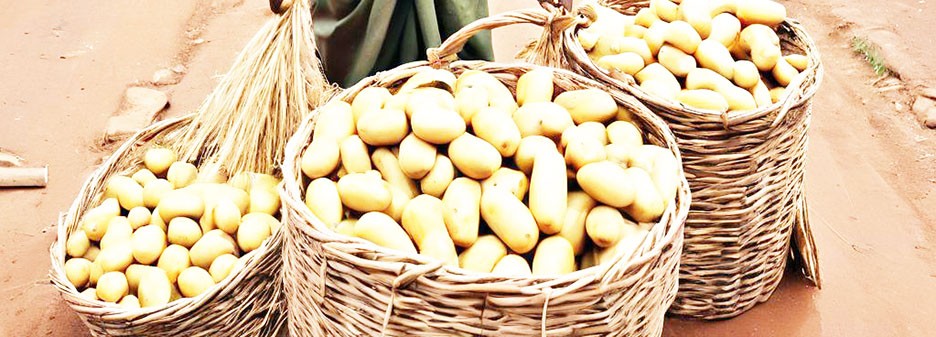
Imagine used for illustration purposes only.
Share
Facebook Twitter LinkedIn Pinterest Email

A recent policy brief, Are Farmers’ Incomes in Uganda Adequate to Contribute to Social Insurance Schemes?, authored by Brian Sserunjogi, Joab Wamani, Hilda Namuleme, and Swaibu Mbowa, reveals that while Uganda’s agricultural sector generated UGX 5.5 trillion in 2019/2020 from crops and livestock, the average household income of farmers remains too low and inconsistent to sustain regular social insurance contributions.

“Banana farmers retained the highest income, followed by coffee, maize, and sugarcane farmers,” the report published recently by the Economic Policy Research Centre (EPRC) states. However, the average annual household income stood at only UGX 782,914, a figure that fluctuates heavily depending on the season and the scale of agricultural operations.

Income Disparities Among Farmers

The brief highlights that larger-scale farmers operating on more than three acres of land or owning multiple livestock tend to retain higher and more stable incomes compared to smaller farmers with less land. Similarly, farmers between the ages of 31-64 years earn significantly more than younger farmers aged 18-30 or older farmers above 64 years. Male farmers also out-earned their female counterparts by more than double, reflecting gender disparities in cash crop production.

Implications for Social Insurance Design

Given the irregularity and seasonality of agricultural incomes, the authors argue that any social insurance scheme for farmers should be flexible. Contributions could be based on biannual income during peak harvest seasons rather than monthly. “This evidence has implications on the design of contributory social insurance schemes for farmers, given the differences in income size, timing, and composition,” the brief notes.

The report further suggests targeting high-income agricultural value chains, such as bananas, coffee, and sugarcane, for the initial rollout of social insurance. Farmers in these sectors often earn more and are organized into cooperatives, making it easier to implement contributory schemes.

Policy Lessons from Other Countries

The policy brief draws comparisons from countries like Brazil, Costa Rica, and the Philippines, where self-employed agricultural workers contribute to social insurance at flexible rates. In these countries, contributions are adjusted based on income, and workers can pay in advance during peak earning seasons.

The report suggests that Uganda could adopt a similar approach by offering subsidized contributions to farmers in the early stages, ensuring affordability and encouraging enrolment.

Conclusion

The study concludes that while Uganda’s agricultural sector generates substantial aggregate income, individual household earnings remain too low and inconsistent for traditional monthly social insurance schemes. A tailored approach that includes biannual contributions, sector-specific targeting, and government subsidies could help bridge the gap and make social insurance a viable option for Ugandan farmers.

By focusing on high-income value chains and offering flexible contribution options, Uganda can move toward expanding social insurance coverage to its agricultural sector, improving financial security for farmers while accounting for the sector’s inherent income variability.


@EPRC
Share. Facebook Twitter Pinterest LinkedIn Tumblr Email
Lucas Musisi
  • Website

Related Posts

How a Water-Rich Uganda Can Feed East Africa

April 28, 2026

How Water, Not Oil, Will Decide Next Superpower

April 25, 2026

MTN Opens Kabale Innovation Hub in Youth Jobs Push

April 23, 2026
Leave A Reply Cancel Reply

Top Posts

Opening Ceremony FIFA World Cup Qatar 2022

November 21, 2022

Musk lifts Donald Trump’s Twitter ban after a poll

November 23, 2022

Angry protests at giant iPhone factory in Zhengzhou

November 26, 2022

Protesters openly urge Xi to resign over China Covid curbs

November 27, 2022
Don't Miss
News

How a Water-Rich Uganda Can Feed East Africa

By ROBERT SPIN MUKASAApril 28, 20260

With lakes, rivers and regional markets, Uganda has the ingredients to become a grain stabiliser, horticulture exporter and climate-smart agriculture leader.

How Water, Not Oil, Will Decide Next Superpower

April 25, 2026

MTN Opens Kabale Innovation Hub in Youth Jobs Push

April 23, 2026

From $53Bn to $500Bn Economy: Here’s The Bold Plan Behind It

April 22, 2026

Subscribe to Updates

Get the latest news from c-news!

Demo
About Us
About Us

C-News is your source of the latest general news, business, health, travel and politics as it breaks in Uganda and East Africa.

Reports, Analysis, Pictorial and Videos.

Email Us: info@c-news.ug
Contact: +256 776745120

X (Twitter)
Our Picks

How a Water-Rich Uganda Can Feed East Africa

April 28, 2026

How Water, Not Oil, Will Decide Next Superpower

April 25, 2026

MTN Opens Kabale Innovation Hub in Youth Jobs Push

April 23, 2026
Most Popular

Opening Ceremony FIFA World Cup Qatar 2022

November 21, 2022

Musk lifts Donald Trump’s Twitter ban after a poll

November 23, 2022

Angry protests at giant iPhone factory in Zhengzhou

November 26, 2022
  • Home
  • Privacy Policy
© C-NEWS 2026

Type above and press Enter to search. Press Esc to cancel.