

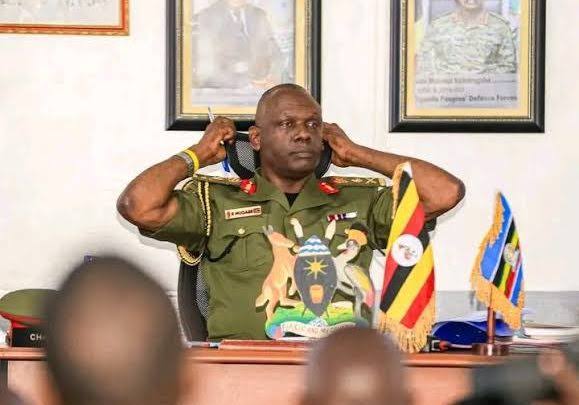
KAMPALA: The Supreme Court’s ruling, which categorically declared that military courts lack the constitutional authority to try civilians, has been met with widespread acclaim from legal practitioners, civil rights activists, and political commentators. The Uganda Law Society (ULS) responded immediately, issuing a statement calling for “immediate compliance” with the decision. In their response, the ULS demanded the release of all civilians currently facing military trials, the cessation of pending prosecutions in military courts, and the transfer of relevant cases to the civilian judiciary. They also urged Parliament to amend the Uganda People’s Defence Forces (UPDF) Act to align it with constitutional principles and called on the executive to ensure security agencies adhere to the ruling without delay.
Prominent legal figures took to X (formerly Twitter) to express their reactions. Lawyer Phillip Karugaba described the decision as “thunderous” and “stunning,” adding that the Supreme Court had “disarmed all courts-martial, bound them hand and foot, and consigned them to the dustbin!” Human rights attorney Caleb Alaka emphasized that the ruling signaled “freedom” and was “the best thing that has happened to Uganda today,” while Magelah Peter G lamented that the decision had come too late to spare many civilians the ordeal of facing military trials. Other commentators, such as Stephen Lawal, praised Justice Catherine Bamugemereire for her particularly blunt assessment of military court deficiencies.
The ruling has put to rest a long-standing and contentious debate over whether civilians can be subjected to military tribunals, a practice that had often been criticized as a tool of political repression. The Supreme Court’s decision effectively dismantles a legal framework that had, for years, allowed military courts to try civilians under the UPDF Act, a provision that civil society groups and legal experts had long challenged as unconstitutional.
The Supreme Court’s Ruling: A Defining Moment for Uganda’s Judiciary
The seven-member Supreme Court panel, in an almost unanimous decision, found that military courts lack the constitutional competence to try civilians. Chief Justice Alfonse Owiny-Dollo, in delivering his judgment, was particularly critical of the Court Martial’s composition and procedures. He noted that military court judges are not required to have formal legal training, equating their judicial role to “sending a person to perform surgery without medical qualifications.” Owiny-Dollo pointed out that despite this lack of legal expertise, military courts routinely preside over serious offenses, including treason, without affording accused persons the right to appeal to civilian courts.
In a striking critique, Owiny-Dollo emphasized the problematic nature of military court appointments, stating that judges of the Court Martial are selected by the President on short, renewable terms of just one year. This, he argued, denies them the security of tenure required to dispense justice impartially and makes them susceptible to undue influence from the executive. He further noted that the Court Martial lacks the facilities necessary to ensure fair trials, particularly in allowing adequate time and resources for defense preparation. Because the decisions of military courts cannot be appealed outside the military system, the Chief Justice ruled that such a structure is inherently unconstitutional.
Other justices, including Monica Mugenyi, Catherine Bamugemereire, Elizabeth Musoke, and Percy Night Tuhaise, concurred with the Chief Justice’s position. They highlighted the military courts’ lack of independence, inadequate security of tenure, and the fact that their judges are appointed at the discretion of the executive. They affirmed that the UPDF Act was never intended to have general applicability and that the Court Martial is not part of the judiciary as defined by the Ugandan Constitution.
The ruling follows years of legal battles over the issue, with the Supreme Court finally affirming what many legal experts had long argued—that military courts do not have the legal standing to try civilians and that laws permitting such trials violate Uganda’s constitutional framework.
Historical Context
The Supreme Court’s ruling builds on a previous legal challenge to military trials for civilians. The former Nakawa Division Member of Parliament Michael Kabaziguruka, who was arrested in 2016 and charged in the General Court Martial with crimes related to illegal possession of firearms and conspiracy against the security of the defense forces, challenged his prosecution in the Constitutional Court, arguing that as a civilian, he could not legally be subjected to military jurisdiction.
In a split decision issued in July 2021, the Constitutional Court ruled in favor of Kabaziguruka. Justices Kenneth Kakuru (RIP), Remmy Kasule, and Hellen Obura held that the Court Martial lacked the independence required of a judicial body and that it had assumed powers meant for civilian courts. Justice Kakuru, in his lead judgment, stated that the UPDF Act was enacted to regulate members of the military and not civilians. He asserted that Parliament had overstepped its authority by expanding military court jurisdiction beyond its constitutional mandate. The ruling, however, was appealed by the Attorney General, leading to the Supreme Court’s final determination.
Implications of the Ruling on Ongoing Cases and Uganda’s Legal System
The Supreme Court’s ruling carries immediate and far-reaching consequences. Civilians currently being tried in military courts, including opposition figures such as Dr. Kizza Besigye and members of the National Unity Platform, are now expected to have their cases transferred to civilian courts. The ruling also sets a critical legal precedent, ensuring that in the future, no civilian will be subjected to military prosecution.
The decision marks a significant victory for civil rights and the rule of law in Uganda. It reinforces the principle that only courts of judicature, as defined by the Constitution, have the mandate to dispense justice to civilians. By striking down sections of the UPDF Act that permitted military trials of civilians, the ruling reaffirms the separation of powers and prevents military overreach into civilian judicial matters.
However, the ruling also presents a challenge to the government and security forces, which have frequently relied on military courts to prosecute civilians, particularly in politically sensitive cases. Compliance with the ruling will require a complete overhaul of how security agencies handle civilian suspects, ensuring that they are tried exclusively in competent civilian courts.
Legal and Policy Recommendations
Following the ruling, legal experts and civil society organizations have called for swift action to ensure compliance. The Uganda Law Society has urged Parliament to amend the UPDF Act to remove all provisions allowing military courts to try civilians. Legal analysts argue that such amendments should not only eliminate ambiguities in the law but also establish safeguards to prevent any future attempts to reintroduce military jurisdiction over civilians.
There are also calls for the government to provide compensation to individuals who have been unlawfully tried and convicted in military courts. The executive branch has been urged by the Uganda Law Society (ULS) to issue clear directives to all security agencies to ensure immediate and full compliance with the ruling. ULS has also suggested the establishment of an inter-ministerial task force to oversee the implementation of the Supreme Court’s decision and prevent future violations.
The ruling is seen not just as a legal milestone but as an opportunity to catalyze broader reforms in Uganda’s judicial system. Analysts argue that the Supreme Court’s decision should mark the beginning of a comprehensive overhaul of military and civilian judicial boundaries, ensuring that constitutional protections are upheld without exception.
As the dust settles, the focus now shifts to implementation. Parliament, the executive, and security agencies must move swiftly to ensure compliance with the ruling, while the judiciary must remain vigilant in upholding the principles outlined by the Supreme Court. If fully implemented, this decision could mark the beginning of a stronger, more independent judiciary in Uganda, one that firmly upholds the rule of law and protects the rights of all citizens.
