

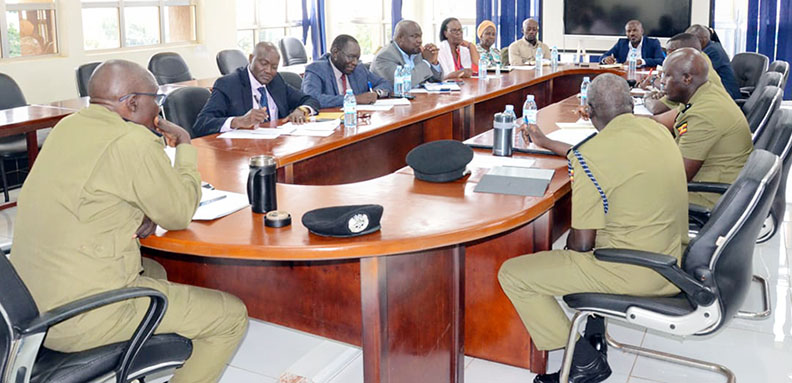
Kampala, Uganda— In a deeply engaging meeting held on April 8, the Uganda Police Force’s top brass, led by Inspector General of Police (IGP) Abbas Byakagaba, sat down with leaders from the Uganda Private Security Association (TUPSA), the umbrella body representing the country’s Private Security Organizations (PSOs). The high-level dialogue, hosted at Police Headquarters in Naguru, was not only cordial but also refreshingly candid—laying bare the core tensions and opportunities in Uganda’s security landscape.
Present at the meeting were Deputy IGP Afande Ochaya and Director of Operations AIGP Frank Mwesigwa, alongside the TUPSA executive committee chaired by Grace Matsiko. In what a participant described as a “frank and constructive conversation,” TUPSA tabled a host of challenges that have long weighed down the private security sector, outlining both systemic hurdles and missed opportunities for collaboration.
“We raised challenges and achievements of private security organizations under TUPSA as presented before the AGM of March 25, 2025,” shared one source who attended the meeting. Among the top concerns were burdensome taxation policies, unreliable access to weapons and ammunition, and the lack of consultation with PSOs on policy changes that directly impact their operations.
The list was both exhaustive and illuminating. TUPSA flagged the UGX 1 million charged per gun permit and the same amount levied on arms importers as excessive. The USD 50 charge for a permit to purchase just 100 live rounds of ammunition was also criticized as an unsustainable policy for companies needing to maintain operational readiness. Compounding the situation is an inconsistent supply chain for weapons and ammunition, leading to frequent stockouts that cripple service delivery.
Also raised was the restriction on the use of non-lethal weapons, a move that leaves guards vulnerable in high-risk scenarios. The sector, which suffered significant setbacks during the COVID-19 pandemic, has received no government support despite its role as a “force multiplier” in national security. This, TUPSA emphasized, is a glaring oversight.
Other pressing issues included widespread defaults by clients—including government agencies—on service payments, which has placed many PSOs in financial distress. The degazetting of PSO uniforms without industry input was another sticking point, as was the continued perception within segments of the police that PSOs are profit-driven entities rather than strategic security partners.
Legal concerns were not left out. The existing regulatory framework, participants argued, is outdated and narrow. TUPSA advocated for broader recognition of specialized services beyond physical guarding, including cybersecurity, investigative work, and technology-based surveillance. They also noted the high cost of guard training and questioned the fate of money paid to police for weapons procurement—some of which, they claim, has yet to be refunded or accounted for.
In his response, IGP Byakagaba struck a unifying tone, reiterating the police’s commitment to private security partnerships. “PSOs are a force multiplier,” he emphasized, stressing the importance of aligning with national policing priorities and the Sub-County Policing Model. He assured the TUPSA delegation that PSOs are not just businesses—they are “serious stakeholders and partners” in maintaining national stability.
Crucially, Byakagaba pledged full support to the sector, “as long as we continue doing the right thing,” and thanked individual companies for easing the law enforcement burden. He also issued a significant directive: the next Uganda Police Senior Administration meeting would dedicate an entire day to discuss TUPSA’s concerns.
In a strong gesture of goodwill, the IGP called for regular meetings between the PSO leadership and police, noting that competition between state security and private firms in business dealings was unnecessary and counterproductive. “PSOs should do their work professionally within their legal mandate,” he added.
Deputy IGP Afande Ochaya summarized the essence of the meeting with three simple yet powerful words: “Collaboration, Cooperation, and Communication.” He concluded with a timely reminder of the strength in unity: “WeAreOne.”
This meeting, while just one step, marked a pivotal shift in how Uganda’s law enforcement and private security industries relate to each other. If words are matched with action, the country could see a more seamless integration of public and private security forces—fortifying national safety while boosting the professionalism and resilience of Uganda’s growing PSO sector.
