

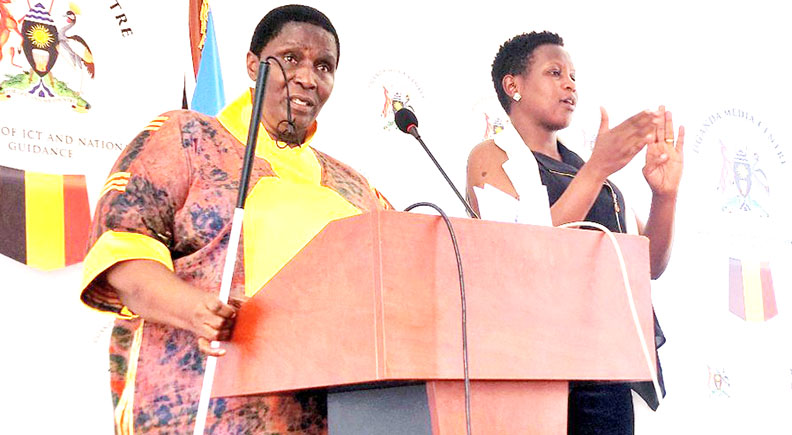
Kampala, Uganda — On November 17, 2024, Uganda will join the rest of the world in marking International White Cane Day under the theme “A White Cane for Every Blind Person.” This day, typically observed on October 15th, has been moved to November 17th for this year’s celebrations, according to Asamo Hellen Grace, Uganda’s Minister of State for Disability Affairs.
Speaking at the Uganda Media Centre, Minister Asamo highlighted that the event, celebrated globally to promote the rights and mobility of persons with visual impairments, carries great significance for Uganda, where visual impairment remains a major challenge. Uganda’s Bureau of Statistics (UBOS) 2014 report indicated that of the 6.4 million persons with disabilities, 2.1 million have visual impairments, accounting for 33.2% of the disabled population.
The theme for this year’s celebration, domesticated as “A White Cane for Every Blind Person,” underscores the importance of white canes in enhancing the independence and mobility of persons with visual impairments. Asamo noted that the event aims to raise awareness about the needs of this community while promoting inclusion and accessibility for all. “The white cane is not just a symbol of autonomy but a vital tool that enables individuals with blindness to navigate their environments safely, detect obstacles, and engage in daily activities with confidence,” she explained.
To mark this year’s event, a key highlight will be a marathon dubbed “Run for the Blind.” This initiative is part of a fundraising drive aimed at raising 10,000 white canes for persons with visual impairments. The minister stressed the significance of the marathon, urging Ugandans to “walk the talk” in supporting the mobility of people with blindness. The fundraising campaign seeks to address the mobility challenges that prevent many persons with visual impairments from accessing essential services such as education, healthcare, and employment.
Uganda’s Commitment to Disability Inclusion
Uganda has made significant strides in promoting the rights of persons with disabilities. As a signatory to the United Nations Convention on the Rights of Persons with Disabilities (CRPD) and the African Union Protocol on the Rights of Persons with Disabilities, the country has developed strong legal frameworks to promote inclusion. Minister Asamo emphasized that Uganda was one of the first 15 African countries to ratify the AU Protocol on the rights of persons with disabilities.
The government has also taken steps to enhance access to education for persons with visual impairments. Uganda boasts 37 special primary schools, and 20 secondary schools dedicated to children with visual impairments. According to the Ministry of Education’s Management Information System, in 2013, 36,792 students with visual impairments were enrolled in primary schools, and 3,709 were enrolled in secondary schools. Additionally, special quotas have been introduced to facilitate the admission of students with disabilities in public universities.
In terms of employment, Uganda has promoted non-discrimination, with persons with visual impairments now holding key positions in public offices, including a magistrate and various roles in ministries and agencies.
The Importance of the White Cane
Globally, white canes are regarded as critical mobility aids for persons with blindness. These tools allow individuals to move independently, particularly in unfamiliar environments, and are differentiated into types based on their functions. These include the long cane, symbol cane, guide cane, and canes with red stripes, which indicate dual disabilities such as hearing and sight loss.
The long cane, which folds into multiple sections, requires training for effective use and is designed for mobility in a variety of terrains. The symbol cane, shorter in length, signals sight loss and is typically used in busy public spaces. The guide cane helps detect obstacles, while the white cane with red stripes is used by individuals with both hearing and sight impairments.
Challenges Facing Persons with Visual Impairments
Despite these efforts, many Ugandans with visual impairments still face significant barriers in accessing services and living independently. Physical inaccessibility, lack of mobility tools, and societal stigma continue to pose challenges. Minister Asamo pointed out that illegal fees in public services and the lack of tailored support for persons with disabilities are issues that need to be urgently addressed.
The government, alongside partners and civil society, is expected to continue working towards fulfilling its obligations under national and international disability frameworks to ensure that persons with visual impairments can access their right to health, education, and employment.
The International White Cane Day celebrations, with their focus on raising awareness and securing white canes for Uganda’s visually impaired population, will bring much-needed attention to these challenges while promoting a more inclusive and accessible society.
