

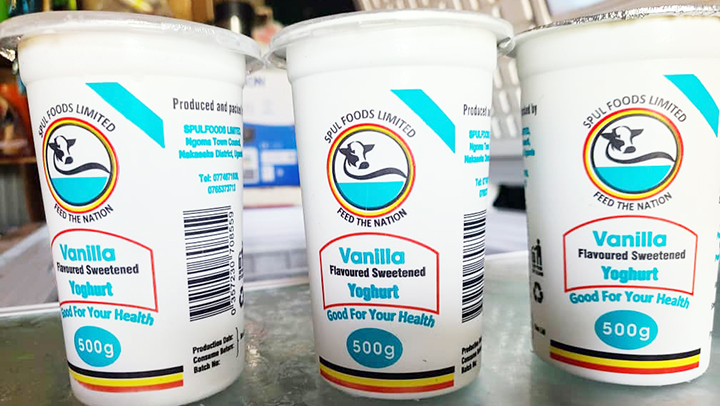
NGOMA, NAKASEKE — On a hot afternoon in Ngoma, in central Uganda’s Nakaseke district, dairy farmer John Vian crouches next to a stainless-steel churn, measuring out sugar and a splash of strawberry flavoring. He isn’t just making yoghurt. He’s making a point: that in Uganda’s milk economy, the biggest gains come not from selling raw milk, but from transforming it into something more.
“For every 20-liter jerrycan of milk I process into yoghurt, I can earn as much as 120,000 shillings,” he explains, running the numbers as easily as any accountant. “If I sold that same milk raw, I’d only make 20,000.”
It’s a simple calculation, but one that has reshaped his livelihood.
Uganda’s dairy industry has long been vulnerable to seasonal swings. In the rainy season, milk floods the market, selling at as little as Shs 1,000 per liter. When the dry months come, scarcity pushes the price to double. For farmers like Vian, this volatility is crushing.
The solution, he argues, is value addition. By fermenting, sweetening, and branding his milk products as SPUL FOODS LIMITED, Vian can sidestep some of the market’s instability. “From one 20-liter jerrycan, we make about 30 cups of 500 grams each of yoghurt,” he says. “Each sells at Shs 3,000. Even after paying for sugar at Shs 4,000 a kilo, flavoring at Shs 20,000 a bottle, and the cost of the milk itself, we walk away with a profit of around Shs 70,000.”
That’s not small change in rural Nakaseke.
But profit alone doesn’t tell the full story. Vian remembers when his yoghurt regularly spoiled before it reached buyers. Nakaseke’s erratic power supply meant refrigeration was unreliable; bad roads turned transport into another risk.
“When we presented these challenges to the government, we were supported through the NSSF Hi-Innovator programme,” he recalls. The program helped him install solar panels that now power his fridges, keeping the yoghurt cold even when Ngoma’s grid goes dark.
Today, he dreams of more land for a factory, more workers to help him scale production, and more supermarkets stocking his brand.
From Ngoma to the Market Shelves
Uganda’s dairy potential is immense. The country produces over two billion liters of milk annually, yet much of it is consumed raw or sold unprocessed at low margins. Farmers like Vian are challenging that model by showing how processing and branding can extend shelf life, stabilize income, and even open regional markets.
“It’s not about reinventing everything,” he says. “It’s about refining what we already produce so it can compete on supermarket shelves—and so farmers can benefit from steady production.”
His SPUL FOODS LIMITED yoghurt already sits in fridges across central Uganda, marketed with the tagline: “Good for your health.” For Vian, that line isn’t just branding; it’s aspiration.
The risks remain. Milk prices still rise and fall with the rains. Transport costs can eat into margins. And Uganda’s dairy processors continue to face infrastructure challenges that keep scaling difficult.
But standing in his small processing room, Vian looks beyond those obstacles. “We are working to create a real market for milk products,” he says. “The goal is for farmers to see fair returns, and for consumers to access affordable, well-branded food.”
In Nakaseke, the math of survival has become the math of growth. For farmers like Vian, value addition isn’t just about yoghurt, it’s about rewriting the story of Uganda’s dairy economy, one cup at a time.
The Economics of Milk vs. Yoghurt
What happens when a 20-liter jerrycan of milk is sold raw versus processed into yoghurt? Here’s the math from farmer John Vian’s operation in Ngoma, Nakaseke:
Selling Raw Milk
In the rainy season, when supply is high, 20 liters of milk fetch about Shs 20,000 at Shs 1,000 per liter. In the dry season, when milk is scarcer, the same jerrycan brings in Shs 40,000 at Shs 2,000 per liter. The margins are low and highly dependent on seasonality.
Processing into Yoghurt
Buying 20 liters of milk at Shs 30,000 and processing it into yoghurt yields roughly 30 cups of 500 grams each. With a retail price of Shs 3,000 per cup, sales total between Shs 100,000 and Shs 120,000. After subtracting costs, about Shs 4,000 for sugar and Shs 20,000 for flavoring used across two batches, the net profit stands at around Shs 70,000 per 20 liters. That’s more than three times the earnings from selling raw milk.
Why It Matters
Value addition cushions farmers against seasonal price swings by extending milk’s shelf life. It also strengthens bargaining power, allowing farmers to sell branded products rather than raw milk at farm-gate prices. Beyond the farm, processing generates jobs, strengthens local branding, and secures supermarket shelf space.
