


While South Africa dominates in data centre real estate and Internet exchange point traffic, there has been similarly significant activity in Uganda, Kenya, Mozambique, Ghana, and Nigeria, as African Internet users demand lower latency for the services they traditionally access, making the case for content providers to extend their delivery networks closer to their eyeballs.
The countries that make up the East African Regional Block – Uganda, Kenya, Tanzania, Rwanda, South Sudan, Ethiopia, Burundi, Somalia, and Eastern Democratic Republic Congo – are heavily reliant on the various Mombasa and Dar Es Salaam submarine cable landing stations, which are our breakout points for the terrestrial fibre optic networks that carry traffic to and from the coasts.
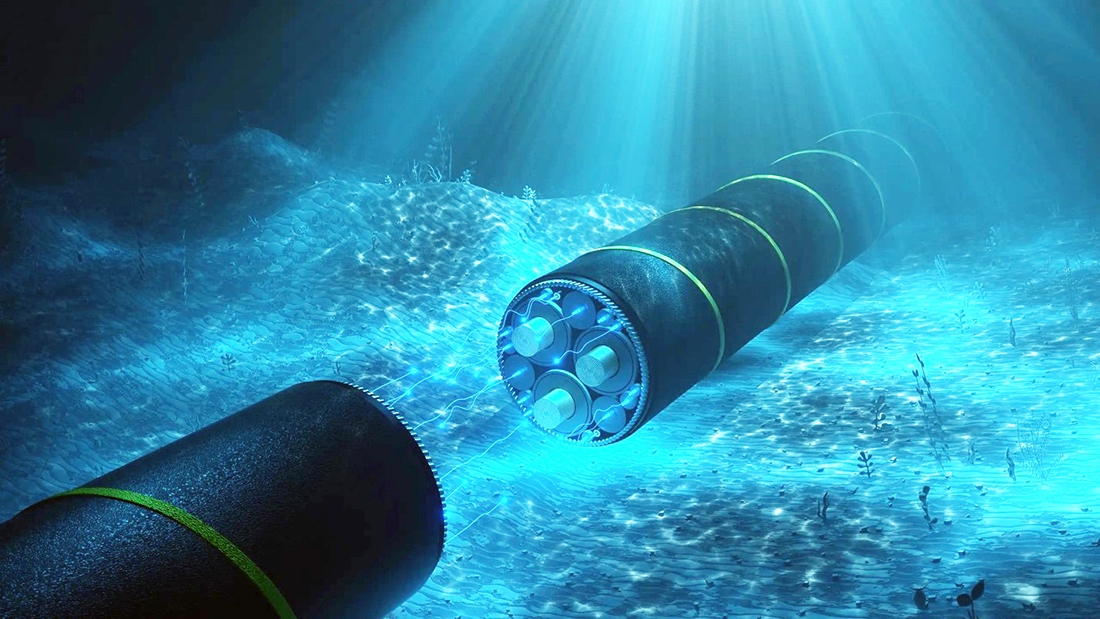
The East African region is currently served by eight submarine cable systems. However, with the older systems beginning to approach their commercial end-of-life window, it is not possible to activate additional capacity to help mitigate the ongoing cable cuts, which then results in a significant reduction in the quality of service Internet users of the region experience.
The latest cable fault occurred on the 12th of May, 2024, where both the EASSy and SEACOM cables were cut just off the east coast of South Africa, near Mtunzini. This incident has severely impacted East Africa and Mozambique, as a large amount of content that is accessed by these regions resides in South Africa. With both cables cut at the locations they are, East Africa and Mozambique has, effectively, been disconnected from South Africa. While there may be some terrestrial (land-based) connectivity providing an alternate method to stay connected to the Internet, it is of low capacity and highly unreliable.
At present, the Leon Thevenin repair vessel has been mobilized by EASSy toward the fault location. The vessel set sail from Cape Town on the 14th of May, 2024, and is set to arrive at the site of the problem by the 18th of May, 2024.
There is currently no indication of when the SEACOM cable will be repaired.
Prior to this outage, Africa has experienced the following interruptions as well:
- AAE-1, EIG and SEACOM on the 24th of February, 2024. The fault was caused by the anchor of the Rubymar cargo ship which was damaged by a missile. Due to ongoing political challenges around the Red Sea, repairs have been delayed for several months. Currently, the Yemeni government has approved repairs to EIG and SEACOM. However, approval to repair AAE-1 has not been granted due to a dispute over the split political control of TeleYemen, Yemen’s sole telecommunications service provider, and a consortium member of AAE-1.
- ACE, MainOne, SAT-3, and WACS on the 14th of March, 2024. The fault was caused by an undersea landslide. All cables have since been successfully repaired over the past five weeks.
- SAFE on April 25, 2024. The fault was caused by an abnormal electrical condition affecting two branching units between South Africa and Mauritius. Full service was successfully restored the following day after the western segment of the system was powered down, and powered up again.
What these outages clearly outline is that despite a spate of growth in submarine cables coming to Africa in the past fifteen years, the continent still has a very long way to go to enhance redundancy alongside increasing bandwidth. It is not enough to have newer cables replacing older ones as traffic demands grow and technologies improve but to also have as many alternatives as is commercially feasible to avoid significant service interruptions or, worse, a total continent-wide Internet blackout.
2Africa, the largest submarine cable in the world to ever be conceived and built, has been delayed for some time now, for several reasons. Its availability would have mitigated some or all the faults the other cables experienced since February of this year. However since some of the older cables are nearing their end-of-life window, more cables will be required to provide protection against an outage of the newer ones – mainly 2Africa, Equiano, and PEACE.
This article is co-produced by Mark Tinka from TransmissionCo and James Byaruhanga Managing Director, Roke Cloud and Chief Commercial Officer, Roke Telkom.
About TransmissionCo
TransmissionCo is a DWDM services company focused on delivering high-capacity terrestrial wholesale bandwidth within Africa.
About Roke Telkom
Roke Telkom is a Uganda-based telecommunications company that has been fully licensed since 2006 by the Uganda Communications Commission (UCC) as a Public Service Provider (capacity Resale, Voice & Data) and Public Infrastructure Provider.
About Roke Cloud
Roke Cloud, a subsidiary of Roke Investment, offers an extensive suite of services, encompassing cloud solutions, colocation, managed services, cybersecurity, enterprise networking, and unified communications.
