

MOSES SSERWANGA

Uganda’s strides toward developing a robust automotive industry soared in 2022.
Kiira Motors Corporation (KMC) took the lead by producing electric and internal combustion engine (ICE) buses.
This growth was fueled by the government’s strategic vision and commitment to invest heavily in the development of the local automotive industry to tap into the global market, now estimated at 2.86 trillion US dollars and projected to hit 9 trillion US dollars by 2030.
There is a mad rush in the Global North to cash in on the lucrative automotive industry as automakers switch to electric vehicles. Around 4.3 million new battery-powered EVs (BEVs) and plug-in hybrid electric vehicles (PHEVs) were sold globally in the first half of 2022, and it’s only fair that African countries—Uganda included—should not be left out of this huge market.
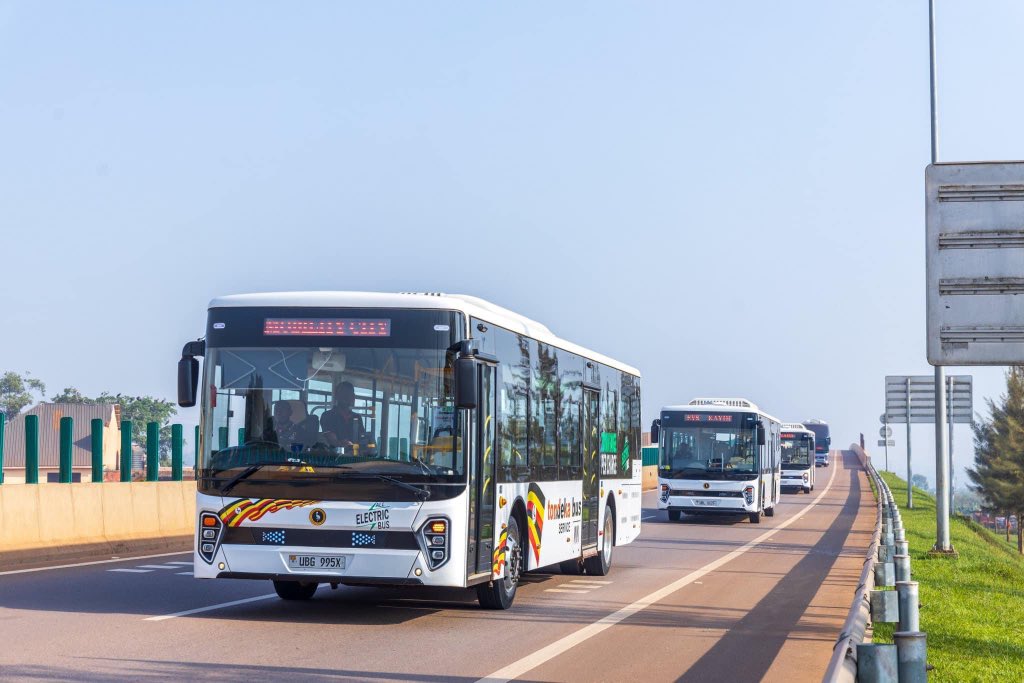
In 2022, Uganda made global headlines in its concerted effort to champion locally produced automobiles and E-mobility technologies in the East African region by growing its fleet of locally produced electric buses and executive coaches—the Kayoola Evs and the Kayoola Diesel Coaches (KDCs), respectively.
WHAT THE GOVERNMENT IS DOING
As Kiira Motors Corporation has leveraged the Luwero Industries facilities in Nakasongola to build and put on the market its validated fully electric buses, the KDCs government has continued to invest in the construction of a world-class Kiira Vehicle Plant (KVP) located in the Jinja Industrial and Business Park, with the first phase (the production line) at 99% completion and the second phase (the body shop, chassis line, paint shop, Quality Inspection and Testing (QIT) building, and the test track, among others) now underway.
Once the Kiira Vehicle Plant is fully operational, it will have the capacity to produce at least 500,000 vehicles annually in Uganda by 2030, along with the establishment of efficient, integrated, sustainable, safe, and inclusive public transport system(s) and the promotion of environmentally friendly transport solutions in the EAC region and the rest of the African continent.
Uganda’s automotive flagship, Kiira Motors, has produced more electric buses and diesel coaches, which are run by Kilita Transporters on the Northern Bypass and hired out to government and private organizations. Uganda Airlines and the Civil Aviation Authorities were some of the first government entities to give public endorsement to Ugandan-produced vehicles, some of which have covered 50,000 kilometers on the road without a hitch.
In 2022, KMC will also produce beautiful orange Tondeka buses with fuel-efficient engines and low carbon emissions. This deal was done through contract manufacturing, and the buses have been deployed by Tondeka to decongest the city and offer affordable transport solutions for urban centers.
Although much of what KMC has achieved thus far has been through technology transfer partnerships with established and tested Original Equipment Manufacturers (OEMs) and sourcing materials and parts from global supply chains, the company is now working with the Secretariat of Science, Technology, and Innovation (STI)—led by Dr. Munica Musenero to ensure the localization of Uganda’s automotive industry materials and parts supply chain.
“The automotive industry is an industry of industries, and it’s essential that we harness our rich minerals to establish a local supply chain for vehicle parts, components, systems, and mobility engineering services,” Prof. Sandy Stevens Tickodri-Togboa, the executive chairman of Kiira Motors Corporation, said in an interview for this article.
Prof. Tickodri-Togboa is also of the firm view that Uganda should not sit back because it doesn’t have a “comparative advantage” for vehicle production, arguing that such economic theories were designed to keep the least developed countries backward.
“The automotive industry is an industry of industries, and it’s essential that we harness our rich minerals to establish a local supply chain for vehicle parts, components, systems, and mobility engineering services,” Prof. Sandy Stevens Tickodri-Togboa, the executive chairman of Kiira Motors Corporation.
“We have all that it takes to produce vehicles in Uganda and Africa. The continent is rich in minerals, which should be harnessed to add value by producing vehicle parts and materials locally,” he added.
Dr. Musenero, through her STI Secretariat, has decided to establish a one-stop center to mentor innovators in the automotive value chain space. The STI Secretariat is currently mobilizing informal sector mobility tech-preneurs to guide them through the innovation process, from ideation to prototypes to commercialization. All these are encouraging signs that a clear pathway has been set and there is no turning back for mission vehicles made in Uganda.
ECONOMIC IMPACT
According to economists, building an indigenous motor vehicle industry provides an unprecedented opportunity for value addition to the country’s minerals and other natural resources, in line with the government’s policy of import substitution and export promotion of motor vehicles, parts, components, and systems.
Globally, it has been established that governments, through their targeted industrialization policies, together with ready market demand and a skilled workforce, play a leading role in the success of the motor vehicle industry.
Kiira Motors and other players in the industry have demonstrated that Uganda has the skill set and technical know-how to produce vehicles locally, reduce our import bill for end-of-life vehicles, and mitigate the climate change challenges by adopting E-mobility solutions.
The author works as a media and communication consultant and advocate for the High Court of Uganda.
msserwanga@gmail.com
