

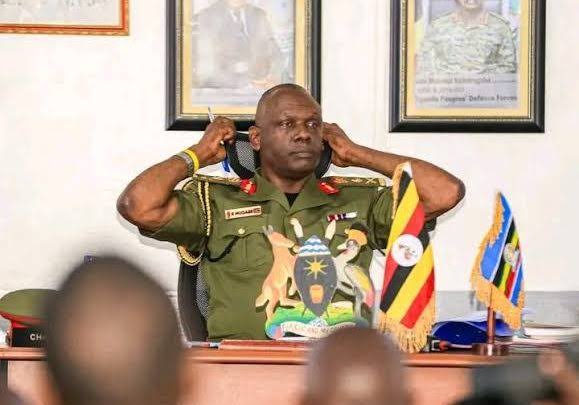
KAMPALA—Uganda’s Parliament has passed the controversial Uganda Peoples’ Defence Forces (UPDF) Amendment Bill, 2025 — a decision that has ignited a political and legal storm.
The bill, which now awaits President Yoweri Museveni’s likely signature, allows civilians to be tried by military courts under “exceptional circumstances.” This directly contradicts a 2021 Supreme Court ruling (Attorney General vs Hon. Michael Kabaziguruka), which declared such trials unconstitutional.
Opposition MPs, led by Leader of the Opposition Joel Ssenyonyi, have pledged to challenge the bill in court. “We will not sit back and watch this law erode our democracy. We are heading to court,” Ssenyonyi said during the heated plenary session on Tuesday. The looming court battle could mark a pivotal moment for constitutional law and civil liberties in Uganda.
A Bill Born in Controversy
The bill was introduced by Defence Minister Jacob Oboth Oboth and quickly referred to a joint parliamentary committee — a process that drew sharp criticism for its speed and lack of transparency. According to parliamentary rules, bills typically undergo a 45-day review process to allow for proper scrutiny and stakeholder input. In this case, the committee took just one day.
“The rules of procedure were ignored. This entire session was a sham,” Ssenyonyi said, accusing the committee of excluding key voices such as the Uganda Law Society and his own party, the National Unity Platform (NUP), from meaningful participation.
What the Bill Actually Does
At the heart of the debate is the issue of military justice. The new law restructures the UPDF’s court system, creating a Military Courts Department and defining the terms “service offence,” “military court,” and “court martial.” It allows civilians to be tried in military courts if they are allegedly working “in support of or in association with” military personnel.
This vague definition has sparked fears of abuse and overreach, especially in a political environment where opposition activists, journalists, and civil society leaders have frequently clashed with security forces.
“The Committee examined this matter and concludes that the trial of civilians by military courts should occur only in exceptional circumstances, ensuring that a fair trial is guaranteed,” said Wilson Kajwengye, Chair of the Defence and Internal Affairs Committee. But critics argue that the law leaves too much room for interpretation.
Dissenting Voices in Parliament
As Parliament debated the UPDF Amendment Bill, dissent erupted from opposition benches and some independent lawmakers. Kampala Central MP Muhammad Nsereko urged the House to delete Clauses 29 and 30, which authorize military courts to try civilians. He warned that this directly contradicts Uganda’s Constitution and undermines a recent Supreme Court ruling that declared such trials unconstitutional. His appeal, however, was defeated in a vote.
Erute South MP Jonathan Odur proposed renaming the Special Forces Command to simply “Special Forces” to harmonize its title with other army branches like the Land Forces and Air Force. He further recommended removing references to the 1986 liberation war from the bill, arguing that Uganda has moved beyond that historical moment and needs to focus on present realities. Both of his proposals were rejected after being put to a vote.
The most visible act of protest came when several members from the National Unity Platform (NUP) staged a walkout, calling the session a betrayal of Uganda’s constitutional order and the principles of civilian justice. They decried what they described as a rushed legislative process designed to sideline dissenting voices and fast-track a controversial law.
What Else Is in the Bill?
Beyond the military court provisions that have dominated headlines, the UPDF Amendment Bill carries sweeping structural changes to Uganda’s defence apparatus. One of the most significant is the formal creation of a new Reserve Force and the Special Forces Command, giving the military greater operational and structural independence.
The bill also transfers responsibility for managing army pensions from the Ministry of Public Service to the Ministry of Defence, effectively placing veterans’ welfare and retirement benefits entirely under military oversight. It further introduces new provisions for health care and disability support, including formal recognition of mental health conditions such as post-traumatic stress disorder (PTSD) among service members. This is seen as a step toward improving the long-term wellbeing of soldiers who suffer from war-related trauma.
In addition, the bill repeals the Uganda Veterans Assistance Board Act, centralizing all veteran-related services within the UPDF framework. Control over weapons and classified military equipment is also being tightened, with the bill granting exclusive oversight of these materials to the military.
Perhaps in response to widespread concern over the independence and fairness of military courts, the bill also clarifies the structure of these courts and outlines the qualifications required for judges. While critics argue that civilians should never be tried by military courts in the first place, the government has tried to present these clarifications as efforts to promote judicial transparency within the defence forces.
The Politics Behind the Passage
The fast-tracked passage of the bill suggests heavy political backing from the executive. President Museveni has long defended the military’s role in safeguarding national security and has previously expressed frustration with civilian courts’ handling of certain sensitive cases.
The opposition, however, sees this as a power grab — a way to sideline the judiciary and intimidate dissenters through military tribunals.
Hon. Ibrahim Ssemujju Nganda (Kira Municipality) put it bluntly during a recent TV appearance:
“Why is Jamil Mukulu, a known terror suspect, being tried in a civilian court while ordinary civilians with no army links are dragged before military tribunals?”
What About Political Parties?
On the same day, Parliament also passed the Political Parties and Organizations (Amendment) Bill, 2025. The new law links public funding for political parties to their participation in Inter-Party Organization for Dialogue (IPOD), a platform often criticized for favoring the ruling NRM.
Opposition parties argue that this amendment will punish dissenting parties financially and force them into dialogue frameworks they consider ineffective or biased.
Why This Matters: A Turning Point for Democracy
The UPDF Amendment Bill is more than just a technical update to military law. It represents a shift in civil-military relations, one that could expand the army’s influence into civilian legal affairs. If signed into law, the bill could have a chilling effect on political dissent and public protest.
It also risks undermining the authority of Uganda’s civilian judiciary, especially given the Supreme Court’s recent ruling against military trials for civilians.
The upcoming legal challenge by the opposition could provide a much-needed test of the checks and balances within Uganda’s democratic system. It’s not just about one bill — it’s about the future of constitutionalism, military accountability, and the rule of law.
Conclusion: Eyes on the Courtroom, Eyes on the President
The fate of the UPDF Amendment Bill now rests with two key players: President Museveni, who is expected to sign it into law, and the Constitutional Court, where the opposition is likely to contest it.
For now, Uganda stands at a crossroads — where its commitment to democracy, justice, and civil liberties will be measured not by words, but by laws.
As Hon. Joel Ssenyonyi warned:
“This is not about military law. It’s about whether Uganda chooses the path of constitutional order or slides into authoritarian control.”
