

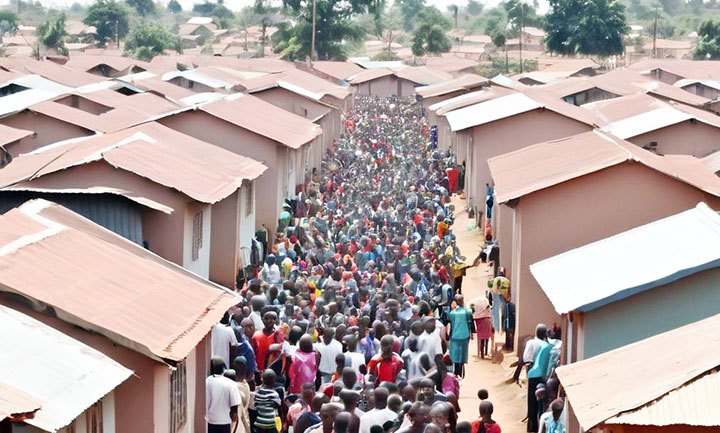
Kampala: Uganda’s Population and Housing Census has unveiled significant demographic shifts, positioning the country for strategic planning and evidence-based decision-making. The census, which is the largest peacetime national operation, revealed that Uganda’s population has surged by 11.3 million since 2014, growing from 34.6 million to 45.9 million, including 780,061 refugees. The number of households has also seen a substantial rise:
- 2002: 5,043,000 households
- 2014: 7,245,245 households
- 2024: 10,845,119 households
The demographic profile of Uganda underscores its status as a young country, with children (0-17 years old) making up 50.5% or 22.95 million of the population, youth (18-30 years) constituting 22.7%, older persons (60+) representing 5.0%, and the working-age population (14-64 years) accounting for 55.6%. These statistics highlight the need for continued investment in education, healthcare, and employment opportunities to meet the demands of Uganda’s youthful population.
Challenges Faced During the Census
Despite the critical importance of the census, the process encountered several challenges. Enumerators faced significant obstacles in hard-to-reach areas, such as islands and mountainous regions, complicating logistical efforts. The Greater Kampala Metropolitan area also proved difficult to access due to its complex urban landscape.
Further complicating data collection were gated households and single-person households, making it challenging for enumerators to gain access or contact respondents. Additionally, some households refused to participate, influenced by religious cults or deliberate refusals.
Internal border conflicts in regions such as Apaa between Amuru and Adjumani, Palaro between Gulu LG and Amuru, Ombechi/Kochi, Legu/Romogi, Gburule/Romogi between Yumbe and Obongi, and Nyamisingiri between Kabarole and Ntoroko, also disrupted the census process.
Successes Achieved
Despite these hurdles, the census achieved remarkable success. An innovative approach involved using personal phones by some enumeration supervisors to collect community-level data, facilitating a comprehensive data collection process. The census gathered detailed information through approximately 160 household questions and over 60 community questions.
The cost efficiency of the census was notable, with a per capita cost of $1.9, compared to $2 in Kenya, demonstrating Uganda’s capability to conduct large-scale data collection effectively.
Implications for Future Policies
The data collected will be instrumental in guiding future policies and development initiatives aimed at fostering sustainable growth and improving the quality of life for all Ugandans. The findings highlight the importance of strategic investments in human capital, particularly in education and healthcare, to leverage the potential of Uganda’s young population and drive the country towards sustained economic development and prosperity.
