

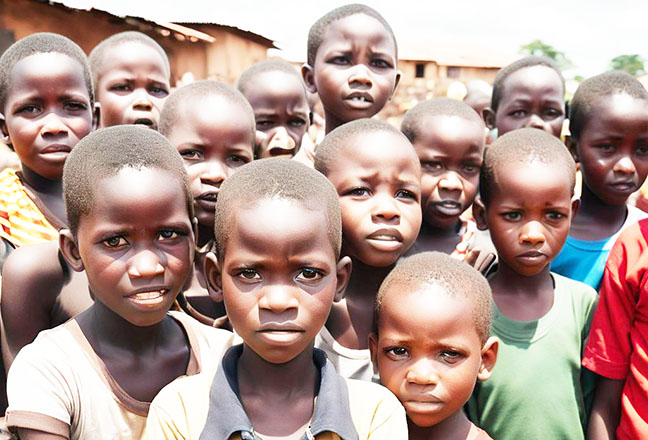
Tooro, Karamoja, Bunyoro, and West Nile have highest levels of stunted children
KAMPALA: The recent release of “The National Early Childhood Development Situation Analysis Advocacy Brief” by Uganda’s Ministry of Gender, Labour, and Social Development paints a concerning picture of the state of early childhood development (ECD) in Uganda. As the second-youngest country globally, with a third of its population under eight, Uganda faces significant challenges in ensuring the well-being and development of its youngest citizens.
Early Childhood Development (ECD) refers to the comprehensive approach to policies and programs for children from birth to eight years of age. This period is critical for a child’s cognitive, social, emotional, and physical development. ECD aims to ensure children achieve their full developmental potential, laying a strong foundation for lifelong learning, behavior, and health.
Uganda’s population of 45.5 million includes 12.9 million children aged eight years or below, highlighting the critical importance of ECD as a foundation for the nation’s future. The demographic shift anticipated between 2023 and 2050, where the working-age population is expected to grow from 54 percent to 64 percent, underscores the potential for a powerful economic transformation. However, this vision hinges on effectively harnessing the potential of its young population.
Health and Nutrition Challenges
The health and nutrition of young children begin with the well-being of their mothers. Despite a nearly 44 percent reduction in maternal mortality between 2016 and 2022, the rate of 189 deaths per 100,000 live births still falls short of the national target of 63. Additionally, less than half of pregnant women attend the recommended four antenatal care visits, and one-third suffer from undernutrition, impacting both maternal and child health.
Uganda has made strides in reducing infant, neonatal, and under-five mortality rates. For instance, under-five mortality decreased from 64 to 52 deaths per 1,000 births between 2016 and 2022. Yet, regional disparities persist, with West Nile exhibiting the highest infant and under-five mortality rates, followed by Busoga and Bunyoro.
Malnutrition remains a significant challenge, with nearly a third of children under five years old being stunted. Regions like Tooro, Karamoja, Bunyoro, and West Nile exhibit the highest levels of stunting. Moreover, 55 percent of children aged 0–4 years are multi-dimensionally poor, highlighting severe and urgent vulnerabilities.
Education and Early Learning
Access to early childhood education is crucial for preparing children for school and future learning. Currently, only 14 percent of children aged three to four are developmentally on track in literacy and numeracy, a figure that improves slightly to 3 percent for children aged four to five. However, access to pre-primary education remains limited, with only 38 percent of ECD-aged children attending such programs nationwide.
Pre-primary services are unevenly distributed, with the Buganda subregion housing 43 percent of all pre-primary schools, while the Karamoja region has only 1 percent. Most pre-school institutions are unlicensed and informal, leading to poor literacy outcomes. Only 1 percent of the pre-primary workforce meets the bachelor’s degree requirement mandated by the state, and 12 percent of caregivers have no training at all.
Regional Disparities and Access to Services
Income level, disability, rural residence, and parental incarceration are significant determinants of access to ECD services. Regions like West Nile, Karamoja, and Bunyoro face disproportionately poor access and service delivery, reflecting deep regional disparities. Even Kampala struggles with high levels of stunting and malnutrition among children.
To address these challenges, there is a need for region-specific understanding, planning, and policy action, with active local government support. Improving access to quality ECD services can yield enormous benefits for children, families, public services, and society at large.
Conclusion
The statistics from the National Early Childhood Development Situation Analysis Advocacy Brief underscore the urgent need for comprehensive strategies to improve the health, nutrition, education, and overall well-being of Uganda’s youngest citizens. Addressing these challenges is not only a moral imperative but also a critical investment in the country’s future. By prioritizing early childhood development, Uganda can harness its demographic dividend and achieve its goal of becoming a middle-income country by 2040.
