

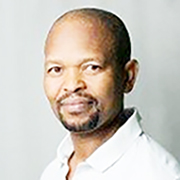
By Khisimuzi (Khisi) Mdluli, PhD
I was born in Brakpan, Johannesburg, South Africa, and grew up in eSwatini (known then as Swaziland). The predominant fear shared by people in these two countries is unemployment. Other concerns in these countries and across the region include unwanted pregnancies, low income, and food safety. Among the most dreaded diseases are cancer and diabetes, while feared infectious diseases include HIV/AIDS, COVID-19, and cholera.
Even though South Africa and eSwatini are among the more than two dozen African countries with a high burden of either tuberculosis (TB), drug-resistant TB or HIV/TB co-infections, TB is not feared in the same way, even though it is the disease that haunts my people the most.
So many are affected on the African continent by TB, which hits the young and vibrant the hardest in our region and in the world. Eswatini joins the seven most populous sub-Saharan African countries — Ethiopia, DR Congo, Kenya, Nigeria, South Africa, Uganda, and Tanzania — where TB hits the 25-34 and 35-44 age brackets especially hard.
It is not just the years of life that this disease takes away from us, but also the future leadership and economic productivity of our countries. I see this even within my own family, with one niece currently being treated for TB and another niece having survived drug-resistant TB a few years ago.
World TB Day is March 24, a day when we will hear about ending TB by 2030, even though it is a disease that has been with us forever. With only six years left, that goal seems too distant. To achieve this goal, we need better awareness, yes. But we also need Africans to be fully engaged with the rest of the world, which includes conducting drug discovery and development research for TB in Africa.
Most of the existing tuberculosis (TB) drugs, similar to medications for many diseases impacting Africans, are developed by corporations in high-income nations. This dynamic became evident during the COVID pandemic, when the distribution of lifesaving vaccines was delayed in African countries. High-income countries, instrumental in developing these vaccines, had quicker access. Consequently, at the Gates Medical Research Institute, our approach to trials testing investigational treatments or vaccine candidates focuses on building sustainable relationships with trial sites in Africa and other regions. This strategy is designed to bolster these facilities, enabling them to take the lead in future trials.
It is critical that African scientists tackle African problems, and the reasons extend beyond access. Local scientists have a better understanding of the social fabric and context threatened by diseases like TB; they understand which solutions could be adopted and embraced and which will remain on the shelf.
In September 2023, the United Nations held a high-level meeting where member states agreed to boost the amount of funding for TB research by a fivefold increase by 2027, but no guidelines on geography were placed on this pledge. More than 90% of current funding for TB R&D currently comes from North America and Europe, and most of those funds stay in the high-income countries when we need to train and develop and indeed employ scientists in the high-income countries. Of the high-burden countries, only India has an investment in the field large enough to be noted — at 1.9% of the total global funding.
Funding specifically earmarked for TB (and antimicrobial resistance) research in Africa would ensure that more of it takes place on African soil. Funding is needed to build appropriately equipped research and production infrastructure, much like the new mRNA vaccine facility being built in Rwanda. Such facilities would be staffed with African scientists, who would get opportunities to expand their basic and applied research skills. The H3D Research Centre at the University of Cape Town, led by Dr. Kelly Chibale, is one example of how successful African ingenuity can be, with four patents already filed.
Together with the much-needed funding from Africa’s better-resourced foreign partners in high-income countries, African governments should incentivize African businesses, African foundations and charities, and high-net-worth Africans to build African Research Institutes to train, develop and employ African scientists. Developing medicines for diseases like TB that are killing African youth and stunting Africa’s economic growth should be everyone’s priority, in Africa and the world.
It is critically important that such efforts are not tied to immediate profits, as this leads to disappointment and ends with dwindling funds for research. Drug discovery is a “long and winding road” that begins with building talent and infrastructure and expanding the critical mass of well-trained drug developers. Investment in biomedical research should be for the sake of expanding biomedical knowledge and training young scientists; the discoveries and the profits will follow.
The timing couldn’t be more appropriate than now as new futuristic technologies — including artificial intelligence, machine learning, and high-speed connectivity — are entering the drug development arena. We can now see a point when the health profile and the life expectancy of people in Africa could be comparable to the rest of the world. Africa and the world should be guided by the belief that all lives have equal value and that health equality is ensured for everyone, on all continents.
Khisimuzi (Khisi) Mdluli, Ph.D., is a TB Drug Scientist and a Discovery Project Leader at the Bill & Melinda Gates Medical Research Institute (Gates MRI).
