
KAMPALA — As betting shops, online casinos and mobile gaming platforms spread rapidly across Africa, regulators are facing growing pressure to answer a difficult question: how do governments control an industry expanding faster than the systems meant to regulate it?
For Uganda, that debate is increasingly shifting beyond taxes and licences toward something more sensitive, protecting ordinary people from the darker side of gambling addiction and irresponsible betting.
Last week, Uganda’s gaming regulator received continental recognition for that approach.
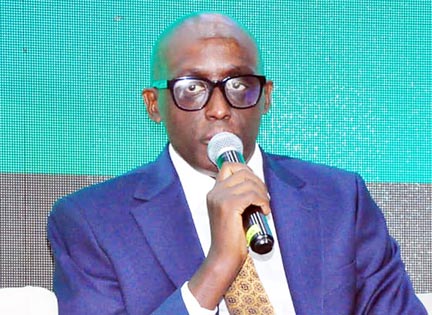
Denis Mudene Ngabirano, the Chief Executive Officer of the National Lotteries and Gaming Regulatory Board (NLGRB), was named “Rising Star in Responsible Gaming” at the inaugural iGaming AFRIKA Summit Awards in Nairobi. The recognition reflects Uganda’s growing effort to position responsible gaming not as a side issue, but as a central part of regulation itself.
The award comes at a time when gaming across Africa is exploding, driven largely by smartphones, internet access and a young population increasingly drawn to digital betting platforms.
In Uganda, betting has become deeply woven into urban life. Small betting centres operate in trading centres and city suburbs, while online platforms now allow users to gamble directly from their phones. For regulators, this growth presents both opportunity and risk.
The industry generates revenue and employment, but it also raises concerns about addiction, financial distress and underage gambling.
Uganda’s regulator says its strategy has increasingly focused on balancing those competing realities.
Beyond licensing operators and collecting revenue, the Board has intensified enforcement against illegal gaming companies while introducing stronger responsible gaming measures. Public awareness campaigns targeting schools and vulnerable groups have also become part of the regulator’s broader strategy.
At the centre of these reforms is technology.
Through the National Central Electronic Monitoring System, commonly known as NCEMS, the regulator can monitor gaming activity in real time, track operator compliance and identify suspicious or potentially harmful betting patterns.
In simple terms, the system acts as a digital surveillance tool for the gaming sector, allowing authorities to see what is happening inside an industry that increasingly operates online and across borders.
The Board has also rolled out consumer protection measures including self-exclusion tools, age verification systems and rehabilitation support for individuals struggling with gambling-related harm. A dedicated helpline now provides confidential counselling and referral services.
That shift reflects a broader change in thinking globally, where gambling regulation is increasingly being treated not only as a commercial issue, but also as a public health concern.
Speaking after receiving the award, Mudene said the future of gaming regulation in Africa would depend on how effectively countries balance industry growth with player protection.
He also emphasized the importance of stronger cooperation among African regulators, particularly as digital gaming platforms increasingly operate across national borders.
For Uganda, the recognition signals something larger than an individual award.
It positions the country among a growing number of African states trying to professionalize gaming regulation while confronting the social consequences that often accompany rapid industry growth.
The deeper challenge, however, remains unresolved.
As betting becomes easier, faster and more accessible through smartphones, regulators across Africa are racing to keep pace with an industry evolving in real time.
Uganda’s response suggests the debate is no longer simply about whether gaming should exist. It is increasingly about whether governments can build systems strong enough to manage its consequences before those consequences overwhelm the people most vulnerable to them.