
KAMPALA — Barely a year after Uganda ended Umeme’s two-decade dominance over electricity distribution, the country’s new state-run power distributor is already facing the kind of turbulence that reveals just how politically and economically sensitive electricity has become in modern Uganda.
The sweeping leadership reshuffle at the Uganda Electricity Distribution Company Limited (UEDCL) this month is officially being framed as a governance and accountability intervention. But beneath the dismissals, acting appointments, and operational audits lies a deeper national anxiety: can the Ugandan state successfully manage one of the country’s most critical public utilities after reclaiming control from a private operator?
That question now hangs heavily over the sector.
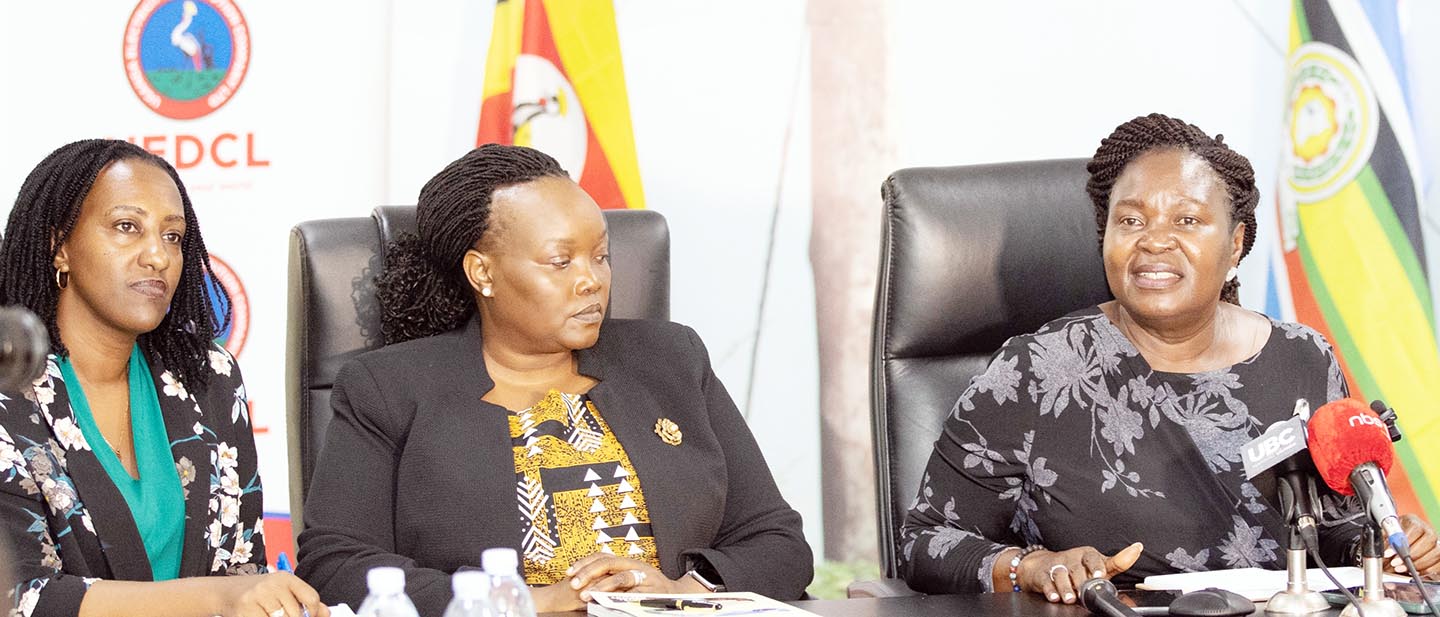
On May 2, Energy Minister Ruth Nankabirwa dismissed Board Chairperson Lydia Ochieng-Obbo and directed Managing Director Paul Mwesigwa to step aside pending a comprehensive operational audit into the company’s performance. Days later, acting Managing Director Eng. Joselynne Rwakakooko announced a broad restructuring affecting key technical, commercial and administrative offices across the company.
Officially, the intervention followed mounting concern over persistent power outages, operational inefficiencies and electricity losses estimated at 17 per cent. But the significance of the reshuffle stretches far beyond management changes.
Electricity in Uganda is no longer merely an infrastructure issue. It sits at the centre of economic growth, industrialisation, political credibility and public trust.
When UEDCL took over national distribution operations from Umeme in April 2025, the transition carried enormous symbolic weight. For years, Umeme had occupied an uncomfortable position in Uganda’s public imagination, praised by some for expanding distribution networks and improving revenue collection, yet criticised by others over tariffs, profits and service reliability.
The government’s decision not to renew Umeme’s concession was presented partly as a reclaiming of national control over a strategic sector. Supporters argued that a state-run distributor would align electricity management more closely with Uganda’s development goals, particularly industrialisation and wider electricity access.
But reclaiming ownership is easier than managing expectations.
The problems now confronting UEDCL reveal the enormous complexity of running a modern national power distribution system. Electricity distribution is not simply about supplying power. It involves balancing technical efficiency, financial sustainability, infrastructure maintenance, customer service and political pressure simultaneously.
And in Uganda, electricity carries unusual emotional and economic significance because outages affect almost every aspect of modern life.
For small businesses, unstable electricity means damaged equipment, reduced productivity and rising operating costs. For manufacturers, it threatens industrial competitiveness. For ordinary households, persistent outages deepen frustration toward institutions already struggling with public confidence.
That is why the government’s intervention matters politically.
The reshuffle signals that authorities are acutely aware that electricity reliability is becoming inseparable from broader perceptions of state competence. In many developing economies, utility performance increasingly functions as a visible measure of whether government systems actually work.
The contradiction confronting UEDCL is particularly striking because the company also represents genuine progress in some areas.
According to official figures, UEDCL has expanded to approximately 2.4 million customers nationwide and registered revenues of about Shs1.71 trillion by early 2026. The company has also overseen a 14 per cent reduction in electricity tariffs, a politically important achievement for both households and industry.
Yet those gains now compete with growing concern over reliability and operational discipline.
The estimated 17 per cent electricity loss rate illustrates one of the sector’s deepest structural problems. In simple terms, electricity losses refer to power generated but never successfully paid for, often due to technical faults, illegal connections, theft or billing inefficiencies.
Those losses matter because they quietly drain enormous financial resources from the system. The more electricity disappears before payment, the harder it becomes for utilities to reinvest in infrastructure upgrades, maintenance and network expansion.
This is where the post-Umeme transition becomes especially revealing.
For years, debates around Uganda’s electricity sector focused heavily on ownership, public versus private management. But the current turbulence suggests the more important issue may not simply be who owns the system, but whether the institutions managing it possess the technical capacity, governance discipline and operational independence needed to run it efficiently.
That distinction is critical.
State ownership alone does not automatically guarantee efficiency, affordability or public trust. Nor does private management automatically solve structural weaknesses. What ultimately matters is institutional performance.
Uganda’s experience reflects a wider African trend.
Across the continent, governments are increasingly reassessing privatisation models introduced during the liberalisation era of the 1990s and early 2000s. Some states are reclaiming strategic sectors or tightening control over utilities amid growing public frustration over service costs and inequality.
But these transitions carry political risk.
Once governments assume direct control over essential services, public anger no longer targets private concessionaires alone. It shifts directly toward the state itself.
That appears to be happening now in Uganda’s electricity sector.
The rapid reshuffles inside UEDCL suggest the government is attempting to contain operational instability before it evolves into a broader political liability.
For ordinary Ugandans, however, the deeper concern remains practical rather than ideological.
Will electricity become more reliable? Will outages reduce? Will new connections expand faster? Will tariffs remain affordable?
Those are the questions that will ultimately define public judgment far more than boardroom appointments or institutional audits.
What happens next may determine more than the future of UEDCL itself.
It could shape public confidence in Uganda’s broader model of state-led infrastructure management at a time when the government is investing heavily in energy, transport and industrialisation as pillars of long-term economic transformation.
Because in the end, electricity is never just about power lines.
It is about whether the systems carrying a country’s development ambitions are strong enough to hold under pressure.