
KAMPALA – For many Ugandan students, the journey from O-Level to A-Level is not determined by grades alone. It is often decided by something far less predictable: whether their families can afford the next step.
A talented student may excel in national examinations, dream of becoming a doctor, engineer or entrepreneur, and still see those ambitions stall because school fees are out of reach. It is a reality that plays out across the country every year, quietly cutting short opportunities for some of Uganda’s brightest young people.
It is against that backdrop that KCB Bank Uganda has announced support for 56 academically gifted but financially disadvantaged learners transitioning from O-Level to A-Level across eight schools nationwide, including 10 students who will join Kololo Secondary School.
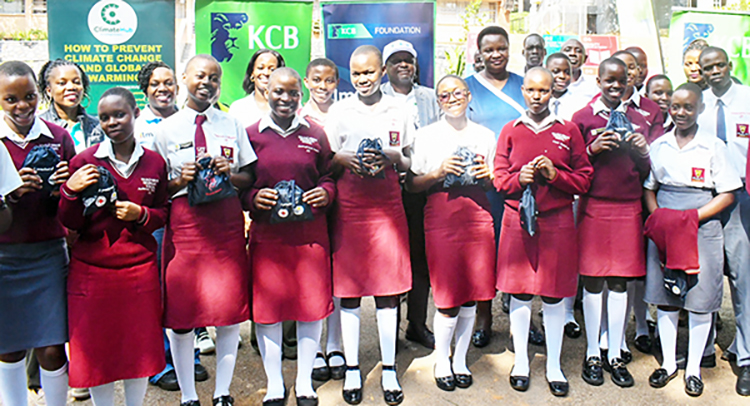
The initiative was unveiled during a recent engagement at Kololo Secondary School in Kampala, where bank staff, school administrators and students gathered for a programme that combined education support with financial literacy training, health interventions, environmental activities and school safety improvements.
While the scholarship support may directly benefit a relatively small group of learners, it speaks to a much larger challenge facing Uganda: how to ensure that academic talent is not wasted because of poverty.
Speaking during the event, KCB Bank Uganda Managing Director Edgar Byamah said the bank views education as one of the most important investments a society can make.
“At KCB Bank Uganda, we believe that banking is ultimately about people. It is about understanding the communities we serve, responding to real needs and creating opportunities that make life better,” he said.
“Education remains one of the most powerful investments any society can make. Through the KCB Foundation, we are proud to support 56 intelligent but financially disadvantaged learners transitioning from O-Level to A-Level across eight schools in Uganda. We are particularly delighted that Kololo Secondary School will welcome ten of these scholars.”
The programme also introduced students to practical financial skills such as saving, budgeting and responsible money management while facilitating account opening to promote financial inclusion among young people.
That aspect may prove significant beyond the classroom.
For Uganda’s banking sector, financial literacy is increasingly viewed as a long-term investment rather than a charitable exercise. Young people who understand how to save, manage money and use formal financial services are more likely to participate in the formal economy later in life. In a country with one of the world’s youngest populations, that matters not only for banks but also for national economic development.
The initiative also tackled barriers that often affect school attendance, particularly for girls. KCB donated reusable sanitary towels to female students, an intervention aimed at reducing challenges linked to menstrual health that can affect participation and academic performance.
For many families, such support may appear modest. Yet education experts have long noted that attendance, retention and performance are often influenced by practical everyday factors rather than academic ability alone.
KCB’s Head of Human Resources, Patience Arinaitwe, used the occasion to encourage students to remain ambitious despite financial and social obstacles.
“I want the students here today to know that there is no limit to what they can achieve. Even if the situation appears to be difficult, believe in yourself. Allow your ambitions to exceed your anxieties. The world requires your ideas, leadership, courage, and voice,” she said.
The programme extended beyond education and finance. Students and bank staff planted fruit trees as part of an environmental sustainability effort, while a zebra crossing and pedestrian walkway were added within the school to improve learner safety.
Kololo Secondary School Headmistress Betty Mwesigwa praised the initiative for addressing multiple aspects of student wellbeing at once.
“This programme addresses several important aspects of student wellbeing, from financial literacy and environmental stewardship to health and safety. We are grateful for KCB Bank’s commitment to empowering our learners and creating a supportive environment for their success,” she said.