

OUR REPORTER
KAMPALA—A gold rush may be on in the districts of Buhweju, Mubende, Namayingo, Karamoja, and Zombo.
New gold targets have been identified there, the minister of Energy and Mineral Development, Ruth Nankabirwa Ssentamu, announced. This puts Uganda on a firm path to becoming a serious gold net exporter and Africa’s “Next Major Gold Mining Destination.”
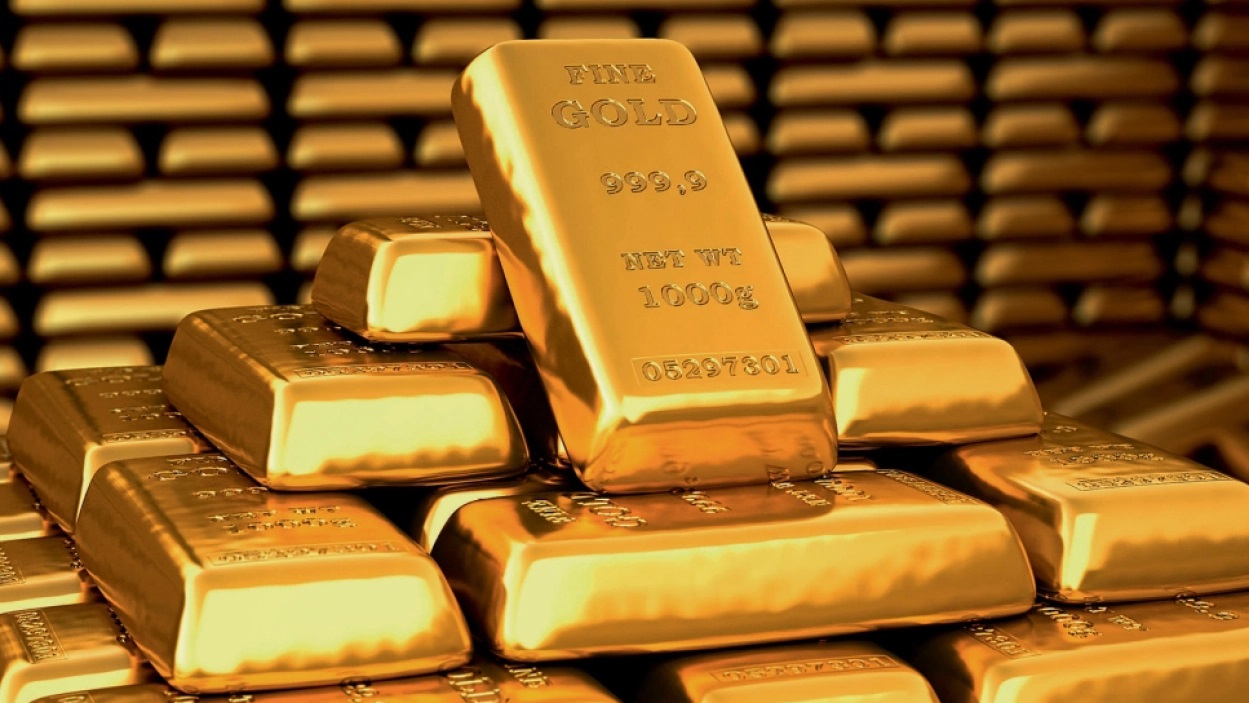
Uganda’s gold export earnings have surged since 2015 due to rising shipments from the African Gold Refinery (AGR), a gold processor set up by Belgian businessman Alain Goetz in Entebbe, about 45 kilometers (28 miles) south of the capital Kampala.
Uganda shipped gold worth $201 million in 2022, down from $1 billion shipped during the same period in 2021, according to the Central Bank of Uganda.
“Significant investment has been registered in mineral exploration and development through Wagagai Mining Limited, a large-scale gold project in Busia, Eastern Uganda, scheduled for commissioning in December 2023,” the minister said in a recent media statement.
Wagagai, a Chinese company, has discovered 30 million tons of gold ore in a greenstone belt in the eastern Busia district.
In March 2022, the government licensed the Wagagai gold mining company to start producing gold products in the country. In 2016, the company began constructing a gold refinery worth $200 million. Uganda is estimated to have gold deposits of around 31 million tonnes. Of that, around 320,158 metric tonnes are refined gold, with an approximate value of $12.8tn.
“On the other hand, over 500 million tonnes of Rare Earth Elements (REEs) have been estimated in eastern Uganda by the Makuutu Rare Earth Project. REEs is one of the critical minerals the Ministry is positioning to support the deployment of renewable energy,” the minister said.
Makuutu has the potential to bolster Uganda’s worldwide positioning among countries with the most significant production of REEs worldwide, after China.
REEs are used as components in high-technology devices, including smartphones, digital cameras, computer hard disks, fluorescent and light-emitting-diode (LED) lights, flat-screen televisions, computer monitors, and electronic displays. Large quantities of REEs are used in clean energy and defense technologies. China has the largest deposits in the world.
REEs are also used in a variety of industrial applications, including electronics, clean energy, aerospace, automotive, and defense. Manufacturing permanent magnets are the single largest and most important end use for REEs, accounting for 29% of the forecasted demand in 2020, according to http://www.rarelementresources.com.
South Africa’s Steenkampskraal Mine has one of the highest grades of rare earth elements in the world. It contains 15 elements and 86,900 tons of total rare earth oxides, with large deposits of neodymium and praseodymium.
The reserves of high-quality vermiculite at Namekhara in Manafwa district have subsequently increased from 5 million tonnes to the current 54.9 million tonnes, the minister said, adding that the government has completed phase one of the airborne geophysical survey, where preliminary data has been acquired over the Karamoja and Lamwo regions, thereby completing the 20% gap in the geophysical dataset in the country.
This publication has established that the government is planning to conduct a detailed exploration of some mineral prospects, leading to feasible mining projects that can be packaged for investment through competitive bidding. The government is investing in acquiring high-resolution geological, geochemical, and geophysical data and generating mineral targets to be packaged for investors to carry out detailed exploration. Besides, incentives are extended to investors within the extractives industry to lessen investment costs, including zero-rated import fees for equipment and machinery and tax holidays.
“The ministry (Energy) launched Artisanal and Small-Scale Miners (ASM) biometric registration in December 2021 to streamline operations and increase revenues. Other initiatives shall include zoning ASM areas, formalisation and regularisation, training, and provision of extension services. On transparency in the sector, Uganda is now a member of the Extractive Industries Transparency Initiative. Each year, it releases a report detailing mineral statistics and revenue management in line with international obligations,” she said.
The government is currently reviewing a minerals revenue strategy (royalty-tax regime) to ensure optimal benefits for all stakeholders in the mining and profit-sharing across the value chain for both the investor and the country. The proposed initiatives may include production sharing, state-equity participation, or a levy-tax structure.
