

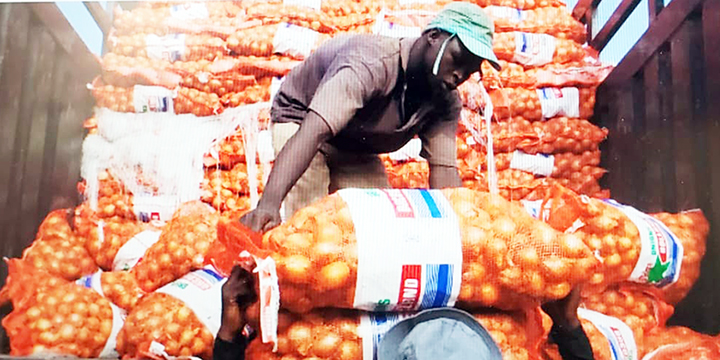
KAMPALA— It’s a familiar scene across Africa: a bustling market where food is abundant, yet households just a few kilometers away go to bed hungry. The paradox is glaring. Over the past three decades, African nations have significantly ramped up food production. Crops are grown, harvested, and packed—but millions still don’t eat. The reasons, long debated, often point to climate change, conflict, and poverty. But a new World Bank report released in May 2025 casts a stark spotlight on a less obvious yet pivotal culprit: transportation.
Titled Improving Transport Connectivity for Food Security in Africa: Strengthening Supply Chains, the report reframes how we think about food insecurity. Hunger, it argues, is no longer just a matter of growing enough food—it’s a matter of getting that food to where it’s needed. And the systems meant to do that are fundamentally broken.
According to the World Bank’s Senior Managing Director, Axel van Trotsenburg, the problem isn’t production—it’s logistics. “Food insecurity in Africa isn’t just about producing more—it’s about fixing the broken systems that prevent it from getting where it’s needed most,” he said. “By investing and improving transportation, we can remove the key bottlenecks, reduce costs, and ensure more reliable access to food for millions of people.”
That simple observation carries enormous implications. The report reveals that up to 37 percent of food produced in Africa is lost before it ever reaches a plate—largely due to poor storage, bad roads, inefficient border processes, and overloaded ports. On top of that, food supply chains in Africa are four times longer than those in Europe, and this lengthy journey adds up to 45 percent of the cost of staple foods like rice, maize, and cassava. In layman’s terms: Africans are not just paying for food—they’re paying for the inefficiency of getting it delivered.
Take, for instance, a cassava farmer in northern Mozambique. After harvest, her produce must travel on dusty, unpaved roads to the nearest market town. From there, it’s trucked hundreds of kilometers to a coastal port, delayed at the border for paperwork, then finally transported inland again to reach food-insecure communities. By the time it arrives, much of the produce has spoiled or become too expensive for the average household. This long journey isn’t a quirk—it’s the norm. And it’s pushing millions deeper into hunger.
In 2024 alone, over 295 million people across 53 African countries faced acute food insecurity, according to UNICEF. The World Bank’s report adds even more urgency, noting that just ten African ports handle food for 89 million people. Meanwhile, only twenty border crossings supply food to 66 million people in 35 countries. When these few critical arteries clog up—due to congestion, poor maintenance, or policy inefficiencies—entire regions are cut off from nourishment.
The good news is that the solutions are not only clear—they’re actionable. The World Bank outlines a series of focused investments and reforms that, if implemented, could revolutionize how food moves across the continent.
First, countries must modernize key seaports and equip them with advanced infrastructure for bulk food handling. These ports should be prioritized not just for their trade value, but for their potential to serve inland populations who depend on timely food deliveries.
Second, border management needs a massive overhaul. As Nicolas Peltier, Global Director for Transport at the World Bank, put it, “While food security is a complex issue with many contributing factors, transport investments are one area where countries can take real action. Improving ports, roads, and border crossings not only makes it easier for food to move between farms and consumers, but it also helps create jobs in the logistics sector.”
That job creation point is crucial. Fixing food transport isn’t just about feeding people—it’s about building livelihoods. Modernizing transport corridors could strengthen regional trade, create employment, and reduce Africa’s dependency on food imports. Currently, about 25% of food consumed on the continent is imported—despite the land, labor, and climate to grow most of it locally. Building a more self-reliant food system depends on building the roads, bridges, warehouses, and customs systems to support it.
Another priority is storage. The report points out that inadequate or non-existent storage facilities—especially in rural areas—are a major cause of food waste. Simple solutions, like community-level cold storage or airtight silos, could dramatically cut losses and keep food fresh until it can be sold.
But infrastructure alone won’t solve everything. The World Bank also calls for policies that enhance competition in the transport sector. Right now, limited options and monopolies often drive up the cost of transporting food. Opening up the market would help make food cheaper and more accessible, especially for low-income consumers.
Importantly, these reforms require coordinated action between governments, regional blocs like the African Union, and development partners. Piecemeal efforts won’t work. For example, improving a port won’t matter if the roads leading to it are unusable. Nor will border reforms help if customs officers are undertrained or corrupt. A holistic approach—one that recognizes the interconnectedness of the food supply chain—is essential.
The potential benefits go far beyond reducing hunger. Investing in food transport infrastructure can boost resilience to climate shocks, reduce reliance on global markets, and support African farmers by giving them consistent access to buyers. It also builds peace. In many food-insecure regions, desperation fuels instability. Making food more available and affordable is, in essence, an investment in national security.
Perhaps the most powerful message of the report is its call for urgency coupled with optimism. The challenges are immense, but so are the opportunities. Africa doesn’t need to wait for global markets to save it. By investing in its own transport and trade systems, the continent can unlock the full potential of its agricultural sector and ensure that no one goes hungry because of a broken road or a backed-up port.
Food should not be lost on its way to the table. The road from farm to fork is just as important as the seeds in the soil. And if Africa can rebuild that road—literally and metaphorically—it can nourish not only its people, but its future.
