
Every heavy downpour on the slopes of the eastern Mount Elgon carries a huge risk of landslides and death.
Thousands of families have lived with that uncertainty as landslides threaten homes, farmland and lives. Now, the government is offering some of those at greatest risk a way out: Shs 18 million per household to buy land and build again on safer ground.
The offer, however, comes with a permanent condition. Families who take the money must leave their ancestral plots behind, surrendering the land to the state for conservation.
Cabinet approved the compensation at meetings on September 28 and October 5, as part of a wide-ranging package that stretches far beyond Mount Elgon. The government has also approved nearly Shs 90 billion to establish Iganga University, cleared major borrowing for roads, backed a EUR 405 million financing plan for the Standard Gauge Railway, and moved Uganda further toward East African integration.
Together, the decisions tell a larger story about the choices Uganda is making, where government is spending, where it is borrowing, who stands to benefit, and what obligations the country is taking on for the future.
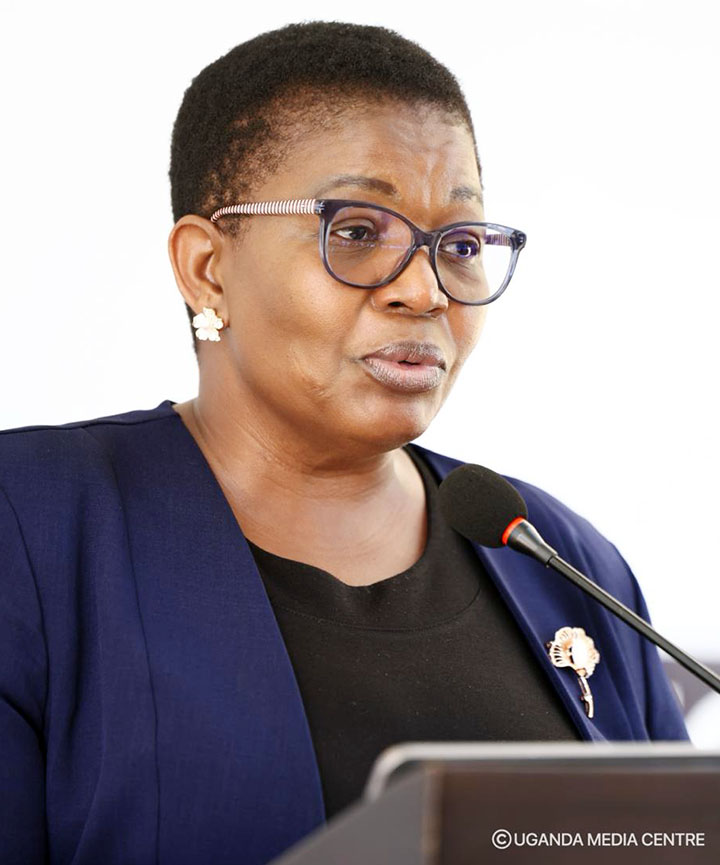
ICT and National Guidance Minister Justine Kasule Lumumba presented the decisions on October 6. The most immediate intervention is in Mount Elgon.
Cabinet approved Shs 62 billion for the resettlement of households living in landslide-prone areas. Of these, 1,423 households classified as being in “very high risk” zones will each receive Shs 18 million.
The money is divided into two parts: Shs 8 million to buy two acres of land and Shs 10 million to build a house.
Government will also spend Shs 8.870 billion to purchase 2,217.66 acres of verified land in the sub-region for families choosing land allocated directly by the state.
The compensation shifts the government’s response from managing disasters after they occur to moving people away from danger before the next catastrophe.
But relocation also means surrender.
Once compensated, families must leave their existing plots. The Uganda Wildlife Authority will receive the abandoned land for conservation. This condition is significant because relocation is not simply about building another house. It can also mean that families rooted in the area give up land carrying economic, social and ancestral importance.
The Office of the Prime Minister will supervise payments with the Internal Security Organization, local governments, and Parish Development Model structures to prevent fraud and ensure the money reaches the intended households.
And the 1,423 households are only the beginning.
Cabinet says another 10,558 households remain in high-risk zones. Relocating them is estimated to require Shs 190,044 billion, which the government intends to seek through a supplementary budget.
That means the larger resettlement challenge remains unresolved. The immediate package provides an escape route for the families facing the greatest danger, but thousands more will continue living with the risk while the government searches for considerably more money.
Busoga Gets a Public University
Another Cabinet decision could reshape higher education in Busoga.
Government has approved the establishment of Iganga University as a national public university, resolving the long-running status of Busoga University.
The Ministry of Finance has been directed to provide Shs 89.998 billion to establish the institution. The historic Namasagali campus will become a constituent college specializing in marine and fisheries studies, while other inherited campuses will also form part of the new institution.
The decision is important beyond the university’s name. A public university represents a long-term government financial commitment involving infrastructure, teaching staff, administration and academic programmes. However, before the institution can fully take shape, it must complete a legal process.
The Education and Sports Ministry will work with the Ministry of Justice and Constitutional Affairs to prepare the necessary legislation and send it to Parliament for approval.
In other words, Cabinet has made the policy decision, but Parliament still has a role in creating the university’s legal foundation.
Big Roads, Bigger Borrowing
The largest numbers in Cabinet’s package are tied to infrastructure.
The government wants to borrow up to EUR 142.68 million, approximately Shs 570 billion, to pave two roads in southwestern Uganda: the 47-kilometre Humurwa–Karere–Kanungu road and the 32-kilometre Kinyantorogo–Butogota–Buhoma road.
The roads are intended to improve commercial transport and access to tourist areas.
Cabinet approval, however, does not automatically make the loans final. The borrowing proposals must now go before Parliament for scrutiny under Article 159 of the Constitution and Section 34 of the Public Finance Management Act.
That distinction matters for taxpayers. Roads can reduce travel times, lower transport costs and improve access to markets and tourism destinations. But borrowed money must eventually be repaid. Parliament’s task will therefore be to scrutinize not simply what Uganda intends to build, but the financial obligations attached to doing so.
An even larger financing decision concerns the Standard Gauge Railway.
Cabinet approved the issuance of a EUR 405 million Sovereign Sukuk to finance part of the Malaba–Kampala SGR.
A Sukuk is an Islamic finance instrument used to raise capital. Rather than operating exactly like a conventional interest-paying government bond, it is structured to comply with Islamic financial principles. The government intends to use the instrument to raise substantial financing for railway construction.
Cabinet has also approved the draft Uganda Railways Bill, 2026, which would replace the Uganda Railways Act, Cap. 216. The proposed law is intended to modernize railway management, respond to changing transport markets and accommodate emerging urban mobility needs.
The railway decisions therefore address two sides of the same problem: how to finance new infrastructure and how to modernize the laws governing it.
Uganda Moves Deeper into East African Integration
Cabinet also ratified instruments adopted through the East African Community.
Among the changes is an amendment to Article 137 of the EAC Treaty recognizing French and Kiswahili as official working languages alongside English.
Cabinet also backed a revised EAC financing formula under which 50 per cent of the bloc’s budget will be divided equally among member states, while the remaining half will be financed through assessed contributions.
Another decision adopts Annex VII of the EAC Common Market Protocol, providing for mutual recognition of academic and professional qualifications among partner states.
For workers and professionals, that last decision may prove particularly important. Mutual recognition is intended to make qualifications more portable across EAC countries, strengthening one of the central promises of regional integration: that people should be able to move and pursue opportunities across national borders with fewer institutional barriers.
The Minister of Foreign Affairs has been authorised to sign and deposit the ratification instruments formally.
Cabinet also announced that this year’s Independence Day celebrations will be held virtually from State House, Entebbe, under the theme, “Embracing our sovereignty with hope and visionary leadership.” Physical attendance will be restricted to 30 dignitaries and selected religious leaders.
The fifth National Commemoration of Bishop Hannington Day is meanwhile scheduled for October 29, 2026, at Kyando Hill in Mayuge district, with President Yoweri Kaguta Museveni expected as chief guest.