
KAMPALA – For businesses and households across Kampala, a planned power cut can mean an idle machine, spoiled food, interrupted work or an evening spent in darkness. Electricity officials say the disruptions are part of a nearly completed overhaul intended to make the metropolitan area’s power supply more stable.
The Greater Kampala Metropolitan Transmission System Improvement Project is now 90.57 per cent complete, according to a joint statement issued on July 23 by the Uganda Electricity Transmission Company Limited and the Uganda Electricity Distribution Company Limited.
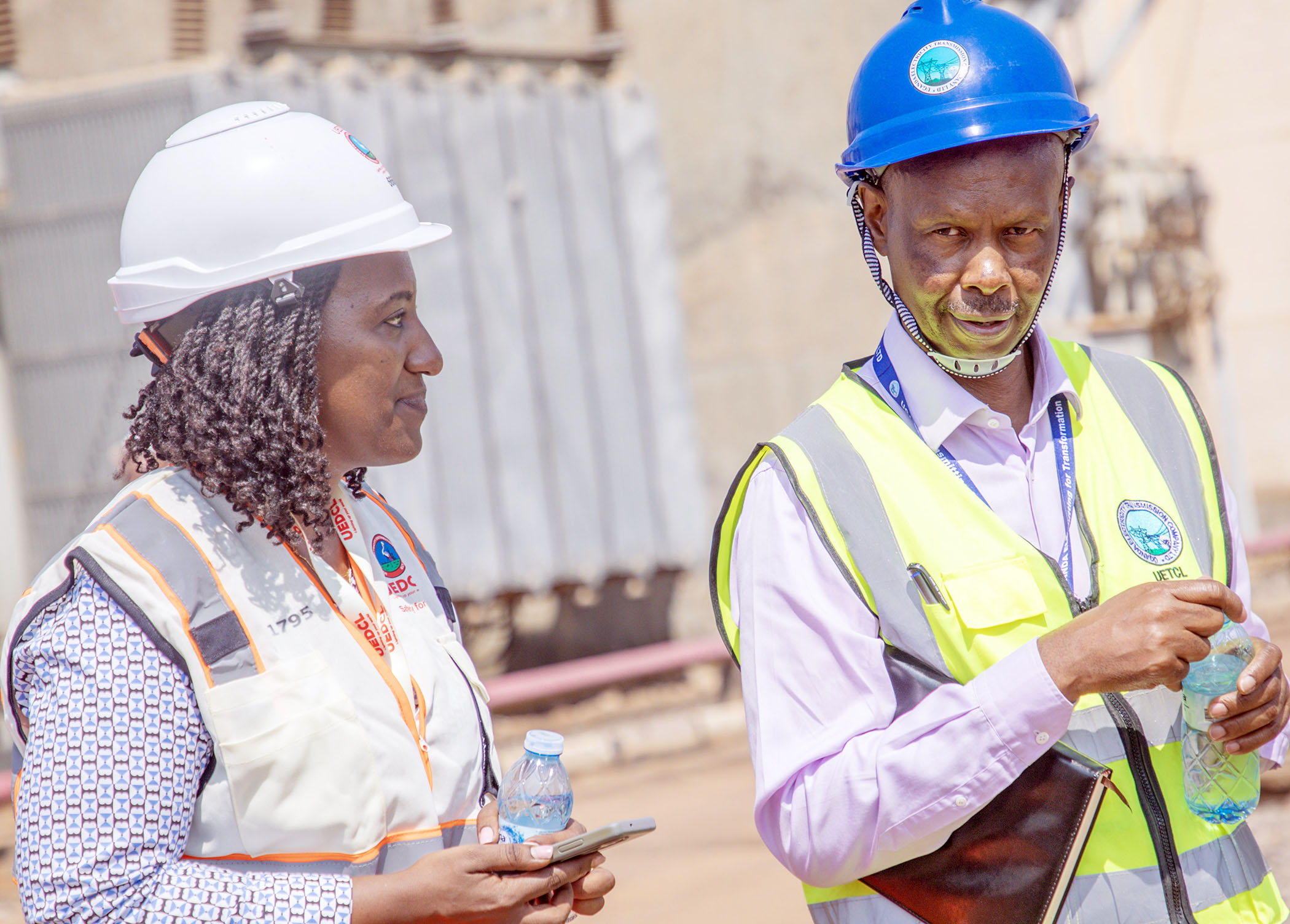
UETCL Chief Executive Officer Richard Matsiko and UEDCL Managing Director Joselyn Rwabwogo inspected the works as the companies sought to explain why customers have continued to experience planned outages.
“We understand the inconvenience these planned outages have caused to businesses and residents across the Kampala Metropolitan Area,” Matsiko said. “However, these interruptions are a necessary part of delivering a stronger, more reliable transmission network capable of meeting the city’s rapidly growing electricity demand.”
The project is designed to strengthen the high-voltage network that carries electricity into Kampala and surrounding areas before it is distributed to homes, shops and factories.
In simple terms, transmission lines are the major highways of the electricity system. They carry large amounts of power over long distances. Substations then reduce or redirect that electricity before distribution lines deliver it to consumers.
When transmission equipment is old, overloaded or operating close to its design limit, faults in one part of the network can interrupt supply elsewhere. The upgrade is intended to reduce those bottlenecks and give the system more capacity as Kampala’s population, industries and commercial activity grow.
Electricity demand in the metropolitan area is increasing by an estimated 15 per cent each year, according to the statement. That means the network must serve significantly more homes and businesses every year, even before large new industrial projects are connected.
The Maya substation in Buloba, built to handle power at 220, 132 and 33 kilovolts, has been completed. A kilovolt measures electrical pressure: the higher the voltage, the more electricity a line can move efficiently over long distances.
Other works are continuing, including the construction of a new substation at Mukono and upgrades at Kawaala, Mutundwe and Bujagali. Existing 132-kilovolt transmission lines are also being “re-conductored”, meaning their wires are being replaced or improved so they can carry more electricity safely.
The project also includes new transmission lines and a mobile substation at Namungoona. A mobile substation can be moved or deployed where needed to restore or strengthen supply while permanent equipment is being repaired or upgraded.
These works sometimes require planned shutdowns. Engineers must switch off sections of the network to protect workers, customers and equipment while new lines are connected or existing substations are modified.
“Unfortunately, during the UETCL grid improvement works, there is intermittent supply as a result,” Rwabwogo said. “We appeal to our customers to bear with us during this period for a great and better service delivery at the end of the day.”
The promised benefit is fewer widespread outages and a more stable supply after construction ends. Businesses may face fewer interruptions to production, while households could experience less damage to appliances caused by unstable electricity.
UEDCL also expects the improved network to support its plan to connect as many as 300,000 new customers each year. Whether that target is achieved will depend not only on transmission capacity, but also on the expansion of local distribution lines and the ability of households and businesses to afford connections.
The project is financed by the Japan International Cooperation Agency through a concessional loan of 13 billion Japanese yen, which the statement values at about US$83.3 million. A concessional loan is financing offered on more favourable terms than an ordinary commercial loan, usually through lower interest rates or a longer repayment period.
UETCL is implementing the project, while China Machinery Engineering Corporation and Toyota Tsusho Corporation form the contracting consortium.
The companies say the stronger network will also support large economic projects, including industrial expansion and the planned Buloba Pump Station under Uganda’s oil and gas development programme. That makes the upgrade more than a Kampala electricity project: it is part of the infrastructure Uganda needs to support investment, jobs and urban growth.
But the immediate cost is being borne by customers dealing with temporary interruptions. The two companies have promised to keep the public informed, although their statement did not provide a final completion date or a detailed schedule of the remaining shutdowns.
What happens next will determine whether the inconvenience delivers the promised improvement.