
KAMPALA – When the first group of Ugandan students trained entirely under the country’s new Competency-Based Curriculum (CBC) sat their final secondary school exams last year, the stakes were unusually high.
Four years ago, Uganda dismantled its long-standing, content-heavy syllabus, a system critics said rewarded memorisation over understanding and replaced it with a curriculum built around what students can do, not just what they can recall. Now, the Uganda National Examinations Board (UNEB) has offered its first structured verdict.
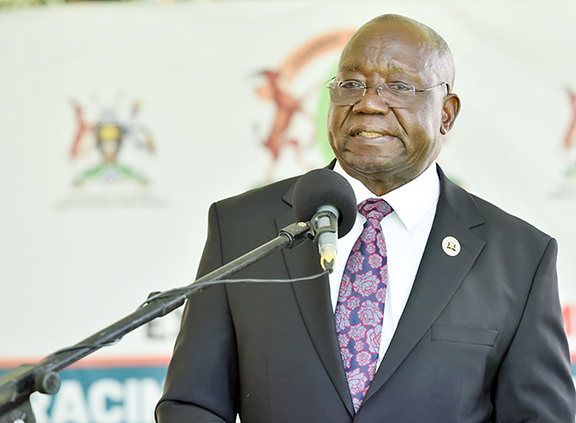
In a study released alongside the 2025 Uganda Certificate of Education (UCE) results, UNEB’s Executive Director Dan N. Odongo presented findings from interviews with 44 headteachers and focus group discussions with teachers and Senior Four students across 171 secondary schools, rural and urban, public and private. The conclusion: classrooms are changing.
But not without strain.
A Cultural Shift in the Classroom
At the heart of the reform was an ambitious goal, to move from teacher-centred instruction and exam cramming to a system designed to nurture critical thinking, creativity, communication, and collaboration.
According to UNEB’s survey, 93 percent of headteachers and teachers, in at least 96 percent of sampled schools, say learners under the new curriculum show stronger problem-solving, communication, and creative skills than those taught under the old system.
School leaders report that students now “identify problems and propose solutions” instead of waiting for instructions. Teachers say learners increasingly research independently and sometimes challenge them with prior knowledge, a sharp contrast to the “spoon-feeding” culture one headteacher associated with the previous syllabus.
Perhaps the most visible change is confidence. Students now present projects, defend arguments, and explain ideas before peers. Even shy learners, teachers say, are gradually finding their voices.
In a country where classroom hierarchy has traditionally been rigid, that cultural shift matters.
Learning by Doing — and Earning
The engine of the CBC reform is project-based learning. Nearly all headteachers (98 percent) and teachers in 91 percent of schools surveyed say student projects are useful, not just for learning, but for communities.
The projects are strikingly practical. Students are growing mushrooms and vegetables, producing organic manure, and keeping bees. They make liquid soap and dustbins. Some produce charcoal briquettes and recycle plastic waste into usable products. Others are extracting avocado oil, baking goods, or designing simple construction tools.
In some cases, classroom assignments have blurred into enterprise. One student wrote a promotional song for a local hotel; the impressed owner offered to cover their tuition. Others have used school gardens to generate income for fees and materials.
For many learners, the appeal is clear: even if financial hardship forces them to leave school early, they will not be “stranded,” as one student put it. They will leave with a skill.
In a country where youth unemployment remains high and much of the economy is informal, that promise is powerful.
Schools as Innovation Hubs
The reform appears to be quietly reshaping schools’ relationships with their communities.
Students are recycling waste and planting trees, more than 200 in one community-backed initiative. Communities are buying soap, produce, and other goods from schools at subsidised prices. In some areas, parents attend weekend sessions led by students to learn skills like liquid soap production.
Agriculture students advise local farmers on crop selection and input use.
In effect, some secondary schools are evolving from examination centres into small innovation hubs, particularly in rural areas where micro-enterprises and farming dominate.
Cracks Beneath the Surface
Yet the report also reveals structural tensions.
Projects are costly and time-consuming. Many schools struggle to finance materials. Large class sizes, sometimes up to 75 students, make meaningful continuous assessment difficult. Competency-based learning requires close supervision, feedback, and individual attention. Overcrowded classrooms undermine that promise.
Resource gaps persist. Students cite limited internet access and outdated libraries. Boarding schools often restrict smartphone use, further limiting research opportunities. Teachers report shortages of books and instructional materials.
Then there is assessment integrity. Continuous assessment counts for 20 percent of final grades. Some educators quietly question whether all schools implement it consistently or authentically, especially where digital infrastructure is weak.
UNEB itself notes that while the 176-school sample was representative, a larger study would strengthen the findings.
A Reform at a Crossroads
The early evidence suggests Uganda’s education system is indeed shifting, away from memorization and toward application.
But reform momentum can stall.
Scaling these gains will require sustained investment in teacher training, learning materials and digital infrastructure. Without that, the CBC risks widening inequality between well-resourced urban schools and struggling rural ones.
Class size management is equally critical. Competency-based education is labor-intensive. Without manageable ratios, its core promise, individualised skill development, may erode.
And public trust hinges on assessment credibility. If the 20 percent school-based score is unevenly applied, the legitimacy of the entire system could suffer.
Still, in a nation with one of the world’s youngest populations, the stakes could not be higher. A curriculum that produces adaptable, entrepreneurial graduates aligns closely with Uganda’s demographic and economic realities.
As one teacher told UNEB researchers, the new curriculum is “very good, if they don’t kill it.”
For now, Uganda’s skills revolution appears to be taking root. Whether it matures into lasting transformation will depend not on ambition alone, but on political will, consistent funding and the hard work of keeping reform alive long after the headlines fade.