
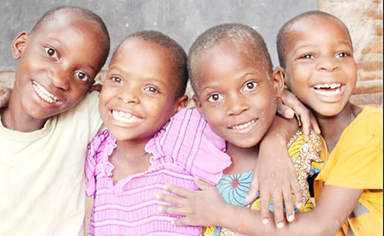
KAMPALA – In rural Uganda, a 15-year-old girl walks a couple of kilometers to fetch a jerrycan of water in the morning. By midday, she may be in a classroom, if her family can afford exercise books. By 18, she could be married. By 20, she may already have two children.
Or she could be something else entirely: a nurse, an entrepreneur, a teacher, a software developer.
The difference between those futures, the World Bank argues in its latest report, Pathways to Prosperity for Adolescent Girls in Africa, is not destiny. It is investment.
Africa is the youngest region on earth. More than 145 million adolescent girls, over one-fifth of the world’s total, live on the continent today. By 2050, that share will rise to more than one-third. In demographic terms, this generation of girls is not a side story. It is the story.
Yet for millions, the path to adulthood narrows early.
One in three African girls marries before the age of 18, the highest rate globally. Western and Central Africa alone account for seven of the ten countries with the highest child marriage prevalence. While rates have fallen in some places over the past 25 years, the gains have largely favoured wealthier households. Among the poorest families, child marriage remains stubborn, and in some cases rising.
Marriage often leads to early childbearing and higher lifetime fertility, with profound consequences. Research shows links to poorer health outcomes, reduced schooling, and lower earnings over a woman’s lifetime. The cost is not only personal; it is national.
The report’s most striking claim is economic. Every dollar invested in empowering adolescent girls could generate more than ten dollars in economic returns. The net benefit, it estimates, could reach $2.4 trillion, compared with less than $200 billion needed to invest in the next two generations of girls across all countries.
For Africa, that is not charity. It is strategy.
When the Gap Widens
Gender gaps in Africa do not begin at adolescence, but they widen there.
Among younger adolescents aged 10 to 14, schooling gaps between boys and girls are often small. But girls are more likely to shoulder household work, while boys are more likely to engage in paid work.
By ages 15 to 19, the divergence sharpens. Twenty-six percent of girls in this age group are neither working nor in school, almost three times the rate for boys. About 22 percent are already married, compared with just one percent of boys.
By early adulthood, the gap becomes stark. Among women aged 20 to 24, 56 percent are married with children. Fewer than 16 percent remain in school. For young men, the picture is different: most remain unmarried and are more likely to continue studying or enter the labour force.
Uganda reflects many of these trends. While primary school enrolment for girls has improved dramatically under Universal Primary Education, dropout rates spike during adolescence, often due to pregnancy, early marriage, or poverty. In some rural districts, teenage pregnancy remains among the highest in East Africa. For many families, marrying off a daughter can feel like a financial coping strategy.
But the report makes clear: early marriage and childbearing are not isolated events. They are turning points that reshape everything, education, income, agency, even health.
Beyond Schooling
Keeping girls in school remains a common policy goal across Africa. In many countries, more than 80 percent of girls aged 10 to 14 are enrolled. Yet by ages 15 to 19, fewer than half are still exclusively in school, unmarried, and without children.
Over the past two decades, school attendance among older adolescent girls has improved in most African countries. Marriage rates have generally fallen, but not everywhere. In Madagascar, Niger, Tanzania, and Zimbabwe, marriage among adolescent girls has increased. In Burundi and Zambia, the share of adolescent girls with children has risen. In Comoros, Tanzania, and Zimbabwe, both marriage and childbearing increased over the past 20 years.
The lesson, the authors argue, is that empowerment cannot be reduced to one metric.
The report proposes a broader framework built around four pillars: human capital (education and health), enabling resources (skills, finance, digital access, social networks and time), agency (the ability to make decisions and set goals), and context (laws, norms, labour markets, conflict and household dynamics). Together, these shape long-term economic achievement.
What emerges from impact evaluations across 11 African countries is sobering. Empowerment is deeply multidimensional. A girl may be educated but lack agency. She may have skills but no access to capital. She may aspire to work but be constrained by childcare or restrictive norms.
Crucially, the correlations between education and other forms of empowerment are weak. Schooling alone does not guarantee voice, income, or autonomy.
In Uganda, this resonates. A girl may complete secondary school yet still struggle to access finance, digital tools, or safe transport to work. Social norms around marriage and caregiving continue to shape choices long after classrooms are left behind.
A Holistic Imperative
The report’s core message is that business as usual will not suffice.
Empowering adolescent girls requires more than classrooms and clinics. It demands comprehensive support, skills training, social protection, financial inclusion, digital access, and reforms that challenge discriminatory norms and laws.
It also requires tailored approaches. A 13-year-old in primary school has different needs from a 19-year-old mother balancing childcare and informal work. Young mothers, in particular, face steep barriers to re-entering education or formal employment.
Digital tools offer promise, but only if girls have the devices, connectivity, and skills to use them. Monitoring and evaluation must be continuous, the authors stress, because girls’ lives and constraints shift quickly.
For Uganda and much of Africa, the stakes are clear. A continent that fails its girls will struggle to reduce poverty or harness its demographic dividend. A continent that invests in them stands to transform its economic trajectory.
Thirty years after the Beijing Declaration set out a roadmap for gender equality, the gap between aspiration and reality remains wide. But the report insists the economics are compelling, the evidence is clear, and the opportunity—while narrowing—is still within reach.
In rural Uganda, the future is still unwritten.
Whether that 15-year-old carries only a jerrycan or also carries a laptop, a business plan, a degree, depends on choices being made now in boardrooms, ministries, and communities across Africa.
The prosperity of the continent may well hinge on whether those choices finally put its girls at the centre.