
KAMPALA — When Uganda Electricity Distribution Company Limited (UEDCL) took over the national power grid from UMEME in April 2025, the move was hailed as the dawn of a new era. Six months later, the numbers look impressive on paper: more than 640,000 new connections, a dramatic expansion of the grid, and modest reductions in energy losses. But behind the bold figures lies a more complicated story about the challenges of running a state-owned monopoly in a sector vital to the country’s economic future.
Numbers tell a story of scale
According to UEDCL’s managing director, Paul Mwesigwa, connections to the national grid have surged from 1.78 million to over 2.43 million in just half a year. Households with access to electricity have grown to more than 2.3 million, while the grid itself has stretched from 3,400 kilometers to over 5,100. Installed generation capacity, boosted by new hydropower and solar plants, has risen to just over 2,000 megawatts.
Equally significant is the reported dip in energy losses, the electricity that disappears through theft, technical faults, or inefficiency, from 19.1 percent to 16.8 percent. For a country where every percentage point of lost power translates into billions of shillings, the reduction matters.
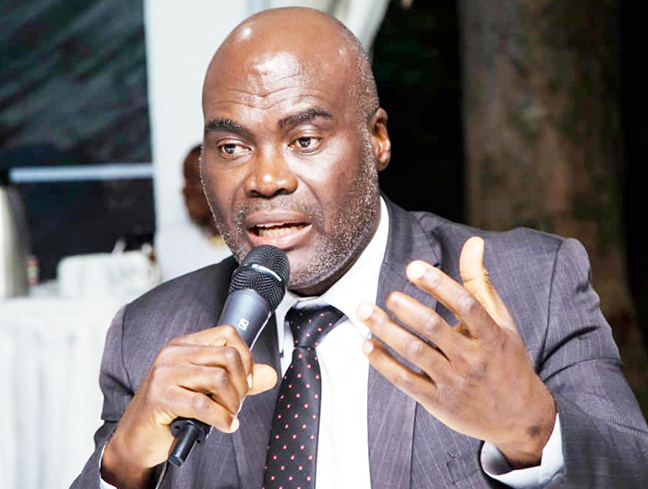
“It was a fundamental decision for the government to take back control,” Mwesigwa told a gathering of agency heads during a meeting at State House Investors’ Protection Unit (SHIPU) on Tuesday. “And in that regard, the government has actually scored very well.”
For supporters of the takeover, UEDCL’s early gains are proof that a publicly owned utility can move faster and cut deeper than a profit-driven private concessionaire. Faster new connections, aided by regulatory approvals and procurement streamlining, have been especially popular. For families waiting years for a line to reach their village, the symbolic value is enormous.
There are also long-term ambitions. UEDCL is expected not only to extend access but also to play a more active role in transitioning households away from biomass cooking, supporting solar uptake, and powering rural enterprises. Agencies such as the Uganda Energy Credit Capitalisation Company (UECCC) have already rolled out subsidies for solar home systems, pumps, and cookstoves, seeking to tie the national grid into a broader clean energy vision.
But cracks are visible
Yet the enthusiasm masks real concerns. Energy experts caution that the scale of expansion raises questions about sustainability. Rapid grid growth requires heavy capital investment, and UEDCL is already grappling with the realities of vandalism, cable theft, and the costs of maintaining far-flung rural lines.
“Every kilometer of line added is a kilometer that must be policed, repaired, and serviced,” one analyst noted. “That’s not cheap, especially for a state utility with limited cash flow.”
Corruption and inefficiency, long associated with parastatals, remain an unspoken worry. Unlike UMEME, which operated under performance-based incentives, UEDCL will need to demonstrate it can deliver both scale and quality without slipping into the bureaucratic complacency that has hobbled other state-run ventures.
Some observers also point out that energy losses, while lower, are still high by global standards. At 16.8 percent, Uganda loses nearly one in every six units of electricity generated, a drag on both revenue and reliability.
The government’s decision to reclaim power distribution from UMEME was as much political as technical. President Yoweri Museveni had long criticized the private utility, accusing it of profiteering at the expense of ordinary Ugandans. The takeover was framed as a “liberation” of consumers. Six months on, the stakes are clear: failure to sustain progress will not just be an operational setback but a political embarrassment.
At the State House Investors’ Protection Unit meeting, Benson Turamye, head of the Public Procurement and Disposal of Public Assets Authority (PPDA), flagged vandalism as a pressing problem undermining rural access. Others urged UEDCL to publicize its achievements widely to counter skepticism. “The results are really encouraging,” said Kule Walid of the Uganda Registration Services Bureau. “This needs to be publicised on all mass media for the government to be visible.”
A cautious verdict
For now, UEDCL can point to tangible progress: more connections, wider reach, and early signs of efficiency gains. But whether the model can be sustained, and whether it can deliver affordable, reliable electricity to both Kampala’s industries and the remotest villages, remains uncertain.
The next 184 days may be even more important than the first. As one energy expert put it: “Connecting households is the easy part. Keeping the lights on, and making sure people can afford the bill, that’s the real test.”