
KAMPALA— The story of global finance is being rewritten—not in boardrooms or Wall Street trading floors, but in rural markets, crowded bus stops, and roadside shops in places like Uganda. The newly released Global Findex 2025 report captures a big shift: more people now hold a financial account than ever before. Since 2011, account ownership has climbed from 51 percent to 79 percent globally, a 28-point leap that owes much to one powerful force: digital finance.
In sub-Saharan Africa, the transformation has been even more dramatic. At the heart of it all is mobile money, a technology that has reshaped how individuals save, spend, send, and survive, especially in regions long underserved by traditional banks.
Uganda’s Leap Through the Digital Divide
Uganda exemplifies this revolution. Since the launch of mobile money services in 2009, adoption has surged, offering a lifeline to individuals and communities excluded from brick-and-mortar banking. By December 2022, the country had 25 million registered mobile money accounts, according to the International Monetary Fund (IMF).
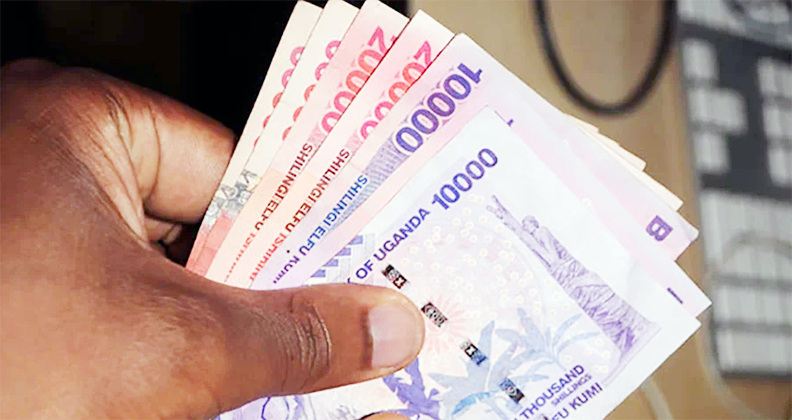
What’s striking is not just the scale, but the pace. While debit card ownership rose by 20 percent and credit card ownership by 25 percent between 2018 and 2022, mobile money use skyrocketed by 73 percent in the same period. Today, Uganda has just 3.1 million debit cards and a mere 10,000 credit cards in circulation, starkly contrasting the dominance of mobile-based finance.
This shift has been most profound in rural areas, where formal banking infrastructure remains thin. Mobile money agents have filled the void, giving farmers, market vendors, and students access to tools that allow them to save, receive remittances, pay for services, and even borrow.
A Continental Shift in Motion
The Global Findex 2025 shows that 40 percent of adults in Sub-Saharan Africa now own a mobile money account—more than any other region in the world. Even more significantly, 20 percent of adults in the region rely exclusively on mobile money, bypassing traditional banks altogether.
Globally, mobile money use has risen from just 2 percent of adults in 2014 to 15 percent in 2024, reaching 18 percent in low- and middle-income countries. This growth highlights how a technology born from necessity has evolved into a pillar of financial infrastructure, especially in economies where financial access is limited or unreliable.
The shift is also reflected in how people now save and spend. The report notes that in low- and middle-income countries, 40 percent of adults now save formally, and over 60 percent engage in digital payments, a remarkable increase driven by mobile-based platforms and digital wallets.
Inclusion with Uneven Edges
Despite the optimism, the report offers sobering reminders: 1.3 billion adults globally still lack access to financial services. And while the gender gap is narrowing, it has not disappeared.
In low- and middle-income economies, 73 percent of women hold financial accounts, compared to 78 percent of men—a five-point gap. That’s an improvement from 2011’s nine-point gap, but persistent barriers—such as phone ownership, social norms, and digital literacy—continue to hold women back.
Income and education disparities also persist. In these economies, 83 percent of adults in the wealthiest 60 percent of households have accounts, compared to 72 percent in the poorest 40 percent. Adults with only primary education are 13 percentage points less likely to own an account than those with secondary or higher education. In Sub-Saharan Africa, that gap jumps to a troubling 31 percentage points.
Age is another factor. Globally, adults over 25 are more likely to be financially included than younger adults aged 15–24. In some parts of Africa and the Middle East, this age gap reaches 15 percentage points, though in mobile-money powerhouses like Kenya, the divide is statistically negligible.
Uganda’s Role in a Broader Global Agenda
Uganda’s rapid adoption of mobile money offers a lesson in innovation tailored to local realities. For many, mobile phones are more than communication tools—they are banks, business hubs, and safety nets. But for the country to maintain momentum, investment in digital infrastructure, financial literacy, and consumer protection must keep pace.
Policymakers also face the challenge of expanding digital inclusion without reinforcing inequality. The tools that have helped urban dwellers and men access financial services must now reach the underserved rural women, youth, and low-income communities who still remain at the margins.
The broader message from the Global Findex 2025 is clear: financial inclusion has advanced, but it is not yet complete. If the goal is universal access, the next frontier must be about equity—not just numbers.
A Cautious Celebration
The Global Findex 2025 is both a celebration of progress and a call to action. The rise of mobile money across Uganda and Africa has shown how quickly financial landscapes can evolve. But it has also revealed where cracks remain—where technology alone cannot overcome social, educational, or infrastructural divides.
As global conversations around digital transformation, sustainable development, and post-pandemic recovery unfold, Uganda’s experience is a powerful case study. It shows that inclusive innovation, when matched with visionary policy, can change millions of lives. But only if it keeps those furthest behind at its center.