
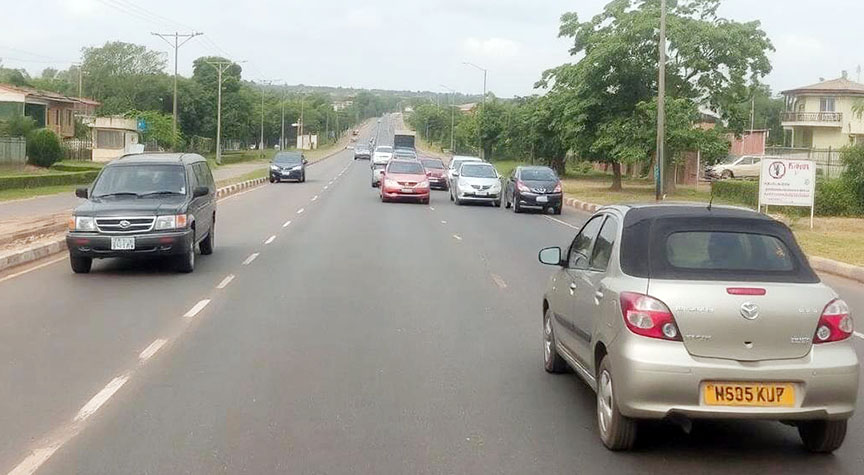
Kampala, February 26, 2025 – The Ugandan government has introduced the Traffic and Road Safety (Prescription of Speed Limits) Regulations, 2024, a new legal framework aimed at standardizing speed limits across different road types and vehicle categories. Enacted under Section 108(1) of the Traffic and Road Safety Act, Cap. 347, these regulations replace the two-decade-old 2004 speed limit framework, incorporating stricter enforcement mechanisms and a structured approach to speed management. With road accidents remaining a critical public safety concern, the regulations seek to balance traffic efficiency, pedestrian safety, and law enforcement, ensuring a more organized and accident-free road transport system.
By introducing clear speed limits tailored to different road types and vehicle categories, the new regulations seek to enhance road safety, streamline traffic flow, and align Uganda’s transport policies with international best practices. However, the effectiveness of these measures will largely depend on rigorous enforcement, public compliance, and investment in modern monitoring technology to ensure that the intended benefits translate into real improvements in road safety.
Key Provisions of the New Regulations
The Traffic and Road Safety (Prescription of Speed Limits) Regulations, 2024, introduce a tiered speed limit structure based on road classification and vehicle type. The prescribed limits are intended to minimize road accidents, facilitate better traffic management, and enhance pedestrian safety.
In urban areas, trading centers, and built-up zones, where high pedestrian traffic and congestion are common, all vehicles—including passenger cars, motorcycles, public service vehicles, and goods vehicles—are restricted to 30 km/h. However, on highways passing through urban areas, vehicles may travel up to 50 km/h, while heavy goods vehicles and tractors are limited to 40 km/h.
On rural paved roads, passenger vehicles may travel at 90 km/h, while motorcycles and tricycles are limited to 60 km/h. Public service vehicles, light goods vehicles, and omnibuses are allowed a maximum of 80 km/h, while heavy goods vehicles are restricted to 60 km/h. On gravel roads, where accident risks are higher due to lower traction, speed limits are significantly reduced, with most vehicles restricted to 60 km/h or below.
On expressways and dual carriageways, designed for high-speed travel, passenger vehicles and motorcycles are permitted a maximum speed of 100 km/h, while light and medium goods vehicles are limited to 80 km/h. Heavy goods vehicles, tractors, and engineering plants face stricter limits, ensuring their movement does not disrupt faster traffic.
Additionally, special speed zones, such as school zones, markets, hospitals, and business centers, enforce a uniform 30 km/h limit for all vehicles to protect pedestrians and reduce accident severity in high-risk areas.
Ministerial Oversight and Enforcement Mechanisms
The regulations grant the Minister of Works and Transport the authority to set special speed limits upon request from a recognized road authority. This provision allows for flexibility in traffic management, enabling adjustments based on changing road conditions, urban expansion, and evolving safety requirements.
To enhance enforcement, the regulations introduce strict penalties under the Traffic and Road Safety (Express Penalty Scheme for Road Traffic Offenders) Regulations, 2024. Exceeding speed limits by 1–30 km/h attracts a fine of 10 currency points (UGX 200,000), while exceeding the limit by more than 30 km/h results in a 30 currency point fine (UGX 600,000). These penalties are designed to deter reckless driving and reinforce compliance with the prescribed limits.
Comparative Analysis: Uganda’s Speed Limits vs. International Standards
The 2024 speed regulations align with the best international practices, where speed limits are adjusted according to road design, traffic density, and safety risks. In many developed nations, urban speed limits range between 30 and 50 km/h, similar to Uganda’s new restrictions. Expressway limits in East African counterparts like Kenya and Rwanda also hover around 100 km/h for passenger vehicles, mirroring Uganda’s new framework. However, enforcement remains a key challenge in Uganda, where speeding and reckless driving are major contributors to road fatalities.
A notable improvement in Uganda’s framework is the special speed zones for vulnerable areas such as schools and hospitals, reinforcing global road safety initiatives like the UN’s Decade of Action for Road Safety. However, Uganda still faces a high road accident rate, largely due to poor enforcement, road infrastructure deficiencies, and limited public awareness.
Potential Challenges in Implementation and Public Reception
While the new speed regulations provide a comprehensive legal framework, their effectiveness will depend on enforcement, public compliance, and infrastructure readiness. One of the major challenges Uganda faces is limited enforcement capacity, with a lack of speed monitoring technology such as speed cameras and radar enforcement units in many regions. Traffic officers often rely on manual enforcement, increasing the risk of corruption and selective application of the law.
Public perception may also pose obstacles. Many Ugandan motorists lack awareness of road safety regulations, and some view speed limits as an inconvenience rather than a safety measure. Additionally, bodaboda riders (motorcycle taxi operators), who contribute significantly to road fatalities, may resist compliance due to their reliance on speeding to maximize passenger turnover.
Moreover, Uganda’s road infrastructure, particularly in rural areas, is not adequately designed to support strict speed enforcement. Many roads lack clear signage, speed bumps, and designated pedestrian crossings, making it difficult for drivers to adhere to limits, especially in community access roads and high-risk areas.
Implications for Road Safety, Urban Planning, and Economic Growth
If properly enforced, the Traffic and Road Safety (Prescription of Speed Limits) Regulations, 2024, could significantly reduce road accidents, which remain a leading cause of injury and fatalities in Uganda. By aligning speed limits with road design and usage patterns, these regulations create a safer and more predictable driving environment, benefiting motorists, pedestrians, and cyclists alike.
The regulations also have critical implications for urban planning. With strict limits in urban areas and special speed zones, city planners may need to redesign intersections, pedestrian pathways, and public transport routes to complement the new framework. Additionally, these regulations support economic efficiency by ensuring that expressways and major highways facilitate faster, safer movement of goods and passengers, reducing travel times and logistics costs.
Furthermore, the integration of penalties under the Express Penalty Scheme enhances government revenue collection while discouraging reckless driving. However, successful implementation requires sustained efforts in public education, law enforcement, and infrastructural improvements. The government must invest in automated enforcement mechanisms, including speed cameras and digital monitoring, to ensure consistent and impartial application of the law.
Conclusion
The Traffic and Road Safety (Prescription of Speed Limits) Regulations, 2024, represent a progressive step toward improving road safety and traffic management in Uganda. By introducing clear speed limits based on road type, vehicle classification, and safety considerations, these regulations align Uganda with global best practices while addressing the unique challenges of its road network.
However, their success will depend on rigorous enforcement, public compliance, and infrastructure support. Addressing enforcement gaps, enhancing public awareness, and investing in speed-monitoring technology will be essential in realizing the full potential of these regulations. As Uganda moves forward, ensuring that speed limits translate into actual behavioral change on the roads will be the ultimate test of their effectiveness in reducing road fatalities and improving transport efficiency.