
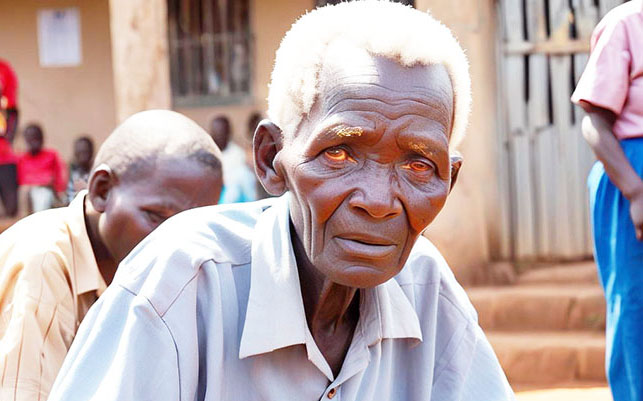
KAMPALA – The ongoing neglect of Uganda’s elderly population, particularly those over the age of 60, continues to raise significant concerns. Despite government efforts to improve financial inclusion, existing programs fail to adequately meet the needs of this vulnerable demographic.
During a press briefing on September 25, 2024, ahead of Uganda’s commemoration of the International Day of Older Persons, the Minister of State for Elderly Affairs, Gidudu Mafwabi Dominic, expressed alarm over the exclusion of older persons from income-generating initiatives. “Less than 3% of older persons are benefiting from the Parish Development Model (PDM),” he revealed, referring to the government’s flagship program aimed at eradicating poverty through village-based savings and credit cooperatives (SACCOs). Many elderly individuals, the minister explained, are left out of these SACCOs due to assumptions that they lack the capacity to borrow and repay loans.
“The notion that it is not morally right to recover money from frail older persons above 70, who have limited support options, is deeply flawed,” Minister Gidudu emphasized. He highlighted the ethical concerns surrounding the enforcement of loan repayments from elderly citizens, many of whom lack reliable sources of income.
These remarks come just days before Uganda joins the global community in observing the International Day of Older Persons on October 1. Since Uganda began commemorating the day in 1999, the country has made significant strides in supporting its elderly population, though major challenges remain.
Among the government’s achievements, Minister Gidudu pointed to the Special Enterprise Grant for Older Persons (SEGOP), a program supporting 9,932 elderly individuals engaged in small-scale enterprises across 181 local governments. This initiative, designed to promote economic empowerment, has enabled many older persons to diversify their income sources, thereby improving their livelihoods.
In addition, the Social Assistance Grants for Empowerment (SAGE), which provides financial aid to senior citizens, continues to support 307,123 elderly persons aged 80 and above. Each beneficiary receives Ushs 25,000 per month, distributed quarterly. “Though the amount may seem small, it has significantly transformed the lives of older persons and enhanced the government’s responsiveness to their needs,” the minister said.
However, the success of these programs has been overshadowed by budgetary and administrative setbacks. One critical issue, as raised by the minister, is an erroneous budget cut of UGX 21 billion from the SAGE program, which could affect up to 63,000 senior citizens. Without swift action, thousands of elderly individuals may lose access to their monthly stipends. “The Ministry of Finance has pledged to address this issue through a 3% supplementary budget,” Gidudu assured.
Further complicating the situation is a 2018 parliamentary resolution to lower the eligibility age for SAGE grants from 80 to 65 years, which has yet to be implemented despite growing public pressure. Minister Gidudu also highlighted a UGX 7 billion funding gap in the SEGOP program, which was designed to assist vulnerable elderly individuals in their 70s.
Beyond financial concerns, the minister also called attention to critical social issues affecting the elderly. The lack of specialized geriatric (elderly) care and the absence of government-supported homes for older persons were identified as urgent problems. As rapid urbanization and the breakdown of traditional family structures continue, private institutions are increasingly stepping in to provide care, though often at prohibitive costs.
“Weak family support systems, combined with the high cost of hiring home care nurses, have forced many elderly individuals into private homes, which are not properly regulated,” Minister Gidudu explained. He vowed to work with the Attorney General to improve oversight of these facilities.
The minister also expressed concern over declining intergenerational respect, exacerbated by the influence of modernity and Western culture. “The young generation’s failure to appreciate the wisdom and guidance of older persons remains a significant challenge,” he noted. The Ministry of Gender, Labour, and Social Development is working with the Attorney General to strengthen the principles of the Older Persons Bill, which seeks to restore respect for elders in Ugandan society.
As Uganda prepares to celebrate the International Day of Older Persons, the minister’s message serves as a powerful reminder of the urgent need for comprehensive reforms in financial inclusion, social support, and healthcare for the elderly. Without such reforms, the neglect of older persons could have long-lasting effects on families and communities across the country.