
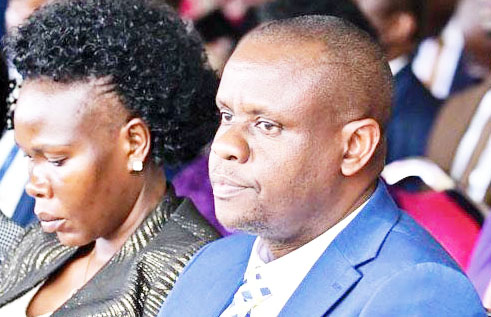
KAMPALA: In a statement, the Minister of State for Gender, Labour, and Social Development in charge of Children and Youth Affairs, Balaam Barugahare Atenyi, highlighted the persistent issue of child labour, calling it an endemic global challenge. Referencing a joint report by the International Labour Organization (ILO) and the United Nations Children’s Fund (UNICEF), Barugahare noted, “One in 10 children aged 5 and above were involved in child labour worldwide, equating to an estimated 160 million children, or 63 million girls and 97 million boys. In Africa, the situation is not any better. ILO estimates that 92 million children aged 5-17 years are involved in child labour in Africa.”
The statement was issued at the Uganda Media Centre in Kampala on Tuesday in commemoration of the 2024 World Day Against Child Labour. This year’s global theme for the World Day Against Child Labour is: “Let us Act on our Commitments: End Child Labour!”
In Uganda, incidences of child labour surged during the COVID-19 pandemic, rising from 21% to 36%, according to the Uganda National Household Survey 2019/2020. Even after schools reopened in January 2022, one in ten school children did not return, most likely slipping into child labour. Further analysis of the data before and after March 20, 2020, showed “that 36% of children aged 5-17 years were engaged in child labour, including household chores, an increase from 21% before the pandemic.”
“The highest proportions of child labour were found in Busoga and Bukedi sub-regions, with 29% and 28% respectively, and more prevalent in rural areas (31%) compared to urban areas (20%),” the minister said.
The recent UBOS National Labour Force Survey (NLFS) 2021 revealed that 6.2 million (40%) of the 15.7 million children aged 5-17 years were involved in child labour, excluding those doing household work. The rates were higher in rural (42%) compared to urban (32%) areas. Notably, 10.4 million (67%) were working in an equal share of six in ten by sex. The findings revealed that eight in 10 of the children aged 5-11 years were working, despite regulations against this, the statement said. The proportion of children involved in hazardous occupations or industries, and working for more than 14 hours a day, was almost 3%.
The global theme for this year’s World Day Against Child Labour marks 25 years since the ILO adopted Convention No. 182 (1999) on the Worst Forms of Child Labour, which was universally ratified by all ILO member states. It also calls for the ratification of Convention No. 138 (1973) on the Minimum Age for Admission to Employment.
“Abolition of child labour is a cornerstone of the aspiration for social justice, through which every worker can claim freely and on the basis of equality of opportunity and treatment their fair share of the wealth that they have helped to generate,” Barugahare emphasized.
The minister also pointed out the need to address the root causes of child labour and promote social justice, aligning with the Durban Call to Action adopted at the 5th Global Conference for the Elimination of Child Labour in 2022. This blueprint aims to turn the tide against child labour using every available economic, political, and social lever, ensuring that child labour is prioritized in national and global policymaking.
According to Uganda’s National Child Labour Policy 2006, child labour refers to work that is mentally, physically, socially, and morally dangerous and harmful to children, and activities that interfere with their school attendance. Barugahare outlined several interventions by the government to eradicate child labour, including developing policy, legal, and institutional frameworks such as the National Child Labour Policy (2006), the National Child Policy (2020), and the Employment Act (2006). Additionally, the implementation of Universal Free Primary Education (UPE) ensures free primary education for all school-going children. To economically empower families, wealth creation programs like Operation Wealth Creation, “Emwoga,” the Parish Development Programme (PDM), and Special Grants for the Elderly have been introduced. The government is also enhancing labour inspection and enforcement of labour standards to ensure compliance with laws against child labour. Furthermore, advocacy and awareness-raising campaigns are being conducted to educate the public about the dangers and consequences of child labour.