

KAMPALA – Uganda’s decision to scrap visa fees ahead of the 2027 Africa Cup of Nations is being framed as a simple gesture of welcome. In reality, it’s a calculated economic signal—one that reaches far beyond football.
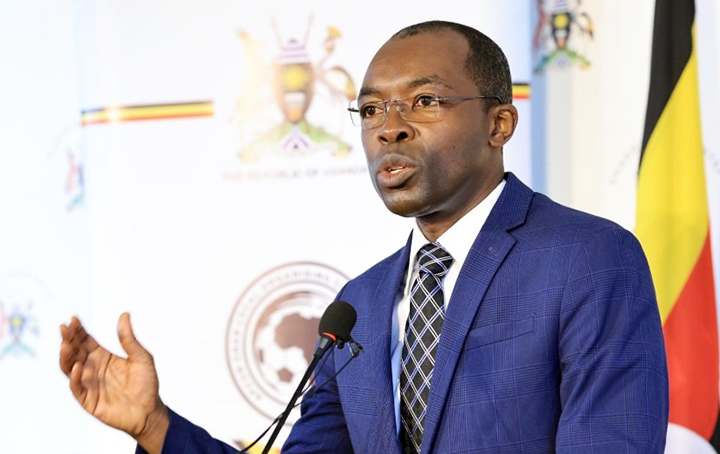
By waiving visa costs for a two-month window around the tournament, the government is lowering the barrier to entry for thousands of visitors expected from across the continent and beyond. As Dr Dennis Mugimba, chairperson of the communications and signage sub-committee on the Local Organising Committee, put it, the move is designed “to encourage more visitors to come to Uganda as part of the marketing and promotion of Destination Uganda.” But for ordinary Ugandans, the real question is what that encouragement will actually mean in practice.
Before a single ball is kicked, the effects are already unfolding. The government’s heavy financial commitments, running into hundreds of billions of shillings, are reshaping physical and economic landscapes, particularly in Hoima, Masindi, and Kampala. Roads are being expanded and lit, hospitals upgraded, and airports modernised. These aren’t abstract investments. For residents, they translate into smoother commutes, better access to healthcare, and new business opportunities tied to construction and supply chains.
The allocation of Shs 213.76 billion for road upgrades around key stadiums, alongside improvements to pedestrian walkways and street lighting, suggests a dual purpose: facilitating tournament logistics while addressing long-standing urban infrastructure gaps. Similarly, the Shs 91.05 billion earmarked for hospital upgrades is not just about meeting CAF standards; it could leave behind improved emergency care capacity in regions that have long struggled with under-resourced facilities.
Yet the most immediate economic promise lies in tourism and consumer spending. Mugimba estimates that if each visitor spends at least USD 1,000, Uganda could see “at least USD 500 million injected into the local economy during the tournament.” That projection hinges on a chain reaction: more visitors because of cheaper entry, more spending in hotels, restaurants, transport, and entertainment, and more income circulating through local businesses.
For small business owners, this is where policy meets reality. A boda boda rider in Kampala, a hotel operator in Hoima, or a food vendor near Namboole Stadium doesn’t directly benefit from visa policy, but they do benefit from the influx it’s meant to trigger. The proposed “PAMOJA visa,” which would allow seamless travel between Uganda, Kenya, and Tanzania, could amplify this effect by turning the tournament into a regional circuit rather than a single-country destination.
Still, the scale of public spending raises quieter, more complex questions. The additional Shs 905 billion allocation for AFCON preparations, on top of earlier commitments, signals a “whole-of-country approach,” as Mugimba describes it. But such an approach requires coordination that extends beyond government announcements. It depends on whether private sector players can access financing, whether infrastructure projects are completed on time, and whether the benefits are distributed beyond host cities.
During the tournament itself, the transformation will be most visible. Upgraded stadiums, improved transport networks, and enhanced urban services will converge to create an experience designed not just for spectators, but for global perception. Uganda will, in effect, be staging itself, its efficiency, hospitality, and readiness, on a continental platform.
That visibility is precisely the point. The Shs 37.85 billion allocated to marketing “Destination Uganda” underscores a longer-term ambition: to convert a one-month sporting event into sustained tourism growth. If successful, the visa waiver becomes less of a temporary incentive and more of a gateway, introducing first-time visitors who may return under normal conditions.
After the final whistle, the real test begins. The stadiums will remain, as will the roads, hospitals, and airport expansions. The question is whether they will continue to serve local communities effectively or become underutilised symbols of a moment that has passed. Infrastructure built for global events often carries this dual legacy, either embedding itself into everyday life or standing apart from it.
What’s clear is that the government is not treating AFCON 2027 as just a tournament. It is positioning it as a catalyst. As Mugimba noted, “there is a need for the private sector, government, and ordinary citizens to position themselves to tap into this AFCON-2027 economy.” That call to action shifts part of the responsibility onto Ugandans themselves.
Because in the end, the scrapping of visa fees is only the opening move. What follows, how money is spent, how systems perform, and how opportunities are seized, will determine whether AFCON 2027 becomes a fleeting spectacle or a turning point in Uganda’s economic story.
