
Close Menu
C-News
  • News
    • World
  • Politics
  • Business
    • Technology
    • Careers
  • Lifestyle
    • Entertainment
    • Travel
  • World News
  • Sports

Subscribe to Updates

Get the latest creative news from FooBar about art, design and business.

What's Hot

KCCA’s Crackdown Changed Kampala — But Not the Poverty Beneath It

May 7, 2026

Inside Kampala’s Secretive Crime Hub

May 6, 2026

What the World Bank’s 2026 Outlook Means for Uganda

April 30, 2026
Facebook X (Twitter) Instagram
Trending
  • KCCA’s Crackdown Changed Kampala — But Not the Poverty Beneath It
  • Inside Kampala’s Secretive Crime Hub
  • What the World Bank’s 2026 Outlook Means for Uganda
  • How a Water-Rich Uganda Can Feed East Africa
  • How Water, Not Oil, Will Decide Next Superpower
  • MTN Opens Kabale Innovation Hub in Youth Jobs Push
  • From $53Bn to $500Bn Economy: Here’s The Bold Plan Behind It
  • What South Asia’s Slowdown Means for Uganda
X (Twitter)
C-News
  • News
    • World
  • Politics
  • Business
    • Technology
    • Careers
  • Lifestyle
    • Entertainment
    • Travel
  • World News
  • Sports
C-News
Home»News»World Bank Report: Private Institutions Outpace Government Schools
News

World Bank Report: Private Institutions Outpace Government Schools

By C-News Bureau ChiefApril 9, 2024Updated:April 9, 2024No Comments3 Mins Read
Facebook Twitter Pinterest LinkedIn Tumblr Email
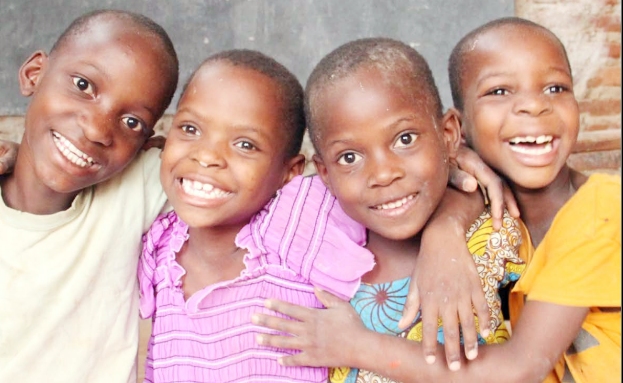
Child smiling (Courtesy Photo UNICEF)
Share
Facebook Twitter LinkedIn Pinterest Email

C-News Bureau Chief

In Uganda, the reliance on private educational institutions is significantly higher compared to neighboring countries, as highlighted by the World Bank’s Uganda Economic Update. The 2019/20 academic year saw only 62 percent of primary students attending government-supported schools, a figure notably lower than the 92 percent average in Ethiopia, Kenya, Rwanda, and Tanzania. At the secondary level, the situation is similar, with just 43 percent in government institutions, almost half the regional average of 85 percent.

For pre-primary-aged children, public school attendance is a mere 20 percent, contrasting sharply with a 76 percent regional average. The report suggests that this figure likely includes underage enrollment in primary schools, as pre-primary education is not formally offered in government schools. To address this gap, the Ministry of Education and Sports (MoES) is engaging in initiatives like school twinning and quality enhancement projects involving private schools.

The report also delves into Uganda’s approach to decentralization of education funding. Since 1986, Uganda has embraced decentralization to enhance democratic participation and public service delivery. The 1995 Constitution and the 1997 Local Government Act further defined this process. In the Fiscal Year (FY) 2022, about 20 percent of education funding was managed by central government agencies, including MoES, with 24 percent by universities and 56 percent by local governments.

Local governments primarily provide pre-primary, primary, and secondary education. They executed 94 percent of the national education budget for primary education and 95 percent for secondary education in FY2022. Funding is predominantly sourced from the national budget through various transfers and grants.

On a more advanced educational front, Uganda is progressing towards a private-sector-led Business, Technical, Vocational Education and Training (BTVET) system. This is part of the Skilling Uganda Strategic Plan, supported by the World Bank and others, which includes forming private sector-led skills councils and enhancing BTVET institutions.

However, challenges remain, particularly at the secondary education level. In 2019, the gross attendance ratio for primary education was 123 percent, but only 39 percent for secondary education, lagging behind regional averages. Enrollment inefficiencies, such as late entry and high repetition rates, particularly in public schools, exacerbate these challenges.

Cost barriers significantly impact educational attainment, with only 60 percent of children who start primary education in Uganda completing it. Economic factors are the most cited reasons for leaving school, alongside poor academic performance and social issues like teenage pregnancy, which the COVID-19 pandemic has further aggravated.

Top of Form


@ministry of education
Share. Facebook Twitter Pinterest LinkedIn Tumblr Email
C-News Bureau Chief
  • Website

Related Posts

KCCA’s Crackdown Changed Kampala — But Not the Poverty Beneath It

May 7, 2026

Inside Kampala’s Secretive Crime Hub

May 6, 2026

What the World Bank’s 2026 Outlook Means for Uganda

April 30, 2026
Top Posts

Opening Ceremony FIFA World Cup Qatar 2022

November 21, 2022

Musk lifts Donald Trump’s Twitter ban after a poll

November 23, 2022

Angry protests at giant iPhone factory in Zhengzhou

November 26, 2022

Protesters openly urge Xi to resign over China Covid curbs

November 27, 2022
Don't Miss
News

KCCA’s Crackdown Changed Kampala — But Not the Poverty Beneath It

By Chief EditorMay 7, 20260

kampala-trade-crackdown-city-transformation

Inside Kampala’s Secretive Crime Hub

May 6, 2026

What the World Bank’s 2026 Outlook Means for Uganda

April 30, 2026

How a Water-Rich Uganda Can Feed East Africa

April 28, 2026
Stay In Touch
  • Twitter

Subscribe to Updates

Get the latest news from c-news!

Demo
About Us
About Us

C-News is your source of the latest general news, business, health, travel and politics as it breaks in Uganda and East Africa.

Reports, Analysis, Pictorial and Videos.

Email Us: info@c-news.ug
Contact: +256 776745120

X (Twitter)
Our Picks

KCCA’s Crackdown Changed Kampala — But Not the Poverty Beneath It

May 7, 2026

Inside Kampala’s Secretive Crime Hub

May 6, 2026

What the World Bank’s 2026 Outlook Means for Uganda

April 30, 2026
Most Popular

Opening Ceremony FIFA World Cup Qatar 2022

November 21, 2022

Musk lifts Donald Trump’s Twitter ban after a poll

November 23, 2022

Angry protests at giant iPhone factory in Zhengzhou

November 26, 2022
  • Home
  • Privacy Policy
© C-NEWS 2026

Type above and press Enter to search. Press Esc to cancel.