
Close Menu
C-News
  • News
    • World
  • Politics
  • Business
    • Technology
    • Careers
  • Lifestyle
    • Entertainment
    • Travel
  • World News
  • Sports

Subscribe to Updates

Get the latest creative news from FooBar about art, design and business.

What's Hot

KCCA’s Crackdown Changed Kampala — But Not the Poverty Beneath It

May 7, 2026

Inside Kampala’s Secretive Crime Hub

May 6, 2026

What the World Bank’s 2026 Outlook Means for Uganda

April 30, 2026
Facebook X (Twitter) Instagram
Trending
  • KCCA’s Crackdown Changed Kampala — But Not the Poverty Beneath It
  • Inside Kampala’s Secretive Crime Hub
  • What the World Bank’s 2026 Outlook Means for Uganda
  • How a Water-Rich Uganda Can Feed East Africa
  • How Water, Not Oil, Will Decide Next Superpower
  • MTN Opens Kabale Innovation Hub in Youth Jobs Push
  • From $53Bn to $500Bn Economy: Here’s The Bold Plan Behind It
  • What South Asia’s Slowdown Means for Uganda
X (Twitter)
C-News
  • News
    • World
  • Politics
  • Business
    • Technology
    • Careers
  • Lifestyle
    • Entertainment
    • Travel
  • World News
  • Sports
C-News
Home»News»Uganda’s Child Productivity Stops at 38%, Reveals World Bank
News

Uganda’s Child Productivity Stops at 38%, Reveals World Bank

By C-News Bureau ChiefFebruary 12, 2024No Comments2 Mins Read
Facebook Twitter Pinterest LinkedIn Tumblr Email
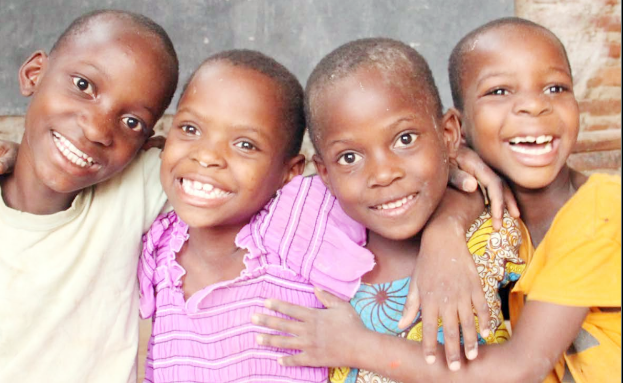
Ugandan Children sharing a happy moment.
Share
Facebook Twitter LinkedIn Pinterest Email

KAMPALA – In its latest economic update, the World Bank emphasizes Uganda’s critical juncture as a “pre-dividend” country with a young and growing population. This demographic trend presents a unique opportunity for economic growth, contingent on the productive potential of its future workforce. However, achieving this demographic dividend hinges on significant improvements in human capital investment.

The Human Capital Index (HCI) reveals that a child born in Uganda today will achieve only 38% of their potential productivity without proper investment in health and education. The country’s low HCI score, particularly in education, is a primary concern. Ugandan children are expected to complete 6.8 years of schooling by age 18, but when adjusted for learning quality, this figure drops to just 4.3 learning-adjusted years of schooling (LAYS), indicating a gap of 2.5 years.

Uganda’s investment in public education has been consistently low, falling below both international benchmarks and regional averages. While policies have expanded access to primary and secondary education, the quality of education and equitable access remain significant issues. Public spending is pro-poor at the primary level but becomes progressively regressive, with postsecondary education almost inaccessible to the poorest households.

The World Bank report identifies several challenges contributing to Uganda’s poor educational outcomes: low completion rates, poor learning outcomes, high repetition rates in primary schools, under-provision of early childhood education, and cost-related barriers to secondary education completion, particularly among girls.

To address these challenges and capitalize on the demographic transition, the report outlines five key recommendations for the Ugandan government and stakeholders:

  1. Increase Education Spending: Gradually raise education funding, prioritizing basic education and skill development over tertiary education expansion.
  2. Introduce Quality Pre-Primary Education: Implement one year of high-quality pre-primary education within the public education system.
  3. Reform the Teaching Profession: Improve teacher compensation, accountability, and support.
  4. Utilize Technological Solutions: Address systemic inefficiencies in education through technology.
  5. Reduce Out-of-Pocket Education Costs: Make education more accessible by lowering direct costs to families.

Implementing these recommendations is crucial for Uganda to leverage its demographic transition, achieve long-term development objectives, and ensure equitable access to high-quality education. The report underscores that a substantial increase in public education spending is necessary for Uganda to realize its potential and secure a prosperous future.


Share. Facebook Twitter Pinterest LinkedIn Tumblr Email
C-News Bureau Chief
  • Website

Related Posts

KCCA’s Crackdown Changed Kampala — But Not the Poverty Beneath It

May 7, 2026

Inside Kampala’s Secretive Crime Hub

May 6, 2026

What the World Bank’s 2026 Outlook Means for Uganda

April 30, 2026
Top Posts

Opening Ceremony FIFA World Cup Qatar 2022

November 21, 2022

Musk lifts Donald Trump’s Twitter ban after a poll

November 23, 2022

Angry protests at giant iPhone factory in Zhengzhou

November 26, 2022

Protesters openly urge Xi to resign over China Covid curbs

November 27, 2022
Don't Miss
News

KCCA’s Crackdown Changed Kampala — But Not the Poverty Beneath It

By Chief EditorMay 7, 20260

kampala-trade-crackdown-city-transformation

Inside Kampala’s Secretive Crime Hub

May 6, 2026

What the World Bank’s 2026 Outlook Means for Uganda

April 30, 2026

How a Water-Rich Uganda Can Feed East Africa

April 28, 2026
Stay In Touch
  • Twitter

Subscribe to Updates

Get the latest news from c-news!

Demo
About Us
About Us

C-News is your source of the latest general news, business, health, travel and politics as it breaks in Uganda and East Africa.

Reports, Analysis, Pictorial and Videos.

Email Us: info@c-news.ug
Contact: +256 776745120

X (Twitter)
Our Picks

KCCA’s Crackdown Changed Kampala — But Not the Poverty Beneath It

May 7, 2026

Inside Kampala’s Secretive Crime Hub

May 6, 2026

What the World Bank’s 2026 Outlook Means for Uganda

April 30, 2026
Most Popular

Opening Ceremony FIFA World Cup Qatar 2022

November 21, 2022

Musk lifts Donald Trump’s Twitter ban after a poll

November 23, 2022

Angry protests at giant iPhone factory in Zhengzhou

November 26, 2022
  • Home
  • Privacy Policy
© C-NEWS 2026

Type above and press Enter to search. Press Esc to cancel.