
TALENT ATWINE MUVUNYI & MUHAMMAD JJUMBA
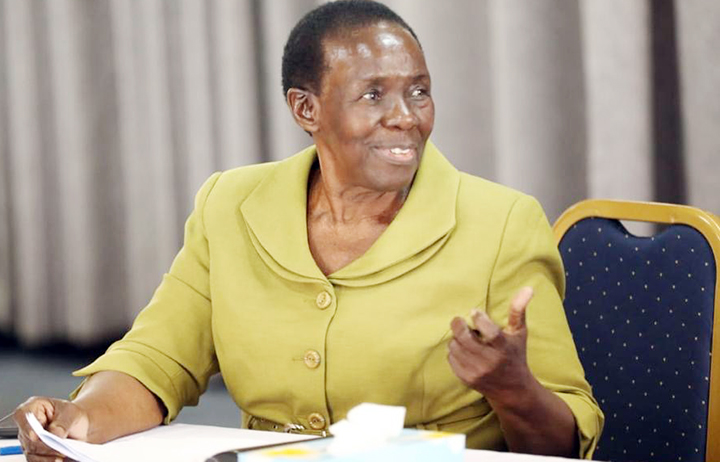
Major (Rtd) Gertrude Njuba, a key figure in Uganda’s National Resistance War (NRA), remains a towering figure in the country’s history. Born on November 26, 1944, to the late Bishop Yokana Mukasa and Norah Nakanywa Mukasa, Njuba’s journey from a tax department officer to a pivotal player in Uganda’s liberation is nothing short of extraordinary.
In 1964, Njuba married the late Sam Kalega Njuba, a prominent lawyer, academic, and politician who would later become a stalwart in the Forum for Democratic Change (FDC). A man of strong convictions, Sam Kalega served as the chairman of the Uganda Law Society and played a significant role in Uganda’s political evolution, notably as an architect of the Reform Agenda and later the FDC.
Post-Independence Uganda: A Hope Dashed
Njuba vividly recalls the optimism surrounding Uganda’s independence in 1962. At the time, she was a senior four student preparing for her Cambridge School Certificate. “The general expectation was that Uganda would socio-economically develop after independence,” she said. However, this optimism soon gave way to disillusionment. The nation, Njuba noted, faced a rapid deterioration of infrastructure and security. “Even the few roads left by Bazungu [colonialists] and security deteriorated,” she recounted.
The chaos reached its peak during Idi Amin’s regime, marked by gross violations of human rights and a climate of fear. “The situation was so bad that someone could come to your house and take your wife or daughter, and you wouldn’t do anything,” Njuba lamented. These atrocities, often shielded from law enforcement by a culture of impunity, galvanized many Ugandans to join the protracted struggle for liberation.
A Personal Catalyst for Change
Before joining the NRA, Njuba worked in Uganda’s income tax department. Her family’s ordeal under the Obote II regime became a turning point in her life. Her husband, Sam Kalega, was arrested multiple times for openly criticizing the regime, once remarking, “We thought things were going to be better, but now there are more bodies on the road than we used to have during Amin’s time.” His arrests left Njuba fearing for his life.
Seeking help, she approached Yoweri Museveni, then vice chairman of the Military Commission. Museveni, who knew Sam Kalega from their time at Dar es Salaam University, intervened to secure his release. Shortly thereafter, Museveni and his allies formed the Uganda Patriotic Movement (UPM) as part of preparations for elections. When the results were disputed, Museveni and his group launched a guerilla war, and Njuba was ready to join the cause.
Joining the Liberation Struggle
Njuba’s first task in the guerilla war was a dangerous one: recruiting disgruntled soldiers from Obote’s army and secretly escorting them to the bush. “My job was to clandestinely take them to the bush,” she recalled. Her covert operations did not go unnoticed, and the government soon discovered her activities. Museveni, armed with intelligence that Njuba was being targeted for arrest, advised her against returning to her job.
Forced into the bush, Njuba adapted to the harsh realities of guerilla life. Though she participated in some training, a leg injury limited her physical involvement. Instead, she took on administrative roles, contributing significantly to the NRA’s organizational efforts. Her resilience and adaptability made her an invaluable asset to the movement.
Gertrude Njuba: Harrowing Memories, Setbacks
Njuba also recalls two harrowing moments that stand out as stark reminders of the risks she took to help liberate the country.
One of these moments occurred while Njuba was covertly recruiting young men to join the National Resistance Army (NRA) rebels. On one fateful day, her group encountered a roadblock set up by soldiers loyal to Milton Obote’s regime. “The soldiers stopped us and asked where I was going with the young men,” Njuba recounted. Thinking quickly, she explained that she worked in the income tax department and fabricated a cover story: “I told them I had a garden nearby and that these were my children, and we were going to work until Sunday when they would go back to school.”
The soldiers allowed her to proceed, but when she returned to the same roadblock later that week, she was met with a chilling scene: dead bodies lay scattered around the area. The soldiers then questioned her again about the whereabouts of the young men she had been traveling with. Fearing for her life, she improvised another story: “Because of the situation, I didn’t bring them back. But if you want, I can go and pick them up.” The memory of those bodies, coupled with the realization of how close she had come to death, remains etched in her mind.
Another terrifying moment came when Yoweri Museveni, the leader of the NRA, fell gravely ill in the bush. Showing symptoms that some doctors suspected were consistent with poisoning, Museveni’s condition created widespread alarm among the rebel ranks. Njuba was among the women tasked with caring for him, but this responsibility quickly turned into a nightmare. Members of the NRA’s high command suspected that Museveni’s caretakers were behind the alleged poisoning and decided they should be executed within 24 hours.
“It was Museveni himself, lying sick in bed, who intervened to stop the execution,” Njuba said. He argued that if his caretakers had indeed poisoned him, they should continue tending to him until his death. To resolve the uncertainty, Museveni ordered a senior doctor to reexamine him. The doctor later confirmed that Museveni was not poisoned but had contracted an amoebic infection caused by drinking contaminated water in the bush. Njuba and her colleagues were exonerated, but the 24 hours they spent waiting for execution were, in her words, “the longest and most frightening of my life.”
The Setbacks Women Faced in the Bush
Life as a female fighter in the NRA presented unique challenges that were often overlooked. One issue, Njuba explained, was dealing with menstruation. “It may seem insignificant, but it was a very big problem,” she said. Supplies were scarce, and women relied on cotton raided from hospitals as the only viable solution.
Another significant challenge was socialization in the bush, where men and women lived in close quarters under extreme conditions. “Many women ended up pregnant, and it was often difficult to even know who the father was,” she revealed. These circumstances added to the difficulties of life as a woman in the NRA, underscoring the additional burdens they carried during the war.
Rebuilding Uganda After the War
After the NRA captured power, Uganda was in dire need of reconstruction. The war had left vast areas of the country, including the Luwero Triangle, in ruins. “The roads had turned bushy, especially in Luwero, and it was the government’s responsibility to rebuild the country,” Njuba said.
While some of her comrades remained in the army to continue fighting in Eastern and Northern Uganda, Njuba was redeployed to the Ministry of Rehabilitation. Her role was to help resettle the soldiers she had recruited during the war and facilitate the return of Ugandans who had fled into exile. She was also responsible for delivering food to returning civilians in devastated areas like the Luwero Triangle, where the scars of war were most visible.
Despite the liberation’s success, the war left Uganda with significant socio-economic challenges. Infrastructure needed to be rebuilt, and the economy had to be revived from the devastation caused by years of conflict. Njuba’s work in rehabilitation reflected the monumental task of transitioning from war to peace and rebuilding a shattered nation.
Legacy of Sacrifice and Courage
Gertrude Njuba’s experiences during and after the war illustrate the extraordinary sacrifices made by individuals in the fight to liberate Uganda. From narrowly escaping death at a roadblock to being falsely accused of poisoning Museveni, Njuba’s resilience and quick thinking were pivotal to her survival and her contributions to the NRA’s success.
As she turned her focus to rebuilding the nation, Njuba played a crucial role in resettling soldiers and helping exiles return home, laying the foundation for a more stable Uganda. Her story serves as a powerful reminder of the personal sacrifices that underpin Uganda’s history and the critical role women played in securing the country’s future.
Gertrude Njuba Reflects on Museveni, Liberation Day
Njuba holds a deep admiration for President Yoweri Museveni, seeing him as more than a leader—she considers him a divine blessing for Uganda and the region. “In my opinion, as a believer in God’s power, I see Museveni as someone deliberately brought to us at a time when we desperately needed him,” Njuba stated. She credits Museveni with steering Uganda onto a better path during its most challenging post-independence years.
Njuba recalls Museveni’s wisdom and leadership during the liberation war, often demonstrated in moments of danger. “His ability to foresee trouble was remarkable,” she said. “There were times in the bush when he would sense an ambush and order us to stop, and moments later, the danger would appear.” For Njuba, Museveni’s resilience, patience, and tolerance have been key to his enduring strength as a leader.
A Message to the Youth on Liberation Day
As Uganda marked its 39th Liberation Day, Njuba urged the youth to reflect on the significance of the sacrifices that brought about the peace they enjoy today. She emphasized that the day should not be taken lightly, as it symbolizes the cost of freedom and the progress made since the dark days of insecurity and instability.
Njuba commended the government’s efforts to involve the youth in patriotic activities, such as the sessions held at the National Leadership Institute in Kyankwanzi. These initiatives, she said, help bridge the generational gap and instill a sense of responsibility and appreciation for Uganda’s history.
She encouraged young people to recognize that peace is fragile and should never be taken for granted. “The world is not a peaceful place, and Uganda’s peace was hard-won,” she noted. Ahead of the upcoming elections, Njuba called on the youth to exercise their right to vote thoughtfully. “I am not telling them to vote for Museveni,” she clarified, “but to choose a leader who can steer the country safely and avoid a 24/7 disaster.”
What Liberation Day Means to Her
Liberation Day is deeply personal for Njuba, bringing back vivid memories of the sacrifices made during the struggle. For her, it’s a day of reflection and gratitude, a reminder of the cost of the peace Uganda enjoys today. “People need to understand that the peace they take for granted was fought for and can be lost in a split second,” she said.
As Uganda commemorated the 39th Liberation Day at Mubende National Teachers College, the story of Rtd. Major Gertrude Njuba stood out as a poignant reminder of the courage and resilience that defined the struggle. Her journey highlights not only the sacrifices of the past but also the ongoing responsibility to honor those sacrifices by safeguarding the peace and progress Uganda has achieved.