
Kampala, Uganda – April 4, 2025 – On the bustling streets of Kampala, life moves quickly. Boda bodas weave between honking taxis, street vendors call out their wares, and students rush through dusty roads with schoolbooks in hand. It’s a city that thrives on energy—sometimes too literally.
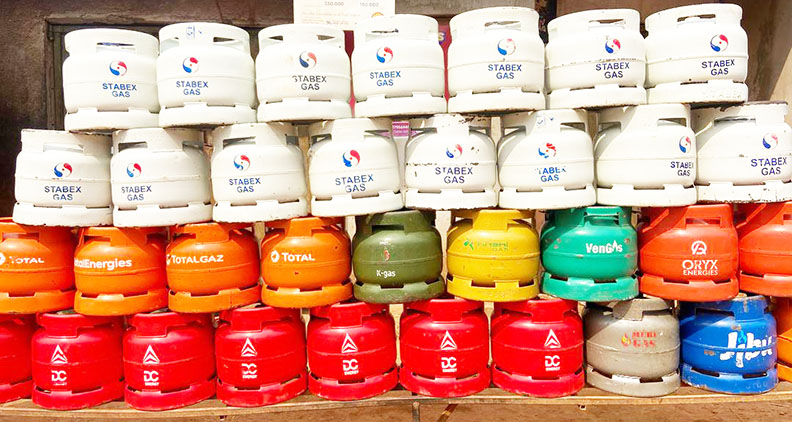
Nestled along sidewalks and under makeshift umbrellas are rows of colorful gas cylinders. They sit under the blazing sun, unsheltered, next to bustling foot traffic and busy roads. For many, they are just another part of Kampala’s urban landscape. But for those who know better, they’re potential disasters waiting to happen.
The Man Behind the Flame
In the heart of Kikoni, just outside Makerere University, 27-year-old Ornan Jjuuko wipes sweat from his brow as he leans against his stack of gas cylinders. This is how he makes his living—selling cooking gas to students and nearby households. He’s not blind to the risks.
“We pay taxes to both KCCA and the gas companies,” Ornan explains. “We know we’re supposed to keep these in shelters, but that would mean renting a room. How can we afford that?”
His story isn’t unique.
Down the street, another vendor, Regan Mukiibi, echoes the same frustration. “The cost of doing this business is too high. We can’t afford to build or rent permanent shelters,” he says, standing beside a precarious line of exposed cylinders. “So, we operate where we can—on the roadside.”
But that decision—borne out of desperation—is one that could have deadly consequences.
The Invisible Danger
To the untrained eye, the cylinders may seem harmless. But to experts like Dr. Job Kasule, a senior lecturer in gas and biotechnology at Makerere University, the cylinders are ticking time bombs.
“Selling gas that’s exposed to too much heat is a massive risk,” Dr. Kasule warns. “Most of these vendors aren’t trained, don’t have licenses, and don’t follow basic safety practices.”
He paints a vivid picture of what should be done. Gas cylinders, he says, must be stored upright in well-ventilated areas, away from direct sunlight, open flames, and flammable materials. “It’s standard practice at major fuel stations like Oryx or Stabex,” he adds. “But on the streets? You won’t find any of that.”
And that’s the heart of the problem: survival over safety.
Between Regulation and Reality
Uganda’s 2021 guidelines on compressed gas cylinder safety from the Ministry of Gender, Labour, and Social Development are clear. Storage areas must be marked, cylinders must be labeled and inspected regularly, and access should be limited to authorized personnel.
But implementation remains a dream far removed from street reality.
As Kampala Capital City Authority (KCCA), gas companies, and ministries issue regulations, vendors like Ornan and Regan feel increasingly caught in the middle—squeezed between the cost of compliance and the struggle to survive.
Risk at Every Turn
The risk doesn’t end with vendors. Thousands of students at nearby Makerere University walk past these exposed cylinders daily. Pedestrians unknowingly light cigarettes or sparks fly from motorbike engines nearby. One spark, one leak, and an explosion could strike with ferocity.
“It’s not just a safety issue,” says another expert interviewed for this story. “It’s a public health and urban planning issue. The city’s unregulated gas economy is a time bomb.”
A Path Forward
So what’s the solution?
Experts argue that a multi-pronged approach is necessary: strict enforcement of licensing and safety regulations, affordable storage alternatives for vendors, and public education campaigns to raise awareness.
There is also a need for collaboration. “Gas companies must stop looking away,” one vendor told us quietly. “If they want us to represent their brand, they must also help us operate safely.”
A City on the Edge
As the sun sets over Kampala, casting a golden hue across its corrugated rooftops, the gas cylinders remain in place—still gleaming, still exposed.
Ornan locks up his cart and prepares to go home. “I just want to feed my family,” he says softly. “But sometimes, I ask myself—what if something went wrong?”
In a city that prides itself on resilience, it’s time for the people, the government, and the private sector to come together—not after a tragedy, but before one. Because safety should never be sacrificed for survival.