
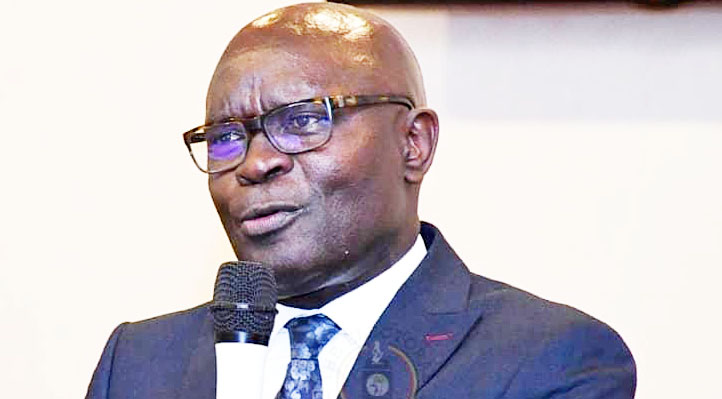
Kampala, Uganda – As calls for electoral law reforms grow louder, the Chairman of the Electoral Commission, Justice Byabakama Mugenyi Simon, used the ongoing National Stakeholders’ Workshop on Demarcation of Electoral Areas and Reorganization of Polling Stations to address the potential resource implications of any amendments or enactments to the electoral laws. Speaking in Kampala, he cautioned that “amendment/ enactment” of the electoral laws may necessitate additional resources for further demarcation and re-organization of polling stations.
Justice Byabakama emphasized the need for a comprehensive reorganization of polling stations due to the creation of new administrative entities post the 2020-2021 General Elections and the rise in voter population. He stated, “Considering the timeframes and commencement of electoral activities for the 2025-2026 General Elections, it is imperative to conduct a country-wide re-organization of polling stations.”
He highlighted the constitutional mandate of the Electoral Commission under Article 60 of the 1995 Constitution of the Republic of Uganda, which ensures regular, free, and fair elections. He pointed out that the Commission must conduct general elections for Presidential, Parliamentary, and Local Government Council elections within the first thirty days of the last 122 days before the expiration of the term of the respective offices.
Justice Byabakama noted the Commission’s launch of the 2025/26 General Elections Road Map on August 2, 2023, which sets specific timelines for election planning and management. However, he acknowledged that some timelines had to be revised due to funding shortages in the last financial year.
He praised the support from stakeholders despite various challenges, stating, “I am happy to note that despite all the challenges the country has encountered, the Commission has always had full support from all stakeholders towards achieving effective participation of Ugandans in the previous elections and by-elections.”
Demarcation of Local Government Electoral Areas
Justice Byabakama announced the Commission’s compliance with the Local Governments Act, setting the stage for the demarcation of electoral areas for the 2025-2026 Local Governments Council elections. He explained, “The purpose of the demarcation exercise is to clearly define the areas of representation for Directly Elected Councillors, Women Councillors, and Councillors representing Special Interest Groups in various Local Governments Councils.”
This activity, initially scheduled for the beginning of July, will now take place in August 2024. The demarcation will cover districts and cities where new administrative units were created after the 2020-2021 General Elections, considering communication means, geographical features, and population density.
Reorganization of Polling Stations
The reorganization of polling stations is crucial, aligning with Section 33(1) of the Electoral Commission Act. This ensures a manageable number of voters per polling station and improves accessibility and space. Justice Byabakama detailed the exercise, which will include relocating polling stations, splitting those with excessive voters, reducing the number of stations in a polling center, and ensuring each parish and electoral area has at least one polling station.
Workshop Topics and Stakeholder Engagement
The workshop covers essential topics, including the legal framework for demarcation and reorganization and the phases involved in these processes. Justice Byabakama appealed to stakeholders to mobilize, sensitize, and inform the public about their critical duties and responsibilities in the electoral process.
He stressed the importance of a credible electoral process being a multi-stakeholder responsibility, urging stakeholders to “preach peace, unity, tolerance, respect for divergent views, and acceptance of the outcome or resort to peaceful resolution of emerging electoral-related conflicts through the Commission or the Courts of Law.”
The workshop aims to guide the Electoral Commission’s efforts in ensuring a transparent and efficient electoral process for the upcoming 2025-2026 General Elections, reflecting the nation’s commitment to democratic principles.