
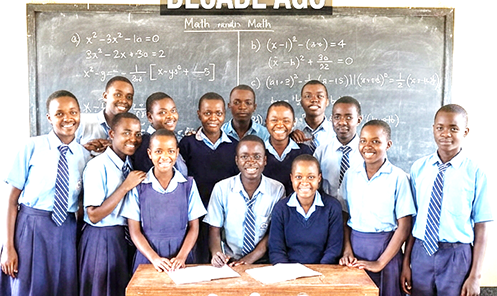
KAMPALA – In many parts of Uganda, the story of a child’s future begins long before they ever step into a classroom.
It starts at home, sometimes in a household stretched thin by poverty, sometimes in communities where basic services remain out of reach. By the time school begins, the gap is already there, quietly shaping what comes next.
A new World Bank report, Building Human Capital Where It Matters, suggests that this early disadvantage is not incidental. It is structural.
Across Sub-Saharan Africa, including Uganda, human capital, the mix of health, skills, and knowledge that drives economic growth, is being shaped as much by everyday living conditions as by formal systems like education and healthcare. And those conditions are often unequal from the very beginning.
In Uganda, where high fertility rates and rural poverty remain significant, many children grow up facing multiple disadvantages at once. Malnutrition and stunting, still prevalent, do more than affect physical growth. They can impair cognitive development, making it harder for children to learn, even when they do attend school.
The report points to a deeper truth: inequality does not begin in the classroom. It begins at home.
Resources matter: income, food, access to learning materials. But so does care. Children who lack early stimulation, interaction, and support can fall behind in ways that are difficult to recover later, the report suggests.
Beyond the household, geography adds another layer.
Uganda’s development story is marked by sharp contrasts. In urban centres like Kampala, children are more likely to access better schools, healthcare, and opportunities. In rural or historically underserved regions, the picture is very different.
Infrastructure gaps, limited services, and fewer economic opportunities shape not only how children grow up, but what they can realistically aspire to.
In rapidly expanding urban areas, informal settlements present a different kind of challenge. They bring people closer to opportunity, but often at the cost of overcrowding, poor sanitation, and insecurity, conditions that can undermine health, safety, and learning.
Where a child grows up, in other words, can quietly determine how far they go.
Then comes the labour market, a space that should, in theory, offer a path forward. But for many Ugandans, especially young people, that path is uncertain.
Most workers are employed in informal sectors or small-scale agriculture, where opportunities to build new skills are limited. Even as education levels rise, many find themselves in jobs that do not match their training.
The result is a familiar paradox: a young and growing population, but limited gains in productivity.
For women, the barriers are even more complex. Although many are economically active, they are often concentrated in low-productivity roles. Challenges such as limited childcare and unsafe transport further restrict access to better opportunities.
The World Bank report argues that addressing these challenges requires a shift in thinking.
Improving schools and hospitals remains essential, but it is not enough. Policies must also focus on the environments where people actually live, homes, communities, and workplaces.
That could mean combining cash support with parenting programmes, investing in water and sanitation alongside education, and expanding pathways into skilled work through apprenticeships and training.
It also means recognising that jobs themselves must change. Work should not simply provide income; it should build skills and open doors.
For Uganda, the stakes are high.
Human capital is not just a social issue. It is an economic one. It shapes productivity, growth, and the country’s ability to compete in a changing global economy.
The report’s message is both urgent and practical: if Uganda wants to unlock its demographic potential, it must invest not just in systems, but in the environments that shape everyday life.
Because in the end, a child’s future is not determined in a single moment.
It is built—slowly, quietly—in the places they call home.
The author can be reached at spinmukasa@gmail.com